In the late summer of 1998, a 14-year-old girl named Coral Pearl Hall disappeared from Flint, Michigan, just one day after her birthday. She was last seen on September 22, 1998, a day that began with a desperate cry for help and ended in a mystery that would haunt her community for decades. Coral's life was turbulent; her mother had passed away from a drug overdose two years prior, and her father's identity was unknown. She was in the care of her maternal grandmother, Lois Janish, and lived in a troubled environment marked by poverty, instability, and allegations of abuse. On the very day she vanished, Coral had been taken by a friend to the Department of Human Services to report the abuse she was enduring at home. Later that night, in what would be her last known contact, Coral called the same friend from a payphone near the White Horse Tavern, expressing her need to escape her home life in Flint. By the time her friend arrived to help, Coral was gone, having seemingly vanished without a trace.
For many years, the official narrative suggested that Coral might have run away, possibly traveling to the Los Angeles, California area with an adult male companion. This theory was supported by her grandmother's initial statements. However, as time went on with no word from Coral and no trace of her existence through official records, suspicion began to shift towards her home life. The Department of Human Services had investigated Janish for abuse and neglect concerning Coral on multiple occasions. Disturbing accounts emerged from acquaintances, including a neighbor who alleged Janish had offered him time with Coral in exchange for drugs, and that Coral showed signs of physical abuse. Coral had also accused her grandmother's boyfriend, Bruce Strait, of sexual abuse. Investigators came to believe that foul play was involved in her disappearance, and the focus of the investigation turned squarely on her grandmother.
The case took a significant turn in July 2013 when Lois Janish was arrested and charged with her granddaughter's murder. The years following Coral's disappearance were marked by Janish providing multiple, conflicting stories to investigators. In one startling account, she confessed to killing Coral by hitting her in the head with a hammer and then, with the help of her now-deceased boyfriend, dismembering the body and scattering the remains. Janish would later retract this and other confessions. Despite extensive searches, Coral's remains were never located. In 2015, Lois Janish pleaded no contest to second-degree murder and was sentenced to a minimum of nine years in prison. She was released on parole in February 2022. The case of Coral Hall is a tragic story of a vulnerable teenager who sought help from a system that could not protect her. Though her grandmother was convicted in her death, the full truth of what happened on that September night and the location of her body remain unknown, leaving a painful void for those who remember the girl who disappeared after a final, desperate phone call.
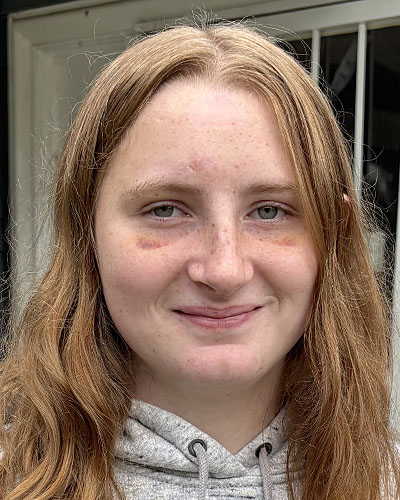
Coral Pearl Hall was a 14-year-old girl when she was last seen in Flint, Michigan, on September 22, 1998, one day after her birthday. She was approximately four feet eleven inches tall and weighed about 85 pounds, with blond hair, blue eyes, and pierced ears. Coral had a round mark at the base of the front of her neck that had been present since birth after she was delivered with forceps, and she was also described as having noticeably large ears. She often wore earrings decorated with Winnie-the-Pooh characters, although it is not known whether she had them on when she disappeared. Her final clothing description included blue jeans, a gray-and-blue shirt, a green sweatshirt, and white tennis shoes. What was initially treated as the disappearance of a troubled teenager eventually became a murder investigation centered on the home where she had been living and the grandmother responsible for her care.
Coral had been raised largely by her maternal grandmother, Lois Janish, in a house in the 500 block of East Ninth Street in Flint. Her childhood was marked by instability, and people who knew her described her as intelligent but increasingly angry, withdrawn, and unhappy. She had missed a considerable amount of school, and placement in foster care was reportedly being considered. Coral had also spoken about being mistreated at home. A man who knew her said he had observed signs of physical abuse, while Coral herself reportedly complained about the way her grandmother treated her. These circumstances formed the painful background to the final day on which anyone outside the household could reliably account for her movements.
On September 22, Coral reportedly went with a friend to a government social-services office to report abuse in her grandmother's home. Later that day, after returning to the neighborhood, she contacted the friend again and asked for help leaving. According to accounts developed during the investigation, Coral used a pay telephone near a Flint tavern and asked the friend to come get her. By the time the friend arrived, Coral was gone. Early information released about the case suggested that she may have left voluntarily in the company of an adult man and traveled to the Los Angeles, California, area. That possibility remained part of public missing-child notices for years, and authorities initially investigated the case as though Coral might have run away to escape the difficulties in her life.
The runaway theory was supported largely by statements attributed to Janish, but investigators gradually became suspicious of the grandmother's account. Janish gave inconsistent explanations about Coral's final movements, and authorities later said she had always been considered a suspect. The absence of any confirmed communication from Coral also weakened the belief that she had begun a new life in California. There were no verified later sightings, telephone calls, letters, school records, employment records, or official contacts establishing that she survived after September 1998. A 14-year-old attempting to live independently would have needed housing, money, transportation, and the assistance of adults, yet no dependable evidence ever placed Coral outside Michigan after her disappearance.
As detectives continued reviewing the case, it became increasingly clear that the last reliable answers might be found inside Coral's own household rather than in California. Investigators believed Coral had returned home after trying to seek help and that a confrontation occurred with her grandmother. Janish eventually made statements indicating that she had beaten Coral with a hammer and had received help from a boyfriend in disposing of the teenager's remains. She later recanted or changed portions of her account, and Coral's body was never recovered. The shifting stories created profound frustration because they offered investigators possible admissions of violence without providing a truthful, verifiable location where Coral could be found.
In July 2013, nearly fifteen years after Coral vanished, authorities charged Lois Janish with an open count of murder. Prosecutors maintained that Coral had not run away and that she had been killed by the woman entrusted with raising her. The case proceeded without the recovery of Coral's remains, requiring investigators and prosecutors to rely on Janish's contradictory statements, the known abuse within the household, the circumstances preceding the disappearance, and the complete absence of evidence that Coral remained alive. The charge marked a major change in the official understanding of the case, replacing the long-publicized image of a teenage runaway with the allegation that Coral had died shortly after seeking protection from an abusive home.
Janish ultimately pleaded no contest to second-degree murder. A no-contest plea did not require her to make a detailed public admission in court, but it allowed the judge to enter a conviction and sentence her as responsible for Coral's death. In 2015, Janish was sentenced to a minimum of nine years in prison. During the sentencing, investigators and prosecutors expressed disappointment that she had not led them to Coral's body. A Flint detective who had devoted years to the investigation emphasized that the case would not truly be finished until Coral was found. The conviction delivered a measure of legal accountability, but it did not bring Coral home or answer where her remains had been placed.
The role of Janish's boyfriend in the disposal of Coral's remains has remained another disturbing part of the case. Janish claimed at different times that another person had helped her scatter or conceal the body, but her changing accounts made it difficult to determine which details were truthful. Publicly available information does not establish that another person was convicted of Coral's murder or of helping dispose of her remains. Without a recovered body or a dependable confession identifying a precise location, investigators have been unable to conduct a final examination that might reveal the full manner of death or establish the exact sequence of events inside the home. The possibility remains that someone besides Janish knew what happened and could still provide the information necessary to locate Coral.
Coral continues to be listed in national missing-person and missing-child records because her remains have never been found. The National Center for Missing & Exploited Children maintains her case under number 857702, while NamUs lists her as MP5406. Age-progressed images have been created showing how Coral might have appeared at 25 and 30 years old, reflecting the years during which authorities still had to preserve the possibility that she might be recognized alive. A DNA reference sample from her maternal grandmother was also collected for forensic comparison. Although a person has been convicted of causing Coral's death, her physical whereabouts remain unknown, leaving an essential part of the case unresolved.
Coral Hall's disappearance is ultimately the story of a vulnerable 14-year-old who tried to report abuse and seek help, only to vanish from Flint on September 22, 1998. For years, the public was told she might have run away with an adult man to Los Angeles, but investigators eventually concluded that the explanation was false. Her grandmother, Lois Janish, was charged and later convicted of second-degree murder after admitting in one account that she struck Coral with a hammer and disposed of her remains with assistance, although she later changed her story and never revealed a location that led police to the teenager. In overview, the case has moved from a missing-child investigation to a proven homicide without a recovered body: Coral's grandmother was held legally responsible for her death, yet Coral herself has never been located, leaving her loved ones and investigators without the final dignity of recovering her remains and bringing her home.
Last Seen: Sep 22, 1998