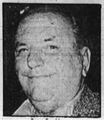
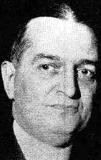
Mark Seifert, a 31-year-old White male from the Machias area of Cattaraugus County, New York, disappeared on February 13, 1984, after leaving for what he believed was a business meeting. Contemporary court records describe the meeting as having been arranged at a rural location on Pleasant Valley Road in the Town of Yorkshire, an isolated area not far from Machias.
Earlier that morning, Mark had been seen at a diner in Yorkshire Corners, where he reportedly said he was on his way to meet a developer concerning a potential construction or recreational-development project. He left the diner before 9:30 a.m. and was never seen or heard from again. His disappearance quickly became far more troubling when his Lincoln Continental was discovered later that morning engulfed in flames on Pleasant Valley Road. The vehicle was found without Mark, and investigators discovered evidence nearby indicating that a violent death had occurred.
The circumstances surrounding the meeting eventually became central to the investigation. Several days before Mark disappeared, his brother, William Seifert, had arranged for an acquaintance to contact Mark while posing as a secretary for a company called Tri-State Developers. Mark was told that he had been recommended for work connected to a large development and was invited to meet a representative at the Pleasant Valley Road location. The person who contacted him provided directions to the isolated meeting site and indicated that another contractor would also be present. Mark apparently accepted the invitation and left home that morning without packing personal belongings, consistent with his expectation that he would be returning after the meeting. Investigators later determined that William had arranged the meeting and had told his employers that he would not be working that morning. The circumstances surrounding William's whereabouts, his connection to the supposed meeting, and physical evidence eventually became significant elements of the prosecution's case.
At the scene of the burned automobile, investigators found pools of human blood along with tissue and bone fragments. The blood was determined to be type O, the same blood type documented for Mark. Investigators also recovered other evidence in the vicinity of the vehicle, including fibers that were later associated with material in William Seifert's van. The burned automobile itself contained no human remains, and Mark's body was never recovered. Despite the absence of a body, prosecutors presented the evidence as establishing that Mark had been killed at the rural location. Medical testimony presented during the legal proceedings concluded that the biological evidence was consistent with a fatal traumatic injury. The evidence, taken together with Mark's unexplained disappearance, the circumstances of the meeting, and the physical evidence connecting William to the area, became the foundation of a murder prosecution.
William Seifert was ultimately prosecuted for Mark's murder, and the case became notable because prosecutors were able to obtain a murder conviction even though Mark's remains had never been found. The prosecution relied heavily on circumstantial evidence, including testimony about the meeting arranged for Mark, William's movements on the morning of the disappearance, the burned automobile, biological evidence recovered near the scene, and evidence linking William's vehicle to material found there. In 1987, William was convicted of murdering his younger brother and received a sentence of 20 years to life in prison. His conviction was subsequently challenged, including arguments that the evidence was insufficient because Mark's body had never been recovered. In 1989, the New York Appellate Division upheld the murder conviction, concluding that the evidence, when considered as a whole, was sufficient to establish that Mark had been killed and that William was responsible.
Mark's remains, however, have never been located. The disappearance therefore remains an unusual case in which a murder conviction was obtained without recovery of the victim's body. Later forensic work also preserved the possibility of identifying Mark should remains ever be discovered: DNA testing involving a family reference sample was completed in 2018, with the resulting profiles entered into the appropriate forensic databases. The official missing-person record continues to identify Mark as missing, while the established court record recognizes that he was the victim of a homicide. More than four decades after Mark left for the meeting that morning, the central unanswered question for his family remains the location of his remains. Overall, the case began as the unexplained disappearance of a 31-year-old man from the Machias area on February 13, 1984, developed into a homicide investigation after his burned vehicle and evidence of a fatal assault were discovered, and ultimately resulted in the conviction of his brother despite the fact that Mark himself has never been found.Last Seen: Feb 13, 1984