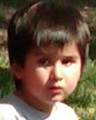
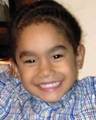
Ork’O Attila Frisancho was 11 years old when he was last seen in Baltimore, Maryland, on August 25, 2010. Public missing-person records identify him with NamUs case number MP28625 and NCMEC case number 1155436, and list the Baltimore case as involving a child who disappeared along with his younger brothers, Amaru Elod Frisancho-Kiss and Raymi Akos Frisancho-Kiss.
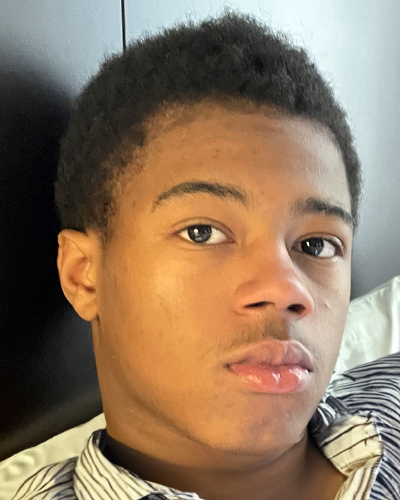
Ork’O is described as a Hispanic/White male child with brown hair and brown eyes; case summaries also note a scar on the left side of his head and that he may wear glasses. Age-progressed images have since been prepared to show how he may have looked as he grew older, reflecting the long passage of time and the enduring hope that someone, somewhere, may recognize him.
The story of Ork’O’s disappearance is also the story of his brothers and of a family separated across borders. Public case summaries state that the three boys were last seen in Baltimore and were believed to be with their mother, Sylvia Kiss, with possible travel to Slovakia or Hungary. A case file compiled from missing-children and law-enforcement resources describes the children as having been abducted by their non-custodial mother and says their father applied for their return under the Hague Treaty. Ork’O, the oldest of the three, was born in Slovakia and was a dual citizen of Slovakia and the United States, while Amaru and Raymi were born in Baltimore.
In testimony submitted to the U.S. House of Representatives in 2017, the boys’ father, J. Augusto Frisancho, described the day the children vanished as beginning with what he believed would be a temporary arrangement: he said his wife had asked him to care for the children for three days and told him to wait for them at a park. He said he left work at Johns Hopkins and waited until dark, but the children never arrived. When he tried calling, he said numbers were disconnected, and he searched places where he thought they might be. By the next day, according to his testimony, he learned that the children had been taken to Slovakia.
That same testimony describes the legal struggle that followed. Frisancho said he filed an application for the children’s return under the Hague Convention on the Civil Aspects of International Child Abduction, and that the matter entered Slovak court proceedings after a peaceful return could not be arranged. He further stated that Slovak courts ruled the children should be returned to the United States, but that the order was not enforced. His testimony also described later court delays, travel restrictions, and a move to Hungary, painting a painful picture of a father trying to reach his children through international legal channels while the children’s lives continued far from the home, school, and community they had known in Baltimore.
A public tribute account gives a more personal view of the hours after Ork’O, Amaru, and Raymi failed to appear. It describes Augusto waiting at Meadowood Regional Park, growing increasingly worried as the day passed, calling repeatedly, driving around Baltimore, and even checking the airport because he feared the children might be leaving the country. The account says he later learned by email that they had been taken to Slovakia, and that when he eventually reached the boys by phone, Ork’O was worried about school starting soon and wanting to be back in time. Those details give the case a deeply human dimension: beyond the legal filings and international proceedings, this was an 11-year-old boy separated from ordinary childhood routines, his father, and the life he expected to return to.
The public record available online presents Ork’O Frisancho’s case as a long-running missing-child and international family-abduction matter connected to his brothers, Amaru and Raymi. He was last seen in Baltimore on August 25, 2010, at age 11; he was believed to be with his mother and possibly in Slovakia or Hungary; and his father pursued legal remedies under the Hague Convention while public missing-person listings continued to circulate Ork’O’s identifying details and images. The case remains defined by absence, distance, and uncertainty, but also by the continued preservation of his name and image so that recognition, memory, and compassion remain part of the search for answers.Last Seen: Aug 25, 2010