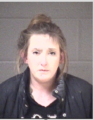
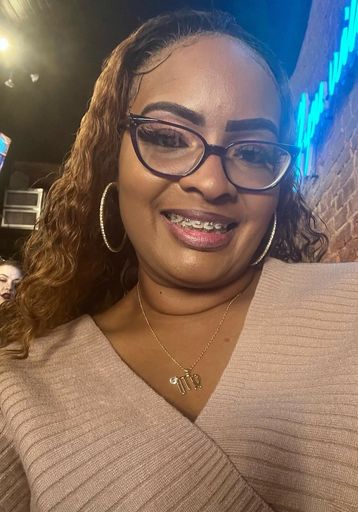
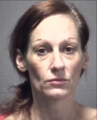
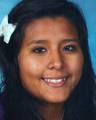
Sara Nicole Graham was just 18 years old when she vanished on February 4, 2015, from Fairmont, North Carolina, in Robeson County. A Native American woman and member of the Lumbee Tribe, Sara had recently begun building a new life in North Carolina after growing up in Texas. She had moved to the Fairmont area following her high school graduation and was living with her father, Hubert Graham, and stepmother, Connie Graham.
Sara worked at a Walmart store in nearby Pembroke, where she was employed as a cashier and door greeter. On the morning she disappeared, she was expected to report to work at 7:00 a.m. According to the account initially given to authorities, Sara left the family home on Centerville Church Road at approximately 6:30 a.m., driving a white Chevrolet van registered to her father. However, she never arrived at Walmart, and no one could account for her whereabouts. What initially appeared to be a troubling missing-person investigation would eventually become a murder case that exposed a devastating betrayal within her own household.
The first significant discovery came only hours after Sara was reported missing. At approximately 12:15 p.m., authorities located the white van abandoned in a wheat field along East McDonald Road, between Centerville Church Road and Chicken Road, approximately five miles from her residence. The vehicle was parked several feet off the roadway and was locked when investigators arrived. There were no immediately apparent signs of a struggle around the van, leaving investigators with few obvious clues about what had happened. Witnesses reportedly observed the vehicle in the field as early as 6:45 a.m., raising questions about the short period between Sara's supposed departure from home and the vehicle's appearance at that location. Detectives would later emphasize that they had uncovered no evidence establishing that Sara herself had driven the van into the field. This detail became especially important as investigators began questioning whether the initial account of her disappearance accurately reflected what had happened that morning.
The search for Sara began almost immediately and involved numerous law enforcement agencies. Deputies from the Robeson County Sheriff's Office worked alongside the Federal Bureau of Investigation, local police departments, and the North Carolina State Highway Patrol. Ground searches covered wooded areas, fields, and other locations surrounding Fairmont, while helicopters assisted in surveying areas difficult to reach on foot. Sara was described as approximately 5 feet 4 inches tall and weighing around 160 pounds, with brown eyes, dark brown hair, eyeglasses, and braces on her teeth. Her ears were pierced, and she was reportedly wearing a blue Walmart work vest when she was last believed to have been seen. Investigators initially considered various possibilities surrounding her disappearance, but those who knew Sara maintained that voluntarily walking away from her life without contacting anyone was inconsistent with her personality and responsibilities. She had recently established herself in her new surroundings, was developing friendships, and had demonstrated reliability at work.
Sara's disappearance was particularly troubling because both her father and stepmother were employed by the Robeson County Sheriff's Office when she vanished. Her father, Hubert Graham, had spent years working in law enforcement, while Connie Graham was an experienced deputy who had served the department for more than two decades. In the early stages of the investigation, authorities publicly stated they had no evidence suggesting Sara had been experiencing serious difficulties at home. However, on March 18, 2015, approximately six weeks after Sara disappeared, Connie Graham was terminated from her position with the sheriff's office. The sheriff at the time characterized the dismissal as a personnel matter and stated that it was unrelated to Sara's disappearance. Although the firing generated questions, authorities did not publicly identify Connie as responsible for Sara's disappearance at that time. Meanwhile, investigators continued interviewing witnesses, examining evidence, and attempting to determine how Sara could have disappeared during what should have been an ordinary morning commute.
As months turned into years, Sara's case remained unresolved, but investigators never abandoned their efforts to find her. The FBI and Robeson County authorities pursued hundreds of leads and interviewed dozens of individuals. Federal investigators publicly expressed their belief that Sara had not simply run away. They described her as a responsible individual who enjoyed her job, was making friends, and appeared happy with her new life. Investigators also indicated that they believed someone close to Sara possessed information that had not been disclosed. During the years that followed, investigators returned to locations associated with the disappearance and conducted additional searches as new information became available. In June 2023, deputies and FBI agents conducted searches in the Fairmont area, including a court-authorized examination of the home where Sara had been living. Search teams and trained dogs were also deployed to investigate areas that might contain evidence of her fate. Despite those efforts, Sara was not located, and her family continued living without definitive answers.
For Sara's biological mother, Catherine Armenta, and the rest of her family, the passage of time brought an enduring mixture of grief, uncertainty, and determination. Sara had been raised by her mother in Texas before moving to North Carolina, and her disappearance left a profound absence in the lives of those who loved her. Friends remembered Sara as a warm, creative, and compassionate person who enjoyed making people smile. Beck Ryan, a friend who spoke publicly about her, described her love of animals, her artistic abilities, and her habit of making handmade gifts for people she cared about. Another friend, Sabrina Nickerson, who attended high school with Sara in Texas, recalled her honesty, cheerful personality, and enthusiasm for learning creative skills. These recollections offered a picture of someone whose life was much larger than the circumstances of her disappearance. Behind the photographs circulated by investigators was a young person with friendships, interests, plans, and experiences that had been abruptly interrupted.
On February 4, 2025, the tenth anniversary of Sara's disappearance, authorities renewed their public appeal for information. The Robeson County Sheriff's Office and FBI announced that the investigation remained active, and a reward connected to locating Sara was increased to $10,000. Investigators again emphasized the absence of any verified contact with Sara and the lack of evidence that she had driven the abandoned van to the location where it was discovered. Additional searches were carried out during 2025, with assistance from specialized search-and-rescue personnel and other agencies. Sheriff Burnis Wilkins repeatedly expressed his determination to find Sara and establish what had happened to her. Although the investigation had lasted a decade, law enforcement continued treating every credible lead as an opportunity to advance the case.
A major turning point occurred in 2026 when Sara's mother sought a court order formally declaring her daughter deceased. After more than eleven years without verified contact or evidence that Sara was alive, a Robeson County Superior Court judge granted the request on June 1, 2026. North Carolina law allows a missing individual to be presumed deceased after an extended period of unexplained absence, provided certain legal requirements are met. The ruling did not establish that Sara's remains had been recovered, nor did it identify the precise circumstances of her death. However, it formally recognized the conclusion that Sara was no longer alive and expanded the investigative framework from a missing-person case to a homicide investigation. For her mother, the decision to pursue the declaration was deeply painful. Catherine explained that Sara's absence had affected her family every day and that the request was something they believed they needed to make after so many years of uncertainty.
Only weeks after the court's declaration, investigators announced the arrests that Sara's family had spent more than a decade awaiting. On June 25, 2026, the Robeson County Sheriff's Office, working with the FBI and the United States Marshals Service, arrested Connie Graham and her two sons, Bobby Matthew McLellan and Luke Locklear. Connie was initially charged with first-degree murder, felony conspiracy, and altering, stealing, or destroying criminal evidence. Investigators alleged that she had killed Sara and subsequently participated in efforts to conceal the crime. Arrest warrants and later indictments described the destruction or alteration of evidence that included bedding, clothing, furnishings, and flooring inside the residence. McLellan and Locklear were accused of assisting with efforts to conceal evidence and obstruct the investigation. The arrests represented an extraordinary development in a case that had remained publicly unresolved for more than eleven years.
Investigators alleged that the actions of Connie's sons played significant roles in concealing what happened to Sara. According to court documents, Luke Locklear was accused of conspiring with Connie to burn items containing evidence connected to the killing. Bobby McLellan was accused of helping remove and dispose of Sara's remains and concealing evidence of the homicide. In August 2026, a Robeson County grand jury returned additional indictments against both men. Each faced charges including felony conspiracy, altering or destroying criminal evidence, accessory after the fact, and conspiracy to be an accessory after the fact to first-degree murder. Neither was charged with personally murdering Sara. Their cases remained separate from Connie's prosecution, and the allegations against them had not been resolved by a criminal conviction as of the latest publicly available reporting. Both men were eventually released on secured bonds with restrictions that included house arrest and limitations on contact with individuals connected to the case.
The most consequential development came on September 30, 2026, when Connie Graham appeared in Robeson County Superior Court and pleaded guilty to second-degree murder in Sara's death. During the hearing, Connie admitted that she had struck Sara in the head with a hammer following an argument on the morning of her disappearance. The admission established that Sara had been the victim of violence inside the family environment where she should have been safe. Information presented during the proceedings indicated that tension had existed between Connie and Sara, including allegations of jealousy surrounding Sara's relationship with her father, Hubert Graham. Investigators also revealed that Connie had made admissions about the killing to fellow inmates while incarcerated. Under the terms of a plea agreement, the original first-degree murder charge was reduced to second-degree murder, while the separate felony conspiracy and evidence-related charges against Connie were dismissed.
Superior Court Judge Jason Disbrow sentenced Connie Graham to a minimum of 20 years and a maximum of 25 years in prison. The sentencing brought a measure of accountability after more than a decade of unanswered questions, but it also forced Sara's family to confront the horrifying circumstances of her death. Her mother attended the hearing and expressed her anger and heartbreak over the betrayal. Sheriff Burnis Wilkins acknowledged the emotional toll of the proceedings, describing the details presented in court as devastating for those who had loved Sara. He emphasized that investigators had continued working the case despite the passage of time and that the conviction was the result of extensive collaboration among sheriff's detectives, FBI personnel, and prosecutors. The guilty plea resolved the question of who had murdered Sara, but it did not resolve every aspect of what happened afterward.
One of the most painful remaining questions concerned the location of Sara's remains. Even after Connie's conviction, authorities had not recovered her body. Investigators developed information suggesting that her remains had been disposed of in an area near East White Pond Road outside Fairmont in 2015. On September 16, 2026, specialized crime scene personnel, divers, and search teams from multiple agencies investigated the area. The search effort involved the Robeson County Sheriff's Office, the FBI, and specialists with expertise in recovering and examining human remains, including anthropology personnel from North Carolina State University. Sheriff Wilkins later confirmed that investigators had received information considered highly reliable about the possible disposal location. However, he did not disclose the source of that information, and there was no public confirmation that the remains had been recovered.
Following the guilty plea, Sara's friends expressed relief that someone had finally been held responsible while acknowledging that the case remained emotionally unfinished. Sabrina Nickerson explained that the conviction provided answers but also raised additional questions, particularly about the concealment of Sara's body. She hoped that those accused of assisting after the killing might provide information that could help investigators recover Sara's remains. Authorities continued to emphasize the importance of locating her so that her family could finally bring her home and arrange a proper farewell. The Robeson County Sheriff's Office and FBI remained involved in the search and investigation, while the criminal proceedings involving Connie's sons continued separately. As of October 2026, publicly available reports had not confirmed the recovery of Sara's remains.
Sara Nicole Graham's disappearance illustrates how an apparently ordinary morning can conceal a far more tragic reality. What began on February 4, 2015, as the search for a young Walmart employee who supposedly failed to arrive at work ultimately became the investigation of a murder committed by someone within her own household. The abandoned van, the absence of signs of a struggle, the unexplained silence that followed, and years of investigative work eventually led authorities to those accused of knowing what had happened. More than eleven years later, Connie Graham's guilty plea and prison sentence established criminal responsibility for Sara's death, although the precise location of her remains and some aspects of the concealment remained unresolved. For Sara's family, the conviction marked a significant achievement in their pursuit of justice, but it could never restore the future that was taken from her. Her case stands as both a heartbreaking example of a prolonged disappearance ending in a murder conviction and a reminder that identifying a killer does not necessarily bring a family's search to an end. Until Sara's remains are found and returned to those who love her, an essential part of that search continues.Last Seen: Feb 4, 2015