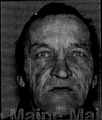
Louis William “Billy” Hogan Jr. was a young Houlton, Maine, pilot whose ordinary work flight became one of the state’s enduring aviation mysteries. NamUs lists him as the subject of missing person case MP33999, with his last contact recorded on May 2, 1972, from Houlton, Maine. Online news accounts describe him as a Houlton resident and LISAir employee, remembered by family as “Billy,” and closely bonded with his younger brother Jerome.
On the morning he vanished, he was ferrying a brand-new yellow-and-white single-engine Citabria from Danbury, Connecticut, toward Houlton International Airport, a flight meant to bring the aircraft home to northern Maine.
Billy left Danbury that morning and was expected to arrive in Houlton later that day. During the flight, he encountered bad weather over Maine. Reports describe a critical navigation problem: the Augusta VOR beacon, part of the radio-navigation system pilots used to stay on course, was reportedly out of service for several hours. Aviation-history summaries and Maine news coverage indicate that investigators believed he may have become lost while trying to transition from the Kennebunk beacon toward Augusta. As conditions worsened, he was flying a small two-seat Citabria at about 3,000 feet, low on fuel and seeking help. His distress call reached the Portland air traffic control tower in the late morning or around midday, and he asked for directions to the nearest airport. That mayday call was the last known communication from him.
When Billy did not arrive in Houlton, the fear that first reached his family became devastatingly real. His brother Jerome later recalled being told at work that Billy’s plane was missing, a moment he said remained vivid decades later. Authorities and search crews looked for the aircraft, but neither Billy nor the Citabria was found. Reports have placed the suspected area broadly over central or coastal Maine, with later theories focusing on whether he could have reached areas such as Mount Waldo in Waldo County, or whether the aircraft went down somewhere else within a wide search radius. The uncertainty has made the case especially painful: there was a mayday, there was a storm, and there was a route home, but there was no crash site, no recovered plane, and no final answer for the people who loved him.
The years did not end the search. Jerome Hogan and others continued pushing for answers long after official search efforts faded. In 2015, Jerome and Malcolm Brydon, a retired Federal Aviation Administration traffic controller, renewed the effort in a more organized way, drawing volunteers, aviation enthusiasts, search-and-rescue groups, hikers, hunters, snowmobile club members, and people who remembered possible clues from the woods. Searchers focused heavily on Mount Waldo after reports from hikers who believed they had seen aircraft wreckage or parts there. Volunteers hiked grids, studied fuel range, followed leads, took aerial photographs, searched with drones, contacted logging companies and community groups, and even explored a lead in the Androscoggin River after a fisherman reported something unusual beneath the water.
Some leads brought hope and then heartbreak. At one point, searchers believed a wrecked Citabria found on Fourth Mountain might finally be Billy’s plane, but the serial number showed it belonged to another pilot, who had survived a separate crash with his son. Other efforts expanded beyond aircraft wreckage. Recent reporting said DNA samples from Jerome and other Hogan siblings were collected for comparison with unidentified remains found offshore in the 1970s, including remains exhumed at Mount Hope Cemetery in Bangor for evaluation. These steps show how the case has become more than a missing aircraft investigation; it is also a family’s long effort to bring a brother home and restore a measure of certainty to a loss that has remained open across generations.
Billy Hogan’s case remains a story of a young pilot, a stormy Maine sky, a failed or unavailable navigation aid, a final mayday, and a family that refused to let him be forgotten. He was bringing a new aircraft back to Houlton when he became lost, low on fuel, and in need of direction; the last known sign of him was his distress call, and the plane and pilot were never recovered. Since then, family members, volunteers, aviation researchers, and searchers have followed hundreds of leads across Maine, especially around Mount Waldo and other possible crash areas, while also using modern tools and DNA comparisons to pursue answers. The overview of the case is that Louis William “Billy” Hogan Jr. disappeared on May 2, 1972, while piloting a new yellow-and-white Citabria from Connecticut to Houlton, Maine; poor weather and navigation difficulties appear central to the disappearance; his last contact was a mayday call seeking help; and despite decades of searching, the central question of where he and the aircraft came down has not been resolved.Last Seen: May 2, 1972