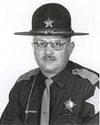
In the early evening of June 8, 1900, in Carmel, Indiana, a day's work in law enforcement turned fatal for 32-year-old Deputy Constable William Frank Carey. That day, Carey, a male, had been deputized by his cousin, the town constable, to assist in the arrest of a traveling evangelist known as Thomas 'Cyclone' Johnson. Johnson, a 32-year-old reverend from Kentucky, had a reputation for being volatile and had assaulted a young man the previous night for heckling him during a revival meeting.
Unarmed, Deputy Constable Carey and his cousin took Johnson into custody for assault and battery at 1st Street and 3rd Avenue NW. They began escorting him to the Jackson & Jeffries livery barn, which was to serve as a makeshift courtroom for his arraignment. A crowd of townspeople, drawn by the commotion, started to gather. As they neared the livery stable, Johnson, who had not been properly searched, produced a concealed. 32-caliber revolver.
In a sudden and violent turn of events, Johnson fired upon Deputy Constable Carey, striking him twice in the neck. One of the bullets severed his jugular vein, and he died within minutes. The chaotic scene escalated as an unidentified citizen in the crowd returned fire at Johnson, killing the evangelist at the scene. In the aftermath of the shootout, though many witnesses were questioned, no one admitted to seeing who shot Johnson, and his shooter was never officially identified.
William Frank Carey, who had served in his role for only a single day, was the first and only law enforcement officer to be killed in the line of duty in the history of Carmel. He left behind a wife and three children, including six-month-old twin sons. Today, a bronze statue in Carmel's Arts & Design District honors the memory of Deputy Constable Carey.