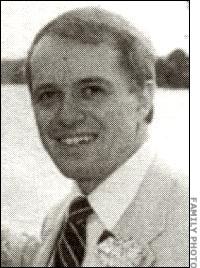
In the small town of Peru, Indiana, the night of August 3, 1992, was shattered by a frantic 911 call. Just before midnight, a woman's voice urgently told the dispatcher, 'It's my husband...There's blood on him.' The call came from Susan Grund, and the man she spoke of was her husband, 47-year-old James Hurst Grund, a well-known local attorney and former county prosecutor.
When police and emergency services arrived at their Summit Drive home, they found James dead on a bedroom sofa, a single gunshot wound through his left eye.
At first glance, the scene appeared to be a burglary that had taken a tragic turn. Suitcases were overturned, their contents scattered, and a jewelry cabinet in a walk-in closet had been ransacked. Susan Grund proposed to the authorities that her husband must have interrupted an intruder. However, investigators soon began to notice inconsistencies. James was found in a comfortable position on the sofa where he often worked while watching television. Before him on the coffee table were bills, checks, and the TV remote. In one hand, he held a tissue, as if he had been about to blow his nose. The peacefulness of his immediate surroundings seemed to contradict the narrative of a violent struggle with a burglar. To one Indiana State Police forensic technician, the disarray in the rest of the room felt unnatural, as if it had been staged.
Suspicion turned towards Susan Grund as the investigation progressed. What initially seemed to be a random act of violence began to look more like a calculated murder. The evidence gathered by law enforcement started to point not to an unknown intruder, but to someone within the home. The staged burglary, meant to deflect attention, ultimately became a key element in unraveling the truth of what happened that night.
The ensuing legal proceedings captivated the community of Peru. The case against Susan Grund was built on the evidence that contradicted her initial account of events. On March 23, 1994, a jury found Susan Grund guilty of the murder of her husband. Three weeks later, the judge sentenced her to 60 years in prison for what was described as the 'calmly, coldly and calculatingly' executed murder of James Hurst Grund.