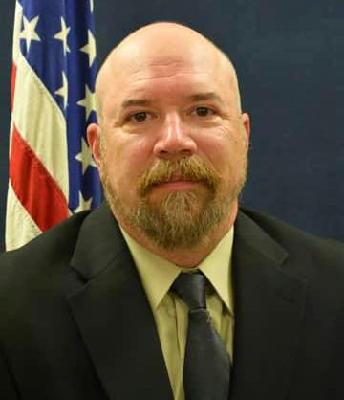
On a summer afternoon in Terre Haute, Indiana, the life of Greg Ferency, a 53-year-old male detective with the Terre Haute Police Department, was violently cut short. Ferency, a 30-year veteran of the force who also served as a federal task force officer with the FBI, was ambushed and killed on July 7, 2021. The man responsible for his death was identified as 44-year-old Shane Meehan of Terre Haute.
The tragic events unfolded outside the FBI Resident Agency building in Terre Haute. Meehan drove his pickup truck to the secure gate of the federal building and threw a Molotov cocktail toward it. Shortly after, Detective Ferency walked out of the building and was confronted by Meehan, who then shot him. Despite being wounded, Ferency was able to return fire. An FBI special agent, hearing the shots from inside, rushed out and engaged in a gun battle with Meehan. Meehan was shot twice but managed to get back into his truck and drive away from the scene. He was later located and taken into custody at a local hospital where he had sought treatment for his gunshot wounds.
Shane Meehan was a figure with a varied and troubled past in the Terre Haute community. He was a retired federal corrections officer and had even run for mayor of Terre Haute in 2019, an election he lost. His background also included a prior arrest in 2013 for trespassing and criminal intoxication, for which the charges were ultimately dismissed. In the wake of the deadly attack on Detective Ferency, investigators searched Meehan's truck, where they discovered a handgun, three additional Molotov cocktails, and more ammunition. While the motive for the violent outburst remained elusive to investigators, Meehan's attorneys later pointed to a significant history of mental health problems, which they argued were a contributing factor.
Following his arrest, Shane Meehan faced a federal indictment that included charges of murder of a federal officer, attempted arson of federal property, and using a firearm during a crime of violence causing death. The legal proceedings that followed were complex. Initially, federal prosecutors announced they would not seek the death penalty, but in a subsequent reversal, they filed a notice of intent to pursue it. However, the trajectory of the case shifted dramatically in November 2024, when a judge ruled that Meehan was mentally incompetent to stand trial. The court found that he was suffering from a mental disease that left him unable to understand the legal proceedings or assist in his own defense. Consequently, Meehan was ordered to be hospitalized for up to four months for psychological evaluation and treatment to determine if his competency could be restored, leaving the future of the criminal case in a state of uncertainty.