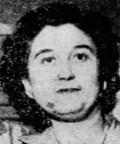
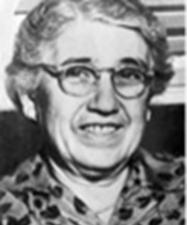
Marian Volpa Pioppi was a 30-year-old white/Caucasian woman from Vineland, New Jersey, part of a close-knit Italian American farming family whose homes clustered along Piney Hollow Road in nearby Franklin Township. On the evening of November 17, 1950, she was at the modest Pioppi farmhouse with her mother, Theresa Biagi Pioppi, and other relatives when the quiet of the South Jersey countryside was shattered by gunfire.
The violence began up the road at the truck farm owned by Marian’s brother-in-law and sister, Michael and Pearl Mazzoli, where her young relative Theresa “Tessie” Ingenito lived with her two small sons, separated from her husband, Ernest.
Ernest Martin “Ernie” Ingenito, Tessie’s estranged husband, had carried anger and resentment into that night. A troubled man with a history of reformatories, a dishonorable discharge from the Army, and time in a military prison, he had never settled easily into domestic life. After marrying Tessie, he worked on her parents’ farm, but clashes with her family, accusations of infidelity, and a bitter separation and custody fight over their sons deepened his fury. In the months before the shootings he immersed himself in target practice and amassed a small arsenal, including a Luger pistol, a Mauser C96, and a. 32-caliber rifle, turning his frustrations into a grim kind of preparation.
Shortly after 8 p.m. on November 17, Ingenito drove to the Mazzoli farm armed with his weapons. Under the pretense of wanting to see his children, he confronted Tessie and her father, Michael Mazzoli, in the farmhouse. The confrontation erupted almost immediately into gunfire. Michael was shot and fatally wounded, and Tessie was struck in the stomach and shoulder as she tried to escape through the adjoining rooms. Panicked relatives scattered; some hid in closets and behind furniture, while others fled into the cold night air, heading toward the sanctuary of the Pioppi home across the road, where Marian and her mother were spending the evening.
Pearl Mazzoli, Marian’s sister, ran from the first scene toward their mother’s house, seeking help. At the Pioppi doorway, 72-year-old Theresa Biagi Pioppi came to see what was wrong. Behind Pearl, Ingenito followed, cutting across the darkened road and up to the front of the small frame house. As Theresa appeared in the doorway, he fired again, striking the elderly woman and dropping her in the entrance. Hearing the commotion, Marian rushed to the door just as the shots were ringing out. Newspapers later described how Ingenito turned the gun on her as she came into view; both women fell almost together, their bodies collapsing in the same doorway that had been the threshold of their family home for decades.
Stepping over their bodies, Ingenito entered the Pioppi kitchen, where still more relatives had tried to take shelter. A nine-year-old girl, Jeannie, was wounded in the gunfire that followed. Elsewhere on the property and back at the Mazzoli farm, the chaos continued as relatives tried desperately to avoid the bullets. Before the night was over, Ingenito would also fatally shoot Marian’s brother, John Pioppi, and her sister Pearl, as well as her brother-in-law Michael. Marian’s own life ended within moments of her mother’s, in the doorway of the family house where generations had gathered for meals, holidays, and ordinary days that suddenly would never come again.
The massacre did not stop in Piney Hollow. After leaving the Pioppi home, Ingenito drove to Minotola, where another branch of the extended family lived. There he shot Frank and Hilda Mazzoli, Tessie’s aunt and uncle, in front of their children; both were gravely injured but survived. By the time the shooting stopped, nine people had been struck by gunfire, five of them killed—Michael Mazzoli, Pearl Pioppi Mazzoli, John Pioppi, Theresa Biagi Pioppi, and Marian herself. Four others, including Tessie, Jeannie, and the Minotola relatives, were left wounded and scarred by the attack.
News of the rampage spread quickly through South Jersey. State police launched an urgent search through the rural roads and pine woods that surrounded Vineland and Franklin Township. Contemporary reports describe a “crazed” war veteran armed with multiple guns, but despite the scale of the violence, the manhunt ended the same night. New Jersey state troopers captured Ingenito and took him into custody; he reportedly talked about the shootings during questioning, though he refused to sign a formal confession. Within days, prosecutors in nearby Woodbury announced that he was being charged with five counts of murder and additional charges for the four people he wounded, moving toward what they called “prompt prosecution” of the man they held solely responsible for the killings. There were no other suspects.
In 1951, Ingenito was brought to trial in Gloucester County. A jury found him guilty of first-degree murder, and photographs from the time show him standing beside an undersheriff as the verdict was read. When jurors recommended mercy, the judge imposed life imprisonment rather than the death penalty. Later proceedings on the remaining homicide counts resulted in additional first-degree murder convictions, but the judge allowed all five life sentences to run concurrently. Under New Jersey law at the time, life sentences still carried the possibility of parole, and after many years behind bars, Ingenito was eventually released, a decision that would later draw renewed public anger when his name surfaced in new criminal charges. For Marian’s family, however, the central fact had never changed: the man who had walked up their steps and fired into their doorway had been arrested, convicted, and sent away for the murders that destroyed their household.
In the days after the shootings, the rural community around Vineland and Franklin Township gathered in shock to bury the dead. Press accounts describe how multiple victims of the “Jersey gunman” were laid to rest together, a shared burial that underscored how deeply intertwined the Pioppi and Mazzoli families had been in life, and how completely the attack had torn through four generations of kin. Photographs from the aftermath captured the Pioppi house with its open doorway, state troopers standing guard over the scene where Theresa and Marian had fallen. Those still images, along with the court records and later true-crime accounts, are almost all that remain to evoke Marian’s final moments: a pregnant aunt rushing to the door of her mother’s home, confronted not by a visiting relative or a neighbor, but by the muzzle flashes that ended her life and forever marked November 17, 1950, as a night of horror in Piney Hollow.