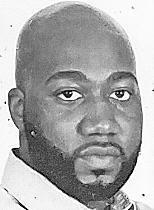
William “Ghost” Albright Jr., a 34-year-old male from Jersey City, was a familiar figure on the streets around Ocean Avenue and Wegman Parkway, moving through the neighborhood in his wheelchair after an earlier shooting had left him paralyzed more than a decade before. He had been using a wheelchair since 2002, when he was shot outside a city bar, and over the years his presence became part of the daily rhythm of the area.
Neighbors and local coverage later described him as well known in the community, someone people recognized and spoke of fondly after his death, remembering him as a good person whose life had been repeatedly touched by violence.
On the night of July 13, 2013, that familiarity made what happened all the more shocking. Albright was out in his wheelchair near Ocean Avenue, close to Wegman Parkway in Jersey City's south side, when gunfire erupted. Accounts compiled later describe him being shot multiple times, including at least one round to the chest, in what witnesses and family members would come to see as a ruthless attack on someone whose disability left him unable to flee or defend himself. Responding officers and medical personnel could do nothing to save him; the violence that had first confined him to a wheelchair now took his life on the same streets where he had long tried to carry on.
The story of his death cannot be separated from the long aftermath of the first shooting that changed his life in 2002. That earlier incident, outside a Jersey City bar, left him reliant on a wheelchair and made him one of many disabled victims of gun violence later documented by advocacy and memorial projects. These projects record not only the date and manner of his killing in 2013 but also the fact that he was targeted again after surviving once already, a detail that resonated deeply with those who knew him. To his family, the loss was compounded by the knowledge that he had already fought a hard, visible battle to live with his injuries. His name appears in online memorials dedicated to people lost to gun violence, where tributes note that he left behind a daughter who would grow up without him, and relatives speak of grief that did not fade with time.
In the immediate aftermath of the shooting, local authorities opened a homicide investigation and treated the killing as a deliberate attack. The location on Ocean Avenue near Wegman Parkway, a busy corridor in that part of Jersey City, meant that detectives looked to the community for leads, hoping someone had seen or heard enough to point them toward whoever opened fire on a man sitting in a wheelchair. Yet, as the months and then years passed, the case did not yield a public arrest. Summaries compiled by disability-rights memorial projects and unsolved-case tracking sites list his killer as “unsolved” and note no identified perpetrator, reflecting the absence of any official announcement that a suspect had been charged.
Later coverage that mentioned Albright did so not because there had been a breakthrough in his case, but because his death still cast a shadow over his family's story. Years after the 2013 shooting, during court proceedings in an unrelated Jersey City murder, a cousin spoke in open court about how the family had already been shattered once when Albright was gunned down in his wheelchair, and how the pain of that killing never really receded. The remarks underscored that, while his name appears now on digital memorial walls and homicide databases, for those closest to him the defining fact remains that someone shot a disabled man on a city sidewalk and walked away, and that no one has yet been publicly held to account. As of the most recent publicly available updates, Albright's murder remains an open, unsolved homicide, with no suspects named and no arrests reported in connection with the shooting that ended his life on July 13, 2013.