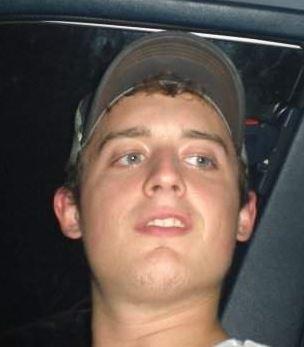
Seth Gunar, a 43-year-old White / Caucasian male, was a disbarred attorney living alone in a three-bedroom house on Cupsaw Drive in Ringwood, New Jersey, a home he had moved into after leaving an apartment in nearby Mahwah and bringing with him a personal collection of guns and rifles. In public records he appears as a man whose professional life had come apart, yet people who knew him later described him as quiet, polite, intellectually sharp, and intensely interested in music, food, history, politics, and complex war-gaming, someone who could quickly master a new game and treat it like an intricate puzzle. That mix of erudition, isolation, and access to firearms formed the backdrop to the winter night when his life ended.
The final day unfolded around the Super Bowl in early February 2014, when Gunar hosted a small gathering at his Cupsaw Drive home.
Among those present was 23-year-old Christopher Coogan of Stony Point, New York, who had recently been arrested in his hometown on a grand larceny charge and whose name had appeared in local police blotters days before he crossed the state line to Ringwood. As the night wore on and the game ended, the party atmosphere curdled; accounts compiled later from news reporting describe an argument breaking out between Gunar and Coogan after the Super Bowl, an exchange heated enough that, behind the closed door of the Cupsaw Drive house, it would escalate into gunfire.
Shortly before 1 a.m. on Monday, February 3, borough police were called to the residence. When officers entered the house, they found both men lying inside with apparent gunshot wounds and no signs of life. A handgun and spent shell casings were recovered at the scene, and investigators arranged for ballistics testing while the medical examiner prepared to conduct autopsies later that day to fix the precise cause and manner of death. From the outset, authorities framed what they had found as a contained and self-contained tragedy: the local police chief publicly labeled the event a murder-suicide and emphasized that there was no ongoing threat to the community beyond the violence that had already occurred inside that house.
As detectives reconstructed the timeline from witness interviews and physical evidence, the working narrative settled into place in official and media accounts. Prosecutors and subsequent summaries of the case describe Gunar as the shooter who fatally wounded Coogan during or after their argument and then turned the gun on himself, transforming a post-game dispute into a double death that shocked both Coogan’s circle in Stony Point and those who had known Gunar at shooting ranges and in legal circles. A later note in a murder-suicide case archive, citing follow-up reporting by The Record, referred to the confrontation as having been sparked by a dispute over missing guns, suggesting that the very objects that had long surrounded Gunar were at the heart of the quarrel that ended in bloodshed. No public account describes any additional assailant; law enforcement statements and contemporaneous coverage consistently present Gunar as the sole perpetrator, and there is no record of any arrests or continuing search for other suspects in connection with the killings. In the public record, the story closes there: two men dead in a quiet New Jersey borough, one remembered both as victim and as gunman, with the unanswered questions about what was said in those final moments sealed inside the Cupsaw Drive house where the shots rang out.