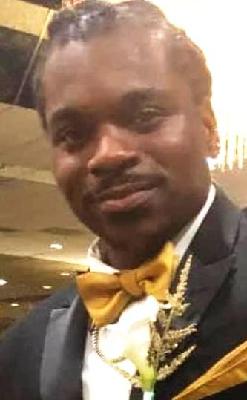
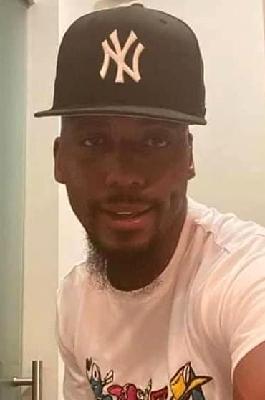
On August 25, 2014, 33-year-old Shaton Cliney, a male resident of Newark, New Jersey, was shot and killed in a burst of gun violence that added one more name to the city’s grim tally of homicide victims. That day’s shooting marked the end of his life in a city already struggling with persistent crime and recurring gunfire, leaving another family and neighborhood stunned in the final days of summer.
His killing came during what local reports described as a brutal stretch for Newark, with several homicides clustered over just a few days. In the week surrounding the shooting, a local businessman was kidnapped and murdered, and another man was stabbed on the street, making Cliney’s death part of a rapid succession of violent episodes that pushed the city’s yearly homicide count higher and deepened a sense of unease across its neighborhoods. Public summaries of the case do not specify the exact block or setting where the gunfire erupted, but they are clear that Cliney was struck by bullets in Newark and did not survive his injuries.
In the immediate aftermath, Newark police and the Essex County Prosecutor’s Office moved quickly to investigate the killing. Within a short time of the shooting, authorities announced they had made an arrest and publicly identified 38-year-old Cornelius Jones of Newark as the suspect. Jones was charged with murder and multiple weapons offenses in connection with the shooting that claimed Cliney’s life, and a judge set his bail at $1 million, underscoring the gravity with which the court viewed the allegations. At the time, officials also released a tip line number and appealed for additional information from witnesses or anyone who might help them understand how the confrontation that ended in gunfire had unfolded.
Even with an arrest announced, the public record leaves many intimate details of the crime in shadow. Available reports focus on the fact of the shooting, the basic identifying details of the victim and defendant, and the swift charging decision. They do not clearly describe the relationship, if any, between Cliney and Jones, nor do they spell out a motive or reconstruct the exact sequence of events that led to the shots being fired. There is likewise no widely accessible reporting that follows the case through trial or sentencing, leaving the ultimate legal outcome of the charges largely undocumented in open sources.
In the years since the shooting, however, Cliney’s name has not entirely faded from public memory. On at least one online forum devoted to unsolved and high-impact violent cases, community members have written about Newark residents and local groups organizing vigils and ongoing campaigns to keep the memory of victims like Cliney alive and to press for lasting change in the city’s response to gun violence. These reflections portray a community that refused to let his death be reduced to a statistic, instead invoking him as one of many lives cut short as Newark wrestled with the persistent, human cost of firearms on its streets.