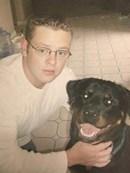
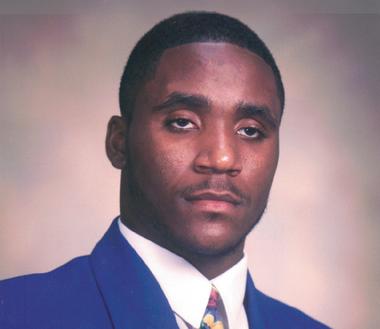
On the morning of January 25, 2016, Victor Bernal, a 19-year-old male from Millville, New Jersey, sat in a car parked outside his family's home in the Country Meadows Mobile Home Park on South 2nd Street while his stepfather cleaned out a minivan nearby. A little after 10 a.m., a neighbor, Antwon D. McGriff, ran up to the vehicle, slammed the butt of a handgun against the car window several times, and then fired into the car, the bullet entering Victor's back as he sat in the driver's seat.
Neighbors called 911, and police and emergency medical crews arrived to find Victor wounded in his upper left back, still in the car where he had been ambushed. He was rushed first to Inspira Medical Center, then medevacked to AtlantiCare Regional Medical Center in Atlantic City for emergency treatment.
The violence did not arise out of nowhere. For weeks, tension had simmered between the two households in the trailer park. Victor's stepfather, Arturo Diaz, had previously worked on McGriff's car, and according to McGriff, a dispute over a $500 repair bill escalated into threats. McGriff later told police that Diaz claimed he had connections to a cartel and could “make a call,” stoking fear and resentment. The night before the shooting, McGriff said, Victor and his brother tried to kick in his door while his family was inside, pointing what he described as two sawed-off shotguns at his home before running off into the darkness. Victor, in contrast, denied any such incident and testified that he had spent that night at his girlfriend's house. At trial he said the friction between him and McGriff came from a different source entirely: he owed McGriff a couple of hundred dollars for marijuana—money he admitted still hadn't paid back.
What happened at the car that morning unfolded in seconds but would be argued over in court for years. Diaz told investigators he watched as McGriff approached the car, banged the gun on the window, and then fired, afterward running back toward his trailer across the street. In his first contacts with police, McGriff denied being involved, but as questioning continued he eventually admitted confronting Victor with the gun. He claimed he only meant to scare him, to “bust the window” and teach him a lesson for the previous night's alleged threats, not to shoot him. According to McGriff, the gun went off accidentally when he struck it against the car window. He said that, panicking, he dropped the weapon at the scene and fled; the gun itself was never recovered.
Victor's injuries were severe. The bullet wound to his back led to an extended hospitalization; he would later testify that he spent about two months in the hospital recovering and that he expected to live with the pain from that single shot for the rest of his life. In the months that followed, the trauma of the shooting and his physical limitations fed into a downward spiral. By the time the case reached trial, Victor was incarcerated on a drug-related charge and openly described his own struggles with addiction that began after he was shot. His life, already altered by a morning confrontation in a quiet trailer park, had veered into a tangle of physical suffering, legal trouble, and the complicated role of being both a victim of violent crime and a witness in a serious felony case.
Investigators quickly focused on McGriff, who was located in the same trailer park, arrested, advised of his rights, and questioned the day of the shooting. A Cumberland County grand jury later returned a seven-count indictment against him, charging first-degree attempted murder, several degrees of aggravated assault, endangering an injured victim, and two second-degree weapons offenses related to unlawful possession of a handgun and possessing it for an unlawful purpose. The charges were explicitly described in court records as arising from a “non-fatal shooting” of his neighbor, underscoring that, despite some later memorial listings, the case proceeded as one in which the victim survived.
When the case finally reached trial in late October 2018, the courtroom became the stage for competing narratives about that January morning. Victor took the stand and identified McGriff as the man who had run up to his car and deliberately pointed the gun at him before firing, rejecting the idea that the weapon had discharged by accident. He recounted the pain, the surgeries, and the lingering effects of the bullet wound. Diaz, his stepfather, testified as an eyewitness, describing how he watched the neighbor cross the street, strike the window, and fire into the car. Under cross-examination, Diaz was confronted with prior statements suggesting that McGriff had said “this is for last night” during the shooting, a detail he tried to distance himself from on the stand, highlighting the small fractures and inconsistencies that defense attorneys would seize upon.
The trial grew even more tangled when prosecutors introduced a letter Victor had signed more than a year after the shooting, in which he purportedly recanted his identification of McGriff as the shooter. The letter, notarized and carefully worded, claimed that McGriff was not the man who had shot him. On the witness stand, however, Victor repudiated the document. He admitted signing it but insisted he had not written it, pointing to a basic factual error—the letter listed the wrong date of the shooting—as proof. He told the jury that a friend of McGriff's had approached him while he was struggling with drug use and offered money if he would sign the recantation, and that he agreed because he “needed money” at the time. The appellate record later described this episode as part of a broader web of “other-crimes” evidence and witness credibility issues that would be hotly litigated on appeal.
For his part, McGriff did not testify at trial, leaving his earlier statement to police as his primary voice in the proceedings. Through that statement and his attorneys' arguments, the defense tried to frame the shooting as an accidental, if reckless, outgrowth of genuine fear—fear supposedly fueled by the alleged door-kicking and shotguns the night before and by months of friction between the two households. The prosecution, by contrast, portrayed McGriff as a man who armed himself and went out to settle a score, striking the car window with the gun, pointing it directly at Victor, and pulling the trigger. In the end, the jury rejected the most serious accusations but still found significant wrongdoing. McGriff was acquitted of first-degree attempted murder and some of the aggravated assault and endangering counts, but the jurors convicted him of simple assault as a lesser-included offense and of both weapons charges: unlawful possession of the handgun and possession of it for an unlawful purpose.
At sentencing, the court looked beyond the single morning in January and into McGriff's criminal history. Finding that he qualified as a “persistent offender,” the judge imposed a discretionary extended term. McGriff received a total sentence of sixteen years in state prison, with eight years of parole ineligibility on the principal weapons count, plus concurrent terms on the remaining counts. Local coverage summarized the outcome as an eight-to-sixteen-year sentence for the 2016 shooting of his neighbor, reflecting both the nominal length of the term and the period before he would first become eligible for parole. On appeal, McGriff argued that evidentiary rulings and comments by the prosecutor had deprived him of a fair trial and that the sentencing court had improperly “double-counted” his record. In 2021, the Appellate Division rejected those arguments and affirmed both his convictions and the sixteen-year extended term, leaving the prison sentence in place.
Even as the courts labeled the incident a non-fatal shooting, some public-facing memorials would later present Victor's story in a different light. National gun-violence remembrance sites list his name under the date of January 25, 2016 in Millville, describing him as “lost to gun violence” and grouping him with others killed or gravely wounded in shootings across the country, while case-summary pages describe his ordeal as “death by force” at the Country Meadows park. Those online tributes, alongside the official court record of a survivor who endured months in the hospital and years of pain, trace two overlapping narratives: one of a young man whose life was irrevocably reshaped by a single shot in a quiet mobile home park, and another of a small city where his name now appears among a growing list of residents marked by gunfire and the long shadows it casts.