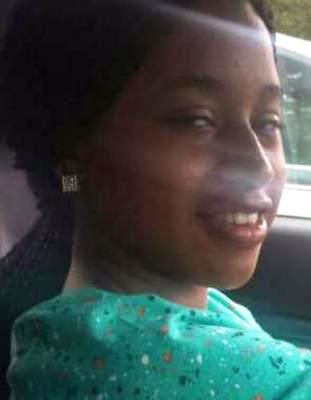
Gabrielle Phillips, an 8-year-old Black / African American girl from Camden, New Jersey, was known to family and neighbors as Gabrielle “Gabby” Hill-Carter, a bright child who attended Camden Community Charter School and was just days away from starting third grade. In her neighborhood off South 8th Street, she rode her bike, played outside near her home, and was described in local accounts as fun-loving, outgoing, smart and kind, a child with a big personality and a future people assumed
would stretch far beyond the narrow city block where she grew up.
On the evening of Wednesday, August 24, 2016, that familiar block became a crime scene. Around 8:30 p.m., as Gabby rode her bicycle and played outside her house on the 900 block of South 8th Street near Spruce, several men converged on the street during what investigators later described as a gang-related ambush aimed at a rival. Gunfire erupted between two groups of people, and Gabby tried to get to safety, at one point fleeing toward a neighbor’s doorway at the same time the intended target ran for the same spot. In the chaos, a single bullet struck her in the head. Neighbors called police and rushed to help; officers arriving on scene found the child gravely wounded on the sidewalk and had her rushed to Cooper University Hospital in critical condition.
For two days her family kept vigil at the hospital while doctors fought to save her life. Reporters later recounted how her father, Will Phillips, turned to social media to share updates, and on Friday, August 26, he posted the message that confirmed their worst fear: Gabby had succumbed to her injuries. Local outlets noted that she died from that single gunshot wound to the head after nearly forty-eight hours on life support. Her death transformed the initial shooting into a homicide investigation and sent waves of grief through Camden. Within hours, neighbors organized a candlelight vigil at the corner where she had fallen; people lit candles in the summer twilight, prayed aloud, and listened as her mother, Maresa Hill-Phillips, spoke through tears about how her child “didn’t deserve” what had happened.
As the reality of the loss set in, attention turned to finding whoever had opened fire. Early on, police and prosecutors described the shooting as gang-related and said the child was an unintended victim. They appealed urgently for information, releasing a general description of a suspect seen fleeing and pleading with residents to come forward despite fears of retaliation. To encourage cooperation, the reward for information began at $12,000, climbed to $24,000, then to $50,000, and eventually reached $76,000 after contributions from the FBI, the Philadelphia 76ers, local political figures, and philanthropists Vahan and Danielle Gureghian, whose company operated her charter school and who also stepped in to cover her funeral expenses. Authorities emphasized that the size of the reward was meant to send a message to anyone who would endanger a child on Camden’s streets that they would be pursued “no matter how far” they ran.
In the days immediately after her death, there were still no arrests, only the knowledge that multiple gunmen had turned a neighborhood block into a battleground. Over time, detectives focused on one young man: 18-year-old Tyhan Brown of Camden. According to investigators and later court records, Brown had been feuding with another man, identified as Amir Dixon, and had allegedly threatened him days earlier by flashing a gun. On August 24, prosecutors said, Brown and others went looking for Dixon, and Brown opened fire on South 8th Street in an attempt to kill him; Gabby was caught in the crossfire. In the midst of the investigation, Brown’s mother, 35-year-old Shakia Land, and his 19-year-old girlfriend, Natasha Gerald of Sicklerville, were each charged with hindering the investigation after detectives said they provided false alibis for a person of interest. While detectives continued to piece the case together and follow up tips fueled by the reward money, Brown left New Jersey with relatives and was eventually tracked to a relative’s home in Clarksville, Tennessee, where U.S. Marshals arrested him on a fugitive murder warrant on September 23, 2016.
Once extradited back to New Jersey, Brown faced a long legal process. He was arraigned on murder and related charges and ordered held on $1.5 million bail. Prosecutors publicly described how, as gunshots rang out, Gabby ran toward a neighbor’s home in an effort to get away and was struck when Dixon, the intended target, ran for the same doorway. They framed the shooting as the culmination of an ongoing dispute between Brown and Dixon rooted in gang tensions in the Centerville neighborhood and said they believed other people had been involved in the gunfight, even as Brown became the central defendant. Court filings and news reports noted that authorities continued to seek additional suspects linked to the crossfire, but in terms of the killing itself, Brown remained the only person charged with homicide, while those around him faced hindering and witness-tampering counts.
Two years after the shooting, the case finally went before a jury. At trial, prosecutors laid out a narrative in which Brown, armed and angry, went after Dixon on that August evening, firing several shots on the residential block and setting off the barrage that ended Gabby’s life. Witnesses testified about the earlier threats, the sound of gunfire, and the child falling in front of her home. Cell phone analysis placed Brown in the area of the shooting despite his earlier claims that he had been in another town. The jury ultimately convicted him of conspiracy to commit murder, attempted murder of Dixon, aggravated manslaughter in Gabby’s death, and multiple weapons offenses. In August 2018, a Camden County judge, John T. Kelley, sentenced Brown to an aggregate 51-year prison term, including 28 years for aggravated manslaughter, a consecutive 16-year term for attempted murder, and an additional seven years for unlawful handgun possession, with a parole ineligibility period calculated at roughly four decades. Family members spoke in court about the emptiness her absence left behind, describing how they missed her laugh most of all, while Brown maintained that he had been wrongfully convicted even as he was led away.
The investigation rippled outward beyond Brown’s trial. Land and Gerald’s hindering charges underscored how the adults closest to him had tried to shield him in the chaotic weeks after the shooting. Later, another Camden woman, Quiaisia Carroll, admitted in court that she had attempted to intimidate a key witness by posting threatening messages and images on social media during the case; her bid to withdraw that guilty plea was denied, and she received a sentence of time served and probation for witness tampering and drug offenses, a reminder of the pressures that swirl around high-profile street cases. Even with Brown serving a 51-year sentence, the story did not simply end. Articles chronicled how Gabby’s mother gave birth to a baby boy just a week after the killing and named him King Gabrielle in honor of the child she had lost, and how staff at her charter school and residents across Camden invoked her name when they spoke about the need to protect children from gun violence. In that way, the shooting on South 8th Street became more than an isolated act of crossfire; it became a symbol of a community’s grief and of its determination that a child’s life on a summer evening should never again be interrupted by the crack of guns.