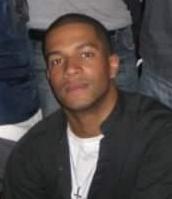
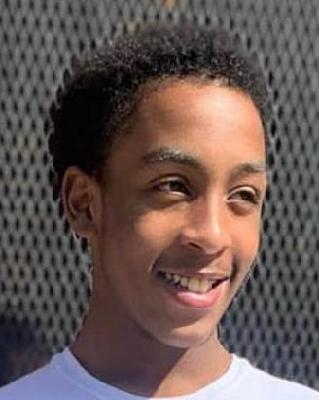
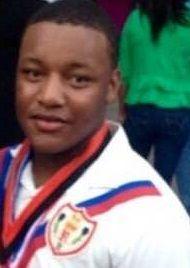
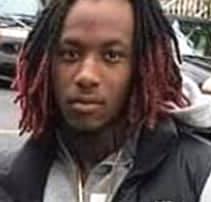
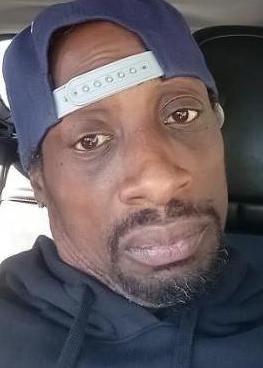
Kamal McCord, a 19-year-old Black / African American man from Jersey City, New Jersey, lost his life to gun violence on the night of May 2, 2018, after gunfire rang out along Merseles Court. Around 9:50 p.m., police were called to the block with a report of a male who had been shot. Officers arrived to find McCord inside a residence at 21 Merseles Court, unresponsive and suffering from a gunshot wound to his torso.
Despite efforts by first responders, he was pronounced dead at the scene at approximately 10:00 p.m., and the regional medical examiner later ruled his death a homicide caused by a gunshot wound to the chest. Outside, near 17 Merseles Court, officers also discovered another victim with a gunshot wound, underscoring how sudden and chaotic the attack had been in that residential pocket of Jersey City.
Behind the brief, stark language of official reports was a young man deeply rooted in his community. Obituaries describe McCord as the loving son of Terry McCord and Tracy Simmons, and a cherished brother to Rashee, Jeremy, Tyrone, and Traci Simmons, as well as a grandson of Dorothy Henderson and Minnie Milteer, surrounded by an extended family and many friends who cared for him. Funeral services were held at Tapestry Church on Glenwood Avenue in Jersey City, where mourners gathered to say goodbye, view his body, and share memories. In online tributes and memorial pages, people remembered him as gentle and kind, someone whose smile could light up a room and whose presence left an imprint on those who knew him. Some recalled him as laid-back and easy to be around, and noted that he had worked at UPS, painting a picture of a young adult beginning to carve out his path before it was violently cut short.
In the early days after the shooting, the case hung heavily over the neighborhood. News reports at the time emphasized that a teen had been killed and another person wounded, and that, initially, there were no arrests. Authorities outlined the basic facts—the time of the 911 call, the address on Merseles Court, the medical examiner’s ruling—but many questions remained unanswered for residents who had heard the shots or seen the flashing lights that night. As days passed, the loss was marked by online candles, condolence messages, and calls for justice, while investigators from the Hudson County Prosecutor’s Office continued to piece together what had happened inside and outside those nearby addresses on Merseles Court.
Less than two weeks after the homicide, the investigation broke open publicly. On May 14, 2018, authorities announced that Omar Williams, then 20, had surrendered with his attorney and been charged in connection with McCord’s killing. Williams faced charges of murder, two counts of possession of a weapon, and two counts of unlawful possession of a weapon. By that time, police had already arrested two other men: Kai Robinson, also 20, and Lasaun Rose, 24. The charging announcement reiterated the grim scene of May 2—McCord found lifeless inside 21 Merseles Court with a gunshot wound to the torso and another victim discovered outside—while making clear that investigators believed multiple people shared responsibility for the deadly gunfire. The case, however, was described as still under investigation, suggesting that detectives were continuing to refine how each suspect’s actions fit into the events of that night.
Over the next few years, the focus shifted from the streets of Jersey City to the courtrooms of Hudson County. On January 7, 2020, Williams, Robinson, and Rose each entered guilty pleas to aggravated manslaughter in the first degree, with the understanding that the charge would be treated as second degree for sentencing in Rose’s case. Then, on February 4, 2021, Superior Court Judge Patrick J. Arre sentenced Williams, then 23, to 10 years in New Jersey state prison and Robinson, also 23, to five years for their roles in McCord’s death. Both sentences were imposed under the state’s No Early Release Act, requiring that they serve 85 percent of their terms before becoming eligible for parole. Prosecutors and subsequent coverage reiterated the basic facts one more time: the late-night call on May 2, 2018, the address on Merseles Court, the fatal gunshot wound to the chest, and the wounded second victim, now framed against the acknowledgment in court that the violence of that night amounted to aggravated manslaughter. Rose, by then 28, was noted as awaiting sentencing following his own plea, a final procedural piece in a case that had already seen years of grief and legal proceedings.
What remains in the public record is a trail that runs from a small stretch of Merseles Court to a church packed with mourners and finally to a series of courtroom hearings where those accused accepted responsibility through plea agreements. The official words—charges, counts, sentences—sit alongside the softer, more personal language of memorials that describe a caring son, sibling, and friend. Together they tell the story of a life ended in a burst of gunfire, a community that gathered to remember, and an investigation that ultimately led to the arrests, convictions, and prison terms of the men held responsible for the killing.