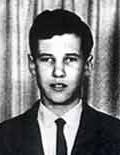
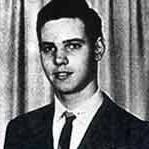
On a summer day in 1968, Richard Carl Robison, a 42-year-old male, was vacationing with his family in their cottage in Good Hart, Michigan, when their lives were tragically cut short. The Robison family, including Richard's wife Shirley, 40, and their four children, Richard Jr., 19, Gary, 16, Randall, 12, and Susan, 7, were all found deceased inside their summer home on July 22, 1968, nearly a month after they were believed to have been killed. The discovery was made by a caretaker who was investigating a foul odor emanating from the property. The doors to the cottage were locked, and a note on the door indicated the family would 'Be Back By 7/10,' which led to the delay in their discovery.
The scene inside the cottage was horrific. Investigators determined that the murders likely occurred on June 25, 1968. Richard Robison had been shot multiple times with both a. 22-caliber rifle and a. 25-caliber pistol and also suffered blunt-force trauma to the head. The other family members were also shot, and some were bludgeoned with a hammer. The initial shots are believed to have been fired from outside through a window, after which the killer entered the home to murder the rest of the family. The brutality of the crime sent shockwaves through the quiet Michigan community and was considered the worst mass murder in the state's history at the time.
The investigation quickly focused on a prime suspect: Joseph Raymond Scolaro III, a 30-year-old business associate of Richard Robison. The motive appeared to be financial, as it was discovered that Scolaro had been embezzling a significant amount of money, estimated to be around $60,000, from Robison's advertising business. It is believed that Richard Robison had uncovered the embezzlement shortly before the murders. Police theorized that a heated phone call between Robison and Scolaro about the missing funds may have triggered the violent events that followed. Scolaro could not provide a solid alibi for his whereabouts on the day of the murders and failed multiple polygraph tests. Further circumstantial evidence, including shell casings found at a shooting range frequented by Scolaro that matched those at the crime scene, pointed to his guilt.
Despite the mounting evidence, charges were not immediately brought against Scolaro. However, in March 1973, as prosecutors were preparing to issue an arrest warrant for six counts of first-degree murder, Joseph Scolaro took his own life. He used a gun identical to one of the weapons used in the murders. In a suicide note, Scolaro denied his involvement in the killings, stating, 'I'm a cheat but not a murderer.' Due to Scolaro's death, he was never formally charged, and the case of the Robison family murders remains officially unsolved. However, investigators and many familiar with the case are convinced of his guilt.