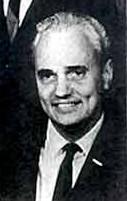
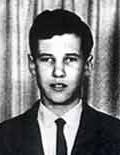
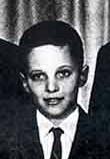
In the summer of 1968, the tranquil resort community of Good Hart, Michigan, became the setting for a horrific crime that claimed the lives of an entire family. Richard Craig Ritchie Robison, a 42-year-old male, along with his wife Shirley, 40, and their four children, Richard Jr., 19, Gary, 16, Randall, 12, and Susan, 7, were brutally murdered in their secluded Lake Michigan cottage. The family, on vacation from their home in Lathrup Village, had been shot and, in the cases of Richard Sr. and his youngest daughter, also bludgeoned with a hammer. Their bodies remained undiscovered for nearly a month, until a neighbor reported a foul odor emanating from the residence on July 22, 1968. The discovery of the six decomposing bodies sent shockwaves through the quiet community and launched one of Michigan's most infamous murder investigations.
The investigation into the mass murder was extensive, involving both the Michigan State Police and the Emmet County Sheriff's Office. Robbery was quickly ruled out as a motive, as valuable items were left untouched at the scene. Investigators believed the crime was premeditated and committed by someone known to the family. Suspicion soon fell upon Joseph Raymond Scolaro III, a 30-year-old business associate of Richard Robison. The motive appeared to be financial; it was discovered that Scolaro had been embezzling a significant amount of money from Robison's advertising business. It is believed that Richard Robison had uncovered the embezzlement and confronted Scolaro shortly before the murders.
Circumstantial evidence against Scolaro was substantial. He had no alibi for a 12-hour period on the day the family was believed to have been killed. Shell casings found at a firing range frequented by Scolaro matched those discovered at the crime scene. Despite the strong evidence, the Emmet County prosecutor at the time declined to issue an arrest warrant, citing a lack of direct physical evidence and the absence of the murder weapons. The case grew cold for several years, but investigators remained convinced of Scolaro's guilt.
In March 1973, the investigation was reopened, and authorities were preparing to indict Scolaro for the six murders. Upon learning of his impending arrest, Joseph Scolaro took his own life. He left a suicide note in which he admitted to being a 'cheat' but denied being a murderer. Despite his denial, law enforcement officials, past and present, are confident that Scolaro was the perpetrator of the Robison family murders. Due to Scolaro's suicide, no arrests were ever officially made, and the case technically remains open, though it is widely believed to be solved.