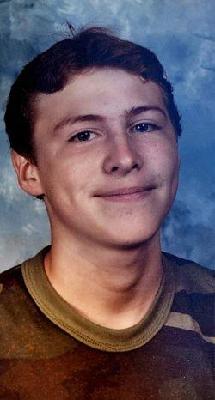
Robert Crenshaw, a 27-year-old Black man, died on January 8, 1989, in Albion, Michigan, after a shooting that left the town with more questions than answers and a family suddenly forced into mourning. In the brief public record that survives online, the death is consistently framed as gun violence in Albion, marked more by the fact of its happening than by a widely published, step-by-step account of how the night unfolded.
Not long before that winter night, Crenshaw had made a move that sounded like the beginning of a quieter chapter. Reported at the time as a recent relocation from Kalamazoo back to Albion to live with his mother around Christmastime, he was described as someone who had been working and trying to steady his footing—having held jobs that included Manpower in Kalamazoo and Union Steel Products in Albion. The picture painted is of a return home, close to family, in a small community where familiar streets can feel like shelter—until they don’t.
When the violence came, it was tied in contemporaneous reporting to a short chain of places and people rather than to a clear, publicly narrated motive. One account says Crenshaw was with a person identified as Lesley and two other acquaintances at a McDonald’s in Albion when the shooting took place, and that a handgun was later found in a vehicle connected to that thread of events. The same reporting indicates that police were never able to question one key individual, a detail that hints at how quickly the situation became complicated—witnesses dispersing, stories colliding, the most important answers just out of reach. Another account from the same newspaper record states that Lesley was charged in connection with the shooting death.
In the days that followed, Albion did what towns do when tragedy interrupts ordinary life: it gathered, it scheduled services, it tried to make sense of the senseless in church pews and quiet conversations, while the legal system moved in its own colder rhythm. Crenshaw was laid to rest in Albion, at Albion Memory Gardens, where the dates on the stone set the boundary of a life and leave everything else—hopes, routines, relationships—to be remembered by people who knew him beyond a headline.
Beyond the charge named in that reporting, widely available online sources do not clearly preserve what came next in a way that can be confidently retold as a complete courtroom arc—no readily accessible, specific public summary of a trial, verdict, or sentence tied to this death appears in the open web material surfaced here. What remains most visible is the stark fact of the loss, the snapshot of an investigation that pointed toward Lesley, and the sense of a case that—at least in the easily found record—fades into silence after the first burst of attention, leaving readers to imagine the long aftermath carried by the people of Albion and by the family Crenshaw left behind.