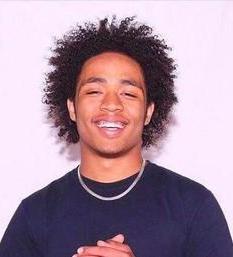
Dajuan Byrd was killed on Sunday, September 11, 2016, in Saginaw, Michigan. He was 19 years old and male. Investigators said he was shot while riding his bicycle, another young life interrupted in the open—no warning, no chance to get away, just a sudden burst of violence and the awful quiet that follows.
In the days after his death, Michigan State Police worked to understand whether his killing was part of something larger. They pointed to a chilling resemblance to another case from the same week: 15-year-old Keyshawn Abraham had been shot while riding his bike on September 4, only seven days earlier. A forensic analyst, digging through social media, found a photo tying together the victims’ circles—Byrd and Abraham pictured alongside 14-year-old Tanorris Lee. Police kept the image close, choosing not to release it publicly while they tried to determine what it meant and who might be connected to the shootings.
Even as they searched for the person who pulled the trigger in Byrd’s case, investigators acknowledged the frustrating reality of where the leads stood at the time: no arrests had been made in either Byrd’s killing or Abraham’s shooting. Meanwhile, Lee was charged in a different incident involving another teen who was shot while riding a bike but survived—an overlapping pattern that made the week feel even darker, and made the questions around motive and retaliation harder to ignore. Lt. David Kaiser of the Michigan State Police urged anyone who might have seen something—even something that felt small—to come forward, emphasizing that one missing piece could be enough to finally fit the puzzle together.
Away from the investigation and the speculation, the story of who Byrd was in life came through in the memories shared by those who loved him. He was born October 24, 1996, in Saginaw, attended Bridgeport High School, played football, and graduated with the class of 2015. Friends and family remembered him as a fun-loving jokester who kept people laughing, someone drawn to rapping and music videos, someone who wanted to be surrounded by family and friends. The days after his death became a procession of grief—names gathered, condolences offered, and a community left trying to make sense of how a teenager’s ordinary ride could end in tragedy.