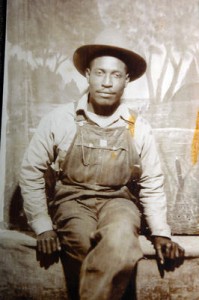
In the rural landscape of Liberty, Mississippi, Herbert T. Lee, a 49-year-old Black dairy farmer and father of nine, was a man of quiet determination. Though he had little formal education, he and his wife, Prince Estella Melson, built a successful life on their farm. His commitment to justice led him to become a charter member of the Amite County NAACP and a key figure in the local voter registration movement.
In the summer of 1961, Lee used his car, a rare asset for a Black man in his community, to drive Student Nonviolent Coordinating Committee organizer Bob Moses to meet with potential Black voters, an act of defiance in a deeply segregated society.
On the morning of September 25, 1961, Lee drove his truck loaded with cotton to the Westbrook Cotton Gin. There, he was confronted by E.H. Hurst, a white state legislator who had grown up on a neighboring farm and had known Lee for most of his life. In front of several witnesses, Hurst, armed with a pistol, shot Lee in the head, killing him instantly. Lee's body was left on the ground for two hours before a funeral home would agree to take him.
Hurst claimed he acted in self-defense, alleging that Lee had attacked him with a tire iron during an argument over a debt. The sheriff and a hastily assembled coroner's jury accepted this account. Black witnesses at the scene were coerced into corroborating Hurst's story, and he was cleared of wrongdoing the same day. The day after the killing, the district attorney did charge Hurst with murder, but during a preliminary hearing, the judges declined to send the charges to a grand jury, and Hurst was released.
The official story, however, was widely disbelieved by those who knew of Lee's civil rights work. They maintained that his murder was a direct result of his efforts to register Black voters. The FBI opened an investigation after receiving a complaint that the killing was racially motivated. One of the witnesses, a Black man named Louis Allen, later recanted his testimony to federal investigators, admitting he had lied out of fear after being intimidated. For his willingness to tell the truth, Allen endured years of harassment and threats. On the night before he planned to leave Mississippi for safety, he was murdered in his driveway in 1964. No one was ever convicted for the murders of Herbert T. Lee or Louis Allen. E.H. Hurst died in 1990.