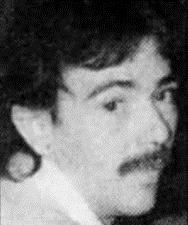
On the night of March 5, 2016, Terrance Kenyatta Durr, a 35-year-old Black man from Jackson, Mississippi, crossed paths with violence at a neighborhood gas station that would end his life. Obituaries later recorded that he had been born on July 2, 1980 and spent his life in Jackson, attending Jim Hill High School and marrying a woman named Robin. Online memorials describe him as an outgoing, funny man who loved to make others laugh, a devoted “paw paw” with three children and a working life
tied to painting jobs, remembered more for his character than for any troubles he may have faced.
That Saturday was already dark for the city before Durr ever pulled into the Fuel Time gas station on Siwell Road in south Jackson. Earlier in the evening, two men had been shot and killed while cooking in their yard on South Westhaven Drive, a dog also struck by gunfire, signaling a night when ordinary routines suddenly collided with lethal force. Later, shortly before 11 p.m., police say Durr was at the gas station when an argument broke out between him and another man. Witnesses and investigators would later tell reporters that the disagreement escalated quickly; at some point, the other man produced a gun and opened fire. Durr was hit multiple times, including in the side, and collapsed as panic spread through the station’s lot. A 15-year-old boy there that night was shot in the hand, caught in the same burst of bullets that cut Durr down, transforming an everyday errand stop into a crime scene edged with police tape and shell casings.
Security cameras mounted around the pumps captured grainy images that would shape the investigation. Jackson police later said the footage showed a Black man dressed in dark clothing, a pistol clearly visible in his hand, moving across the station’s pavement alongside a white woman wearing a red hooded sweatshirt; both were considered people police needed to talk to about what happened that night. Detectives soon identified the suspected gunman as 29-year-old Kendrick Morris. According to police accounts summarized in local reporting, Durr and Morris were involved in an altercation at the station when Morris drew the handgun, shot Durr multiple times, and then fled the scene on foot into the surrounding south Jackson streets.
Within days, Jackson Police Department officials announced that Morris had been formally charged with one count of murder in Durr’s death and one count of aggravated assault for the wounding of the teenager. A warrant was issued for his arrest, and the department, along with local media, circulated his name and image, urging anyone who recognized him or knew his whereabouts to come forward. Yet the appeals did not immediately yield an arrest. Coverage in the weeks after the shooting repeatedly noted that Morris was “still at large,” a charged but distant figure whose absence hung over the grieving family and a rattled city.
While detectives worked their leads, Durr’s family prepared to bury him. Funeral announcements list services for him on March 12, 2016, at Emmanuel Temple Independent Church in nearby Byram, under the care of Jackson Memorial Funeral Service. The dry language of those notices—times, addresses, the bare facts of birth and death—stands in stark contrast to the way friends and relatives remembered him in online condolences and candle-lit tributes: a man whose “time on this earth was way too short,” whose kindness and sense of humor filled rooms, and whose children and loved ones would have to navigate life without him.
Durr’s killing became part of a grim cluster of violent incidents that week which prompted Jackson officials to publicly reckon with a rise in crimes against persons, even as overall crime statistics were touted as improving. City leaders spoke about the need not only to respond to shootings like the one that claimed Durr’s life, but to address the deeper conditions that made such encounters so common in certain neighborhoods. Years later, when the original reporting on his case was republished in a broader review of unsolved or unresolved violent crimes, it still described Kendrick Morris as charged with murder and aggravated assault and noted that he remained at large, with police again asking for the public’s help. In the public record, there is no widely reported arrest, trial, or conviction connected to Durr’s death, leaving his story frozen at the moment when an argument at a gas station turned fatal and the man accused of pulling the trigger vanished into the city’s shadows, while the family he left behind continued to mourn without the closure that justice might have brought.