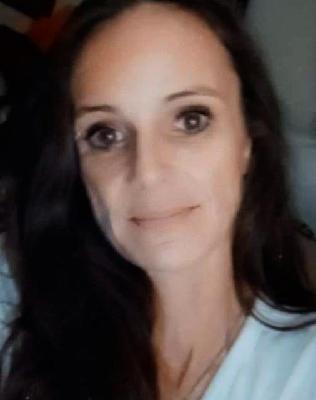
In early August of 2016, Paula Hopkins, a 44-year-old woman from the rural community of Clara in Wayne County, Mississippi, was still woven into the quiet rhythms of the place where she had been born and raised. She had come into the world on May 24, 1972, in nearby Waynesboro, the daughter of J.C. and Jewel Hopkins, and much of her life had unfolded within a short drive of that town.
She belonged to Buckatunna Freewill Baptist Church, the kind of congregation where families knew each other across generations, and she worked as a store clerk at Buckatunna Grocery, a small local business that put her in daily contact with neighbors, friends, and passing regulars who came to recognize her behind the counter. Her life, as remembered in memorials and obituaries, was firmly rooted in family, faith, and routine in this corner of Mississippi.
By the summer of 2016, that seemingly ordinary life sat beside deep personal strain. Paula had married and taken on the surname Cochran, and she and her husband Jonathon were in the middle of a divorce, a process that had brought tension into their home. They lived on Big Creek Road outside Clara, a rural address surrounded by woods and country roads rather than city streets. Those who knew the couple later told reporters they were still in shock at how quickly things escalated from domestic conflict to irreversible tragedy, and they spoke of children and grandchildren suddenly left without parents and grandparents in a single afternoon.
On Saturday, August 6, 2016, events inside the Cochran home moved with frightening speed. Around 2 p.m., Wayne County authorities were dispatched to 347 Big Creek Road after a 911 call from one of Jonathon’s close friends. The friend told dispatchers that Jonathon had admitted to shooting Paula and was threatening to shoot himself. When Sheriff Jody Ashley and deputies arrived, they were told that Jonathon was still inside the house, armed with a gun, and that his wife had already been shot several times. The house, once an ordinary family residence, suddenly became the center of a tense and desperate effort to prevent further loss of life.
Deputies tried to reach Jonathon by phone, urging him to come out and surrender. Sheriff Ashley later recounted how one of his chief deputies, who personally knew Jonathon, joined the effort to talk him down. From outside, they pleaded with him to step away from the weapon and walk out the door. In those moments, there was still a fragile hope that, even though Paula had been gravely wounded, the standoff might end without another death. According to family members, Jonathon spoke to a relative during this period and asked that someone pray for his children and grandchildren, acknowledging, in his own way, that what he had done could not be undone and that he was about to leave them behind.
Then, during the negotiations, a single gunshot rang out from inside the house. Deputies, fearing the worst, entered the home. Inside they found Paula already dead from multiple gunshot wounds and Jonathon dead from what investigators described as a self-inflicted gunshot wound. The couple’s children were not at home during the incident, a small mercy amid the devastation. On scene, authorities characterized the case as a murder-suicide, with Jonathon identified as the sole perpetrator. Later, national gun-violence memorial records would list Paula as a victim lost to gun violence in Clara on August 6, 2016, noting plainly that her husband had killed her and then himself as their marriage was dissolving.
In the days that followed, the focus in public records and memorials shifted from the crime itself to the woman whose life had been cut short. Funeral arrangements were made through Freeman Funeral Home in Waynesboro, with visitation held at Buckatunna Freewill Baptist Church and services conducted there on August 11, 2016. Friends, relatives, and fellow church members gathered to remember Paula not as the victim in a headline but as a daughter, a mother, and a familiar face behind the counter at the local grocery store. She was laid to rest with other members of the community, a fixture of a small town whose end came not on a distant highway or in a city far away, but in her own home.
From a law-enforcement standpoint, the case effectively closed as soon as investigators confirmed that Jonathon had died at the scene. With the identified shooter deceased, there were no arrests, no charges filed, and no criminal trial. The official narrative, repeated in news coverage and memorial summaries, is consistent: Paula was shot multiple times by her estranged husband in their home, and he then turned the gun on himself. What remains is not a list of suspects or a lingering investigation, but the quieter aftermath of grief—children and grandchildren growing up with the knowledge of what happened on that August afternoon, and a small Mississippi community left to reconcile the image of a familiar couple on Big Creek Road with the violence that ended both of their lives.