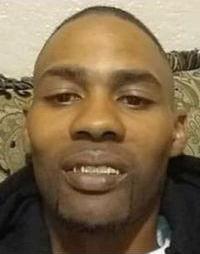
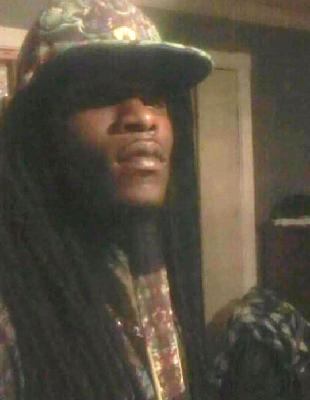
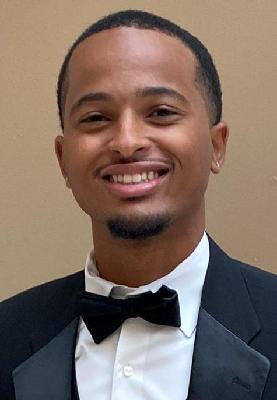
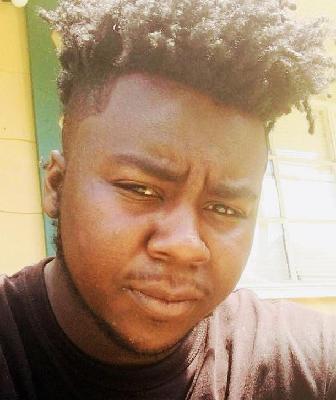
Byron Demtris Burns Sr., a 33-year-old Black African American man from Jackson, Mississippi, was remembered by those who loved him as “Bay Bay,” a humbled and super-cool presence whose easy smile anchored family gatherings and neighborhood friendships. He grew up in Jackson, attended Lanier High School, and, as an adult, worked in construction, eventually becoming self-employed with a small outfit known as Empire Construction. He was a father of three, the “Sr.”
in his name a quiet testament to the next generation following him, and online tributes from relatives and friends describe a man whose life was woven tightly into the fabric of his community.
In the early hours of Sunday, January 24, 2021, that life was violently cut short. Around 1 a.m., Jackson police were called after someone dropped a gunshot victim off at Baptist Medical Center; hospital staff quickly transferred him to the University of Mississippi Medical Center, where he was pronounced dead. Investigators identified the man as Byron Burns and traced the shooting back to the area of Bailey Avenue, a corridor in Jackson that residents already associated with tension and late-night danger. The official incident listing in a national gun-violence database narrows the scene to the intersection of Bailey Avenue and Mayes Street, reflecting the clinical way such tragedies are reduced to coordinates and dates, even as they shatter real lives.
That night was a grim one for Jackson. Police were already reeling from a string of shootings across the city, including the death of 25-year-old Kiana Singleton in a drive-by attack on I-220 and a separate carjacking in which another man was shot and his white Mitsubishi Galant stolen. Against this backdrop of chaos, Burns’s case began like so many others: flashing lights outside emergency rooms, detectives canvassing Bailey Avenue for shell casings and witnesses, and a public plea for anyone with information to come forward. The man who had been quietly working construction and raising his children was suddenly another name in the city’s growing tally of homicides, his final moments marked in reports simply as “Status: Killed.”
Behind the scenes, though, investigators kept pushing. In the incident record compiled by gun-violence researchers, a 31-year-old man named Jeremy Johnson appears not as a victim but as the listed subject-suspect in Burns’s killing, noted as “unharmed, arrested.” Separately, a social-media update from a Jackson television station, citing the U.S. Marshals Service, reported that Johnson was arrested in Texas in connection with the January murder of Burns, suggesting that the search for him had led law enforcement beyond Mississippi’s borders. Taken together, these public records show that authorities did more than open a file—they found a suspect and took him into custody. What remains unclear in the available information is what happened afterward: there is no widely reported record of a public trial, verdict, or sentence tied to Burns’s name, leaving the ultimate legal resolution of the case opaque to anyone outside the court system and the families involved.
While investigators and federal officers chased leads, Burns’s family prepared to lay him to rest. An online memorial notes that he died in Jackson on January 24, 2021, and that his remains were cremated, a final, quiet act after the violence that claimed him. At Unity Fellowship Baptist Church, the congregation extended formal condolences to his mother, Jacqueline, acknowledging her loss and referring to him with the respectful “Mr. Byron Burns, Sr.,” language that carries the weight of both love and grief. On the National Gun Violence Memorial page dedicated to him, mourners lit more than a hundred virtual candles and added small but intimate details—his nickname, his children, his work—that resist the flattening effect of crime statistics. Each remembrance insists that Byron Burns was more than a victim at an intersection on Bailey Avenue; he was a son, a father, a friend, and a worker whose death left an empty space at dinner tables and in Jackson’s streets that no arrest record can ever fully explain or repair.