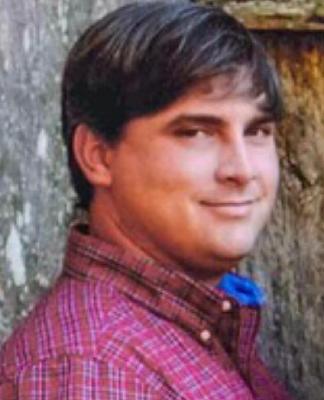
Tony “Tommie” Owens, a male resident of Houston, Mississippi, was killed by gunfire on December 15, 2022, along Airport Road on the edge of the small Chickasaw County town he called home. On that cold December day, what began as another ordinary afternoon in a quiet community ended with sirens and flashing lights cutting through the stillness, as first responders converged on a scene that would soon be marked as yet another entry in the grim roll of lives lost to gun violence. Owens was recorded as an adult, and official records list his death simply and starkly: he was shot and killed in Houston, Mississippi, on that date.
News of the shooting spread quickly through the town. Airport Road, normally just a stretch of pavement locals travelled without a second thought, became the focus of a police investigation, cordoned off as officers documented the scene and collected evidence. Owens’s death was entered into national databases that track gun homicides, identifying him by name and noting his status as a victim who died from his wounds. Those same records, sparse but chilling, list the incident as a single-victim shooting in Houston, Mississippi, on December 15, 2022, tying his final moments to that specific strip of road.
In the weeks that followed, the community’s grief began to surface online. A memorial page dedicated to Tony “Tommie” Owens was created on a national gun-violence remembrance site, where friends, family, and strangers could symbolically “light candles” in his memory. The page identifies his full name, confirms the date and location of his death, and invites people to share memories, photos, and details about his life—evidence that behind the bare official language of “lost to gun violence” stood a real person whose absence was deeply felt. Over time, dozens of virtual candles were lit for him, each one a small sign that those who knew him or simply read his name were unwilling to let him be forgotten.
Investigators did not close the file quickly. Law-enforcement records connected to the case show that attention soon focused on a specific individual. In the incident report preserved in a national gun-violence archive, a subject–suspect is listed by name: Marika Gates. She is recorded there as an adult who was unharmed in the incident and, crucially, as having been arrested in connection with the shooting that took Owens’s life. That entry sits alongside the line identifying Owens as the victim who was killed, placing both of their names within the same December 15, 2022 occurrence in Houston, Mississippi, and marking the point at which the investigation shifted from an open question to a case with a named suspect in custody.
Local coverage, preserved through references in memorial and archival sites, indicates that the case was later presented to a Chickasaw County grand jury, which returned an indictment charging a woman with second-degree murder in connection with the Houston shooting death. Although the full text of that news report is not readily accessible, its headline makes clear that prosecutors believed they had enough evidence to pursue a serious homicide charge rather than treating the shooting as an accident or minor offense. The move from an arrest to a grand jury indictment marked a turning point for Owens’s loved ones, signaling that the criminal justice system was formally acknowledging his death as a crime for which someone would have to answer in court.
Public corrections records show how that prosecution ultimately concluded. The Mississippi Department of Corrections lists a woman named Marika Gates as having been convicted in Chickasaw County of manslaughter, with a sentence date of September 13, 2024, and a fifteen-year term of imprisonment. Her conviction is specifically recorded as “Offense 1: Manslaughter,” with Chickasaw County noted as the county of conviction and a tentative release date set in 2038. The timing, location, and nature of the offense align with the earlier arrest in Owens’s case, indicating that the original homicide charge was resolved in court as a manslaughter conviction rather than second-degree murder. Today, according to those same records, Gates is serving her sentence in the state prison system, while the community in Houston lives with the knowledge that the shooting on Airport Road did not fade into obscurity but instead resulted in a felony conviction and a lengthy prison term.
For those who knew Tony “Tommie” Owens, the legal outcome can offer only a partial sense of closure. His name persists in databases that track the toll of gun violence and on the online memorial where candles continue to be lit in his memory. The case stands as a story of a small town shaken by a sudden act of violence, a methodical investigation that identified and arrested a suspect, a grand jury that elevated the matter to a serious homicide charge, and a final judgment that sent the defendant to prison for years. What remains, beyond the legal documents and digital records, is the quieter narrative of a life cut short in Houston, Mississippi, and a community still living with the absence left behind on that December day in 2022.