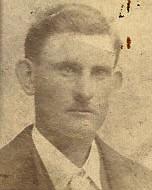
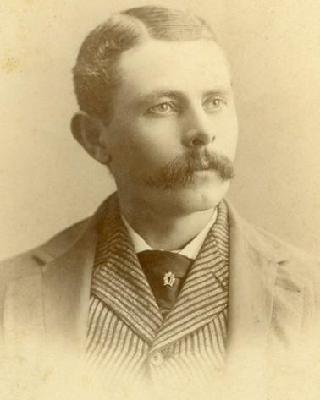
Deputy U.S. Marshal Luther “Lute” Houston, a male lawman from Chickasha in Oklahoma Territory, met his death in the autumn of 1902 while pursuing one of the most feared outlaw gangs on the frontier. He came from a prominent Chickasha family and moved in circles where law, land, and livestock were tightly intertwined, making him a natural choice when federal authorities needed someone who could slip into the world of ranchers and horse traders without drawing too much attention.
When the Bert Casey gang of horse thieves grew into a regional menace, raiding stock and leaving bodies in their wake, Houston set out from Chickasha with several horses, outwardly on routine business but in reality bound toward the Hughes ranch, a known refuge for the gang, as part of an undercover operation to infiltrate Casey’s circle.
The Casey gang’s reputation colored everything about Houston’s mission. Accounts of the period describe Bert Casey as one of the most violent outlaws in Oklahoma Territory, responsible, with his associates, for multiple cold-blooded killings, including that of another sheriff and deputy earlier that same year. The Hughes ranch, run by Ben Hughes and his son Jim, appears again and again in historical references as a place where Casey’s men came and went, blurring the line between host, employer, and accomplice. Against this backdrop, Houston’s undercover role placed him directly in the orbit of men who were already accustomed to solving their problems with a rifle or a rope.
Sometime around October 20, 1902, the deception failed. Later law-enforcement memorials and summaries describe how Houston was seized by members of the outlaw gang in Caddo County once they realized he was a deputy marshal. Rather than simply shooting him and riding on, they chose a slower, more brutal spectacle: he was hanged and then shot multiple times, his killers leaving his body in the timber near Swan Lake, a lonely area of southwestern Caddo County. Official law-enforcement records give October 20 as the date of his “end of watch,” and modern gun-violence memorials list that day and Caddo, Oklahoma, as the time and place he was killed by gunfire, even though his body would not be recovered until days later.
When the corpse was finally discovered near Swan Lake toward the end of October or early November, it was badly decomposed. Contemporary newspapers reported that an unknown man had been found with his hands tied behind his back, a rope around his neck, and a bullet wound through his heart. At first, local rumor held that the dead man was himself a member of the Casey gang, discarded by his companions. Only later, as relatives and acquaintances examined his hat, boots, and other articles of clothing, did the truth emerge. After his mother viewed the remains and personal effects, the body was positively identified as that of Lute Houston, who had left Chickasha about three weeks earlier with several horses. The grim combination of a noose and gunshot wounds matched later law-enforcement narratives, which consistently describe his body as both hung and riddled with bullets.
News of the identification traveled quickly back to Chickasha. Reports from the time note that Houston was related to “some of the best families in the territory,” and that those relatives vowed to make a determined effort to find whoever was responsible for his death. The discovery that a respected citizen and deputy marshal had been left like a discarded outlaw in the brush near Swan Lake fueled public outrage. Behind the sorrow was a growing recognition that his death was not an isolated killing but part of a larger pattern of violence radiating out from the Casey organization, with the Hughes ranch and various gang members emerging as key focal points.
In the months and years that followed, the investigation into Houston’s murder pulled in a shifting cast of outlaws, informants, and lawmen. Deputy Marshal James “Jim” Bourland continued to probe the case, eventually securing a murder warrant for Fred “Fred” Hudson, a man with close ties to the Casey gang who would later become infamous in his own right. Court notes from the time describe trials in which jurors were walked through the grisly discovery of Houston’s remains: witnesses recounted how the body was found in the timber near Swan Lake in 1902, described the noose still around his neck, the bullet through his heart, and the clothing and gear that allowed family members to identify him. Those same notes show that the Territory of Oklahoma brought charges against Jim and Ben Hughes for the killing, with venue shifts requested on the grounds that local prejudice made a fair trial impossible. Hudson, meanwhile, was jointly indicted with the Hughes brothers, his own trial unfolding before jurors who heard the same testimony about Houston’s body and last journey from Chickasha to the Hughes ranch.
The legal outcomes, however, fell far short of the determination that Houston’s family and friends had promised. Contemporary crime reports and later historical summaries note that Hudson was acquitted of the murder of Lute Houston after standing trial, and that he then traveled to Hobart as a prosecution witness against Jim and Ben Hughes, who were themselves acquitted of the same charge. Another law-enforcement memorial account, looking back years later, emphasizes that in early 1903 the Hughes brothers were again tried for the “brutal October 20, 1902, murder” of Deputy Marshal Houston attributed to members of the Casey gang and again walked free. No court ever formally convicted anyone for the killing, and the men who most frequently appear in connection with his death—Hudson and the Hughes brothers—left those courtrooms legally cleared, even as their names remained tied to Casey’s outlaw circle in public memory.
While the courts failed to fix individual guilt for Houston’s murder, the broader outlaw world that had surrounded him did not long survive. Historical sketches of Bert Casey make a point of including Deputy U.S. Marshal Luther “Lute” Houston among the gang’s victims, listing him alongside other lawmen killed during the gang’s bloody career. Those same accounts describe how, only weeks after Houston’s death, Fred Hudson and another former gang member, Ed Lockett, were released from custody and given temporary deputy marshal commissions on the condition that they either capture Casey or kill him. They found Casey and fellow gang member Jim Simms camped near Cleo Springs while the outlaws planned another train robbery, and Hudson shot Casey dead, ending the career of the man most closely associated with the wave of violence that had claimed Houston’s life. In a sense, the vengeance that Houston’s family and community had demanded was carried out with gunfire on the prairie rather than by a jury’s verdict.
Today, the outlines of Luther Houston’s story remain preserved in a patchwork of memorials, grave records, and clipped news columns. Law-enforcement remembrance sites list him among the United States Marshals Service dead, specifying his end of watch as October 20, 1902, in Caddo County, killed by gunfire after being hanged by an outlaw gang. Modern gun-violence memorials echo that date and place, while local historical notes and cemetery records say he is believed to be buried in Rose Hill Cemetery in Chickasha, not far from the community that once watched him ride out with a string of horses and a dangerous assignment. Although the trials ended in acquittals and no official record names a single convicted killer, the narrative that survives ties his death firmly to the orbit of the Bert Casey gang, marking him as one more lawman who paid with his life for stepping between a ruthless outlaw world and the fragile order of an emerging state.