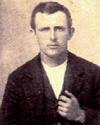
George Williams, a male deputy U.S. marshal serving with the United States Marshals Service in Oklahoma, met his death on November 16, 1907, in the small community of Comanche, just as the former territory was entering statehood. He was working in an era when frontier towns and scattered settlements in southwestern Oklahoma still carried the rough edge of Indian Territory days, and federal lawmen were expected to ride long distances, confront armed suspects, and impose order where local
authority was thin.
On that November day, Williams and another deputy set out to arrest a man accused of illegally selling liquor. The enforcement of liquor laws had become a flashpoint as Oklahoma moved from territorial status into statehood, with authorities clamping down on bootlegging, saloons, and related vice that had flourished in the region. In this atmosphere, the two deputies approached the suspect with the intention of taking him into custody for the liquor offense, a task that might have seemed routine but carried the constant risk that the person they confronted would choose violence over surrender.
According to the surviving accounts, the confrontation turned deadly in an instant. When Williams and his fellow deputy moved to arrest the man, the suspect produced a gun and opened fire on them. One of the bullets struck Williams, mortally wounding him before the deputies could bring the scene under control. In the chaos that followed, the second deputy returned fire, shooting and killing the assailant, ending the immediate danger but leaving Williams fatally injured on the ground, the attempted arrest irrevocably transformed into a fatal gun battle.
Williams would not recover from his wounds. His death was formally recorded as a line-of-duty killing by gunfire, with Comanche listed as the place where his life was taken and November 16, 1907, as his final day of service. Later memorial records preserve a brief but poignant detail: he was survived by a fiancée, a reminder that beyond the badge and the dangers of frontier law enforcement, he had begun to build a life that would never be realized. Though the historical record does not preserve his age or a fuller biography, the circumstances of his final assignment are clear—he died acting under federal authority, enforcing liquor laws during a turbulent moment in Oklahoma’s transition to statehood.
The man whom Williams and his colleague attempted to arrest was the only identified suspect in the shooting. Official descriptions of the case describe him simply as the offender they were trying to apprehend for selling liquor, and note that he was shot and killed at the scene by the other deputy after he opened fire. There is no indication in the surviving summaries of any additional suspects, accomplices, or further arrests connected to the attack; the violence began and ended with that single individual, leaving no opportunity for a trial or a fuller exploration of his motives in any court record.
In the wider history of law enforcement on the Southern Plains, Williams’ death formed part of a grim pattern. Historians have noted that more than a hundred deputy U.S. marshals lost their lives working in Indian Territory and Oklahoma before and around statehood, confronting bootleggers, outlaws, and fugitives in an environment where every arrest could erupt into sudden gunfire. His killing in Comanche, remembered today on modern memorial pages that list his name, date, and place of death, stands as one more story of a federal officer who did not return from his round of duties, leaving only a sparse paper trail and the memory of a life cut short in the line of duty.