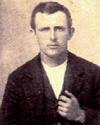
On September 25, 1901, 57-year-old Deputy U.S. Marshal John Poe, a male lawman serving in the Indian Territory but based around Comanche, Oklahoma, stepped into what should have been a routine task: quieting a disturbance aboard a Frisco Railroad train. The former buffalo-hunter country of southern Indian Territory had become a corridor for trouble, and Poe, appointed a United States deputy marshal in 1900 while living in Mill Creek in Johnston County, was one of the men tasked with imposing
order on a landscape where the line between cattle town and outlaw haven was thin.
By the time Poe entered the passenger car with another deputy, the situation had already begun to boil over. A group of men had turned the coach into their own rowdy stronghold, a rolling extension of the saloons and backrooms where illegal whiskey moved through the Chickasaw Nation. Contemporary accounts describe them as whiskey dealers, part of a crowd that had effectively declared war on federal marshals because law enforcement stood between them and the profits of their bootlegging operations in and around Mill Creek.
Inside the narrow aisle of the Frisco car, words gave way to violence. As Poe and his fellow deputy tried to make the arrest, one of the men at the center of the disturbance lunged. In the sudden struggle, he knocked Poe hard to the floor of the car, leaving the deputy sprawled and vulnerable. In the same motion or in the frantic seconds that followed, the assailant managed to wrench the service revolver away from Poe’s partner, turning the marshals’ own weapon into the instrument of their undoing.
On the floor of the coach, Poe tried to rise and reclaim control of the confrontation he had been sent to end. Before he could fully regain his feet, the gunman leveled the stolen revolver and fired. The shot struck Poe and dropped him back to the boards of the moving train. There, amid the smell of coal smoke and the stunned silence that follows a gunblast in close quarters, the deputy marshal’s last duty tour came to an end. He died a short time later, his end of watch recorded as that late September day in 1901, with Comanche, Oklahoma, remembered as the nearest landmark to the place where his life was taken.
What happened next on that train was a rare moment when ordinary passengers seized the initiative that lawmen usually carried. The conductor and several riders, jolted from fear into action, moved against the killer and his companions before they could escape into the countryside or turn their weapons on anyone else. Working together, they overpowered the shooter and three other men connected to the disturbance, disarmed them, and held them under guard in the very car where Poe had fallen. When the train reached a point where authorities could take custody, the four suspects were handed over to law enforcement. Official records summarize the outcome simply: the offender was apprehended, and the men who had terrorized the Mill Creek district and turned a railroad coach into a killing ground were finally under arrest, though surviving accounts do not clearly preserve their names or the ultimate disposition of their cases.
In the months that followed, Poe’s death became another entry in the long roll of fallen lawmen of the Indian Territory, but it also changed the balance of power in the area he had tried to police. The same whiskey traffic that had claimed his life had already wounded another deputy, and Poe’s killing underscored how determined those liquor runners were to keep control of Mill Creek and its surrounding trails. In response, federal authorities assigned a new deputy, John Millard Burton, specifically to Mill Creek, a “hell-raising cattle town” whose reputation had been written in gunfire and illicit bottles. Burton stepped into the vacancy created by Poe’s death and eventually helped break the grip of the whiskey dealers who had fought so violently to preserve their trade. In that sense, the ambush on the Frisco Railroad train did not end with a dead marshal on the floor of a passenger car; it set in motion a renewed campaign against the men who had killed him, ensuring that John Poe’s last ride became part of the turning of the tide against outlaw liquor in that corner of what would soon become Oklahoma.