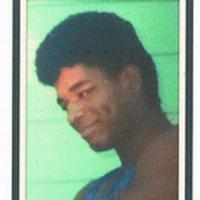
Thomas E. Tyus was a 42-year-old male deputy sheriff in Creek County, Oklahoma, working the Bristow area in the years when the young oil towns around Sapulpa were rough, busy, and often volatile. He had moved his family to Bristow around 1905, first going into business by helping build and operate a two-story livery stable and wagon yard on West 6th Street before selling the stable and taking up farming. His personal life had already been marked by hardship before his death: his wife died in December 1909, leaving him a widower with several children, and records indicate that by 1911 he had a surviving son and three daughters, while another little boy had died earlier that year. In 1910 he accepted a commission as a deputy with the Creek County Sheriff’s Office, based in the Bristow area, and earned a reputation as a capable local lawman.
On the night of Wednesday, July 19, 1911, Deputy Tyus was sent to serve legal papers—described in later accounts as a warrant related to bootlegging—at a home in or near Bristow. When he arrived, the person he was seeking was not there. With the workday long since over and the small town settling into darkness, he chose to wait rather than abandon the errand. He crossed over to a nearby neighbor’s house, sat down on the front porch, and, sometime in the small hours after midnight, apparently drifted into sleep as he kept his silent vigil.
Inside that neighboring house, a woman later identified in memorial accounts as Mrs. Sankie noticed a man stretched out on her porch around two o’clock in the morning. She did not recognize him as a deputy sheriff. In the darkness and tension of the hour, she became convinced that a burglar was lying in wait outside her door. Rather than confront the stranger, she slipped quietly out the back and went in search of help, finding the town’s night watchman, W. A. Ryder. She told him that a suspicious man was on her porch, setting in motion a chain of misunderstandings that would end in tragedy.
When Night Watchman Ryder returned with her and approached the sleeping figure on the porch, the events unfolded quickly and in confusion. Some accounts say he tried to rouse the man and a struggle broke out in the dark; others describe the two men advancing toward each other, each believing the other to be dangerous. In either version, neither recognized the other as an officer. Tyus, still on duty and expecting to meet a bootlegging suspect, saw an approaching figure and believed he might finally be confronting the man he had come to arrest. Ryder, armed and primed by the warning that there was a burglar on the porch, saw a man rise and move toward him. In that tense, poorly lit moment, Ryder fired his handgun. The shots struck Deputy Tyus, fatally wounding him. He died on July 20, 1911, a death now recorded by law-enforcement memorials as an inadvertent line-of-duty killing, with modern summaries listing the location as Sapulpa in Creek County while the narrative of the shooting itself centers on the Bristow home.
In the immediate aftermath, officials treated the case not as a simple accident but as a potential crime. Contemporary and memorial research notes that both Night Watchman W. A. Ryder and the neighbor woman, Mrs. Sankie, were charged with the murder of Deputy Sheriff Tyus, reflecting the seriousness with which authorities viewed the killing and the decisions that led to it. However, the readily available records do not clearly preserve what happened next in court: they do not specify whether those charges resulted in convictions, acquittals, or dismissals, nor do they detail any sentences imposed, leaving the legal outcome of the case uncertain in the surviving summaries.
Tyus was laid to rest in Bristow Cemetery in Creek County, where his grave still marks the abrupt end of a life spent trying to provide for and protect his family and community. Later genealogical and historical work has filled in fragments of the story around that grave—the move to Bristow, the livery stable on West 6th Street, the farm, the loss of his wife and a child, and his final service as a deputy sheriff in a growing county. Over a century later, his name appears on state and local law-enforcement memorials and in roll-calls of fallen officers, where the story is retold of a deputy who went out one night to serve papers on a bootlegging case and, through a chain of tragic misidentifications, was killed by another officer in the dark.