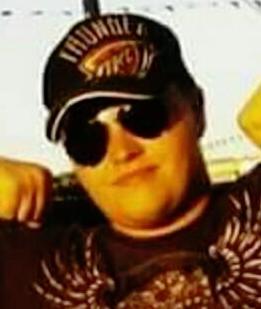
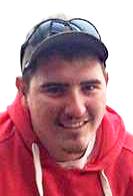
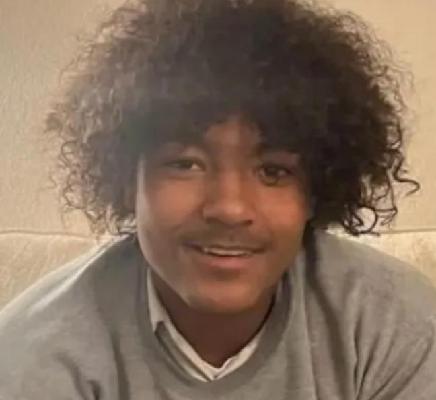
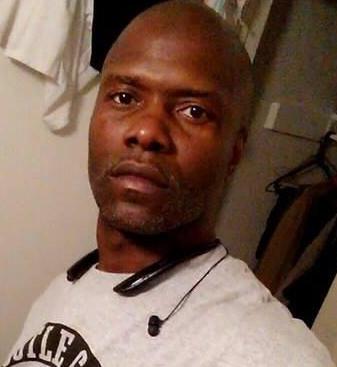
Charles Dean “Chuck” Hamilton was a 57-year-old man whose life bridged the communities of Arkansas City, Kansas, and Bartlesville, Oklahoma. On Thursday, March 11, 2004, he died in Bartlesville, with early newspaper notices saying little more than that he had passed away there and that family and friends would gather back across the state line for visitation and a graveside service at Geuda Springs Cemetery.
Those notices painted him in the quiet shorthand of an obituary: a husband to Diana, father to Tony and Chris, Casey Fergeson and Shannon Mapel, son of Nancy Estes, brother, half-brother, and grandfather to a large, scattered family of twelve grandchildren who were left to mourn him.
In the days immediately after his death, public records and obituaries did not spell out how Hamilton died, only where and when. Over time, however, the picture changed. Later case summaries and memorial listings no longer spoke of an ordinary passing, but of a killing. Advocacy and case-tracking sites now categorize his death in Bartlesville as a homicide, describing it as a “death by force” and placing his name among victims of fatal shootings in the city. On national gun-violence memorial rolls, he appears simply as “Charles Dean ‘Chuck' Hamilton,” lost on March 11, 2004, in Bartlesville, Oklahoma, a candle count standing in for the details of the life and the violent moment that ended it.
Behind those sparse public lines lay an investigation that, according to the limited open descriptions available, did not stop with the funeral. Case write-ups indicate that Hamilton's death became part of a broader inquiry that involved multiple suspects and led to legal proceedings, suggesting that authorities did not see his killing as an isolated or random act. Yet those same sources, at least in the portions accessible to the public, do not name the suspects, spell out the charges, or clarify what became of those proceedings. There is no widely available court summary tying a specific person to a conviction for his homicide, no easily found news story that walks through a trial or a plea. Instead, the official narrative fades just as the investigation begins, leaving only the indication that more happened behind courthouse doors than the public record now reveals.
Two decades later, Hamilton's story exists online in fragments: an obituary from Kansas that focuses on family ties and funeral arrangements, a brief memorial entry on a national gun-violence site, and a homicide listing on a case-advocacy platform that directly asks readers for updates. Together they suggest a man whose life was rooted in work, kin, and community, and whose death drew the attention of investigators, prosecutors, and victim-advocacy groups, but whose case has not been fully illuminated in the open record. The absence of clear public documentation of arrests or outcomes leaves a lingering sense of incompleteness, as though the story pauses mid-sentence—with a family laid to rest at Geuda Springs Cemetery, a name preserved on victim rolls, and unanswered questions about who, ultimately, was held to account for the violence that cut his life short in Bartlesville on that March day in 2004.