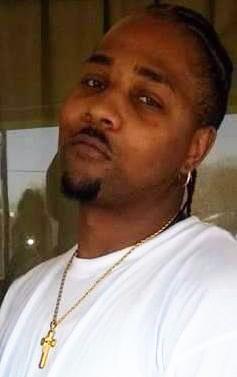
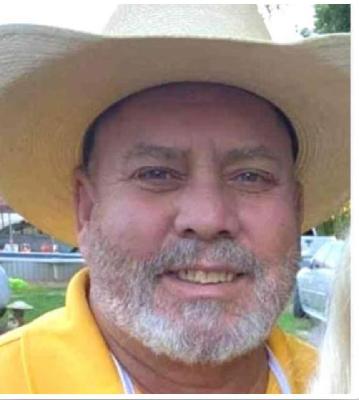
James E. Stutchman, a 28-year-old white male from Okmulgee, Oklahoma, died in the early hours of March 6, 2014, after an encounter with police that began as a routine traffic stop and escalated into a fatal officer-involved shooting. He was later memorialized as a victim of gun violence, with online tributes recalling him as “Smoke,” a young father with a good heart whose life was cut short in his hometown.
Shortly after 2 a.m. that Thursday, an Okmulgee police officer tried to pull over the vehicle Stutchman was driving near the intersection of 4th Street and Woodlawn. Instead of stopping, he fled, and the interaction turned into a pursuit through the quiet residential streets. Additional officers joined the chase as the SUV left the roadway and crossed onto the grounds of the Turning Leaf Apartments. Residents later described hearing engines, tires on the grass, and the sound of a vehicle crashing through a fence in the complex, shattering the calm of the middle-of-the-night hours.
The pursuit came to an abrupt end in the 1300 block of East 1st Street, where the SUV became disabled after plowing through a chain-link and iron gate on the apartment property. With the vehicle stuck near the rear brick units, officers closed in. Stutchman climbed out of the SUV holding a handgun, confronting the officers who had followed him. According to official accounts later summarized in local reporting, he refused to comply with commands, and multiple officers fired, striking him several times. He was fatally wounded at the scene, his body later transported to the state medical examiner’s office for autopsy as investigators cordoned off the area and documented the trail of torn fencing, tire ruts, and shell casings that marked the final minutes of the chase.
In the immediate aftermath, the Oklahoma State Bureau of Investigation was called in to take over the inquiry, a standard step in shootings involving local police. Agents interviewed apartment residents who had been jolted awake, processed the scene, and began compiling a report for the district attorney, who would be responsible for deciding whether the officers’ use of deadly force was legally justified. The manager of the Turning Leaf Apartments told reporters that Stutchman did not live at the complex and had no known reason to be there, and local coverage noted that his social media listed a job at a Sonic drive-in and referenced prior run-ins with the law, details that both complicated and humanized the portrait of the man at the center of the case.
Friends and family, by contrast, spoke of him in softer tones. Online memorials remember James as a “good person with a good heart,” a young man from Okmulgee who had children who would grow up without him. Candles lit in his name and short, emotional messages posted years after the shooting show that people close to him continued to grieve and to revisit the circumstances of his death. His name also appears in national compilations of people killed by law enforcement in the United States, where the terse entry listing his age, race, and city stands in stark contrast to the complicated, messy reality of his life and final hours.
Publicly available records of the legal aftermath focus on the investigation process rather than on any criminal accountability for the officers. Reports at the time emphasize that OSBI would submit its findings to the district attorney to review the shooting, but there is no subsequent coverage indicating that any officer was arrested or criminally charged in connection with Stutchman’s death. In the absence of news about indictments or prosecutions, the case appears to have been treated officially as a fatal use of force resulting from an officer-initiated traffic stop and pursuit, leaving James E. Stutchman’s death recorded as another unresolved point of pain for those who knew him, rather than as a homicide with an identified suspect brought before a court.