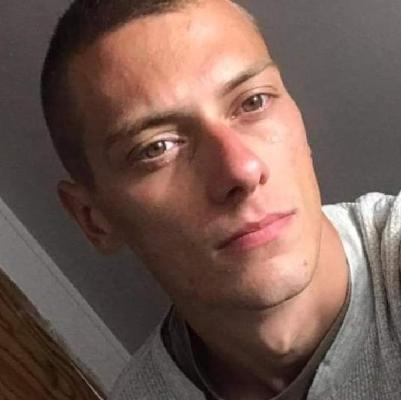
Karter Makenzie Alderman was a 17-year-old white male from Shawnee, Oklahoma, spending a quiet night with friends when violence came to the front door of a small house on North Aydelotte Avenue in the early hours of March 14, 2015. He had gone to the home of his friend Brianna Alvarez at 2227 North Aydelotte, just off the campus of Oklahoma Baptist University, where a handful of teenagers were hanging out and playing games in the living room.
Among them was his girlfriend, Ashlynn Garner, who later described an ordinary night suddenly interrupted by a knock at the door. One of the friends went to answer it, expecting nothing more than a visitor at the late hour.
What waited on the other side of the door was a masked man with a gun. According to Garner, as soon as the door opened, it became clear the stranger meant harm, and the friend at the door tried to slam it shut. In that narrow crack between open and closed, the intruder shoved the barrel of his gun forward and announced a robbery, trying to force his way inside. The teenagers in the living room heard the commotion but, at first, the gunshot itself sounded strangely muted to Garner; she did not immediately realize anyone had been hit. Only moments later did she see Karter slumped on the couch, the bullet having torn through the door and struck him in the head as he sat in the living room surrounded by friends.
Panic took hold as the teens grasped what had happened. Garner later recalled that their first instinct was to hide, but when she understood Karter was wounded, everything narrowed to trying to keep him alive. She held his hand, spoke to him, and encouraged him to keep breathing while someone called 911. Emergency responders rushed him from the scene to the hospital, but the damage from the single shot was catastrophic, and he died from his injury not long afterward. The gunman fled into the night, leaving behind a shattered group of friends and a family that, within hours, would learn that their son and brother was gone.
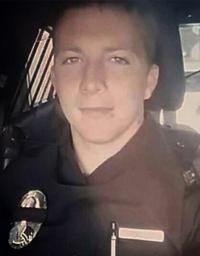
In the days that followed, the chaotic scene at the door was pieced together by witnesses and investigators. Accounts later gathered by case summaries and true-crime archives describe the shooter as Aaron Bernard Bradford, a 25-year-old gang member who had been wandering the area alone that night, looking for a house to rob. He chose the Alvarez home, pulled on a mask, and approached the front door knowing there was money inside, according to what police would subsequently tell reporters. When the friend at the door tried to shut him out, Bradford jammed his gun into the narrowing gap and fired through the wood, sending the bullet into the living room where it found Karter instead of any of the people standing at the entrance.
Initially, the shooter remained at large. Local news outlets carried urgent reports describing a killer on the run, pleading for anyone with information to contact the Shawnee Police Department. Within two days, those appeals were replaced by a different headline: U.S. Marshals had tracked and arrested Bradford in Lawton, Oklahoma, in connection with the deadly home invasion. Police said he had targeted the house because he believed the occupants had money, and officials announced their intention to seek murder charges for the killing that had unfolded just after 1 a.m. on March 14. Prosecutors later alleged that Bradford had not been acting entirely on his own, stating that he and two other individuals went to the home with the intent to rob the residents of money and drugs, though Bradford was identified as the man whose shot came through the door and took Karter’s life.
The case moved through the courts over the next two years. Bradford was ultimately tried for murder in connection with the shooting at the Aydelotte house, and a jury found him guilty. He received a sentence of life in prison without the possibility of parole for the killing carried out during the attempted robbery. In November 2017, the Oklahoma Court of Criminal Appeals reviewed his conviction and sentence, rejecting his arguments on appeal and affirming both the verdict and the life-without-parole term, effectively cementing the outcome of the case and closing the legal chapter on Karter’s death from the state’s perspective.
For Karter’s family and friends, there was no such sense of closure. His obituary recorded that he had been born in October 1997 and listed a long line of survivors: his parents, multiple brothers and sisters, grandparents, aunts, uncles, and cousins, all left to grieve a teenager who never came home from what should have been an ordinary night with friends. In Shawnee, relatives and supporters set up donation jars at local businesses and opened an account at a MidFirst Bank branch to help cover funeral costs, small gestures of a community trying to ease a burden they could not truly lift. A balloon release at Boy Scout Park became one of the most visible tributes to him, a moment remembered by those who attended as a sign of how deeply his loss was felt. Years later, online forums and memorial pages still carry reflections on the “cruel and senseless” way he was taken and on the hole left in the lives of those who loved him, reminders that, long after the court records were finalized, the story of that night on North Aydelotte continues to echo in Shawnee.