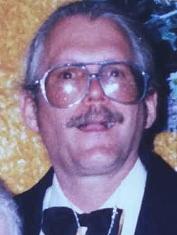
Darwin Espin, a 43-year-old white male from Tulsa, Oklahoma, spent the evening of December 17, 2018, at his apartment complex along the Arkansas River when violence found him just outside his front door. The Waterside Apartments, in the 1900 block of South Jackson Avenue near River West Festival Park, were a cluster of modest buildings overlooking the river, the kind of place where residents came and went after work, children played in the courtyards, and life usually unfolded quietly.
That Monday night, however, the calm of the complex gave way to chaos as an encounter in front of Espin’s unit turned into a deadly attack that would change his family’s life forever.
According to police and later case summaries, Espin was ambushed just outside his apartment, steps from the doorway that should have represented safety. Reports would later note that he was both shot and stabbed during the assault, a level of brutality that stood out even in a city sadly accustomed to headlines about violent crime. Neighbors saw the flashing lights of patrol cars and ambulances as first responders rushed to the scene and found him gravely wounded on the pavement. Medics transported him from the Waterside Apartments to a local hospital, but the injuries were too severe; he died shortly after arriving, and what began as a frantic rescue effort became a homicide investigation.
Detectives from the Tulsa Police Department moved quickly, canvassing the complex and working through the night to piece together what had happened. By the following day, their attention had focused on a 36-year-old man named Epifanio Soto, whom they initially described as a person of interest tied to the shooting at the west Tulsa apartment complex. After questioning, Soto was taken into custody on Tuesday afternoon; police announced that he had been arrested in connection with the killing and was being held on a complaint of first-degree murder, with records showing he was booked into the Tulsa County jail without bond. Local news described the scene in stark terms: a man shot and stabbed outside his own apartment near River West Festival Park, and a suspect already in handcuffs less than twenty-four hours later.
As detectives interviewed witnesses and reconstructed the events that led up to the attack, an early portrait of the motive emerged. Radio reporting on the case later summarized police statements by saying that the killing appeared to revolve around a love interest, suggesting that romantic or relationship tensions lay beneath the violence rather than a random act or a robbery gone wrong. At the same time, community discussions that grew up around the case online reflected a sense of lingering uncertainty: people writing about the homicide noted that Soto was someone Espin knew, and they struggled to understand how a personal connection and a dispute tied to affection or jealousy could escalate into a deadly encounter involving both gunfire and a knife. The contrast between the ordinary setting—a familiar apartment complex by the river—and the intensity of the attack left many observers with the feeling that something deeply personal had ruptured in an instant.
In the months that followed, the case moved from the streets of west Tulsa into the courts of Tulsa County. Prosecutors initially charged Epifanio Soto Jr. with first-degree murder under Oklahoma statute, as well as a separate count for using a firearm in the commission of a crime of violence, all tied to the events of December 17, 2018. On October 8, 2019, in District Court, Soto stood before a judge and entered a guilty plea rather than taking his chances at trial. As part of the plea, the original murder charge was amended to first-degree manslaughter, and he also pleaded guilty to the firearm-in-commission-of-a-violent-crime count. The judge accepted the plea and imposed a substantial sentence: twenty-five years in the custody of the Oklahoma Department of Corrections for the manslaughter conviction, plus an additional ten years for the firearm offense, ordered to run consecutively, followed by a year of post-imprisonment supervision, effectively committing Soto to decades in prison for Espin’s death.
Even after the courtroom formalities ended and a conviction was secured, the impact of the killing continued to ripple outward. Online memorials dedicated to Espin record his name, age, and the date he was “lost to gun violence,” and they show dozens of virtual candles lit in his memory, alongside comments that speak of a devoted family man remembered as an especially kind and remarkable person. Case summaries on true-crime and victim-advocacy sites describe the attack as a shocking act that shattered a sense of normalcy at the Waterside Apartments and note how swiftly Tulsa detectives identified and arrested the man responsible. Together, those records form a quiet archive of grief and accountability: a man stepping outside his apartment on an ordinary December evening, a sudden eruption of violence tied to a tangled romantic conflict, and a legal process that eventually named, charged, and sentenced the person who took his life, even as those who loved him continue to mark the date he never came home.