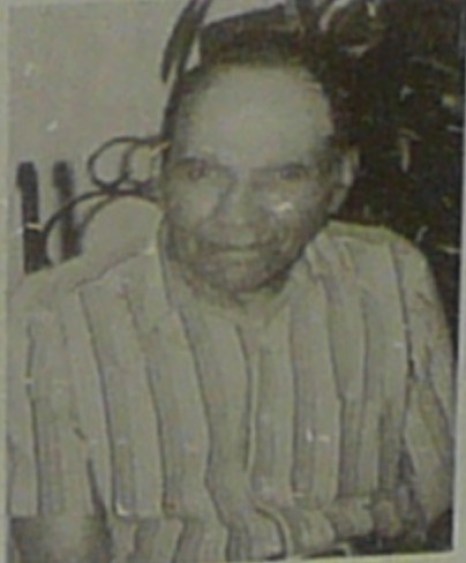
Shortly after Christmas in 2018, Glen Dale Scott Jr, a 47-year-old male, was in north Tulsa when gunfire cut through the cold night near the intersection of Apache Street and Martin Luther King Jr. Boulevard. Residents later told reporters they had heard shots and seen police sweep into the area; by the time the flashing lights converged on the scene, Scott had already been gravely wounded.
According to police and later case summaries, he was shot in that corridor of north Tulsa and then somehow made it away from the scene or was moved from it, ending up at Oklahoma State University Medical Center, where doctors tried to save his life.
The exact moment-by-moment details of the shooting were never widely spelled out in the press, but what is clear is that Scott's injuries were catastrophic. Initial local coverage from Tulsa television stations described him being shot on Friday, December 28, 2018, near Mohawk or Apache and Martin Luther King Jr. Boulevard, then “turning up” at OSU Medical Center, where he later died of his wounds. An obituary from a Tulsa funeral home lists his life dates as September 20, 1971, through December 29, 2018, suggesting he survived the initial attack only briefly before succumbing in the hospital. The killing came during a grim holiday stretch for the city: that same weekend, Tulsa police were juggling three separate homicide scenes, including the deaths of Louis Pool and Dionca Guess at different locations around town. Scott's death was later counted as the 64th homicide in Tulsa for 2018, a bleak marker at the close of the year.
In the hours and days after the shooting, detectives with the Tulsa Police Department began the slow, methodical work of a homicide investigation. They processed the stretch of road and nearby properties around Apache and Martin Luther King Jr. Boulevard, looking for shell casings, surveillance footage, and witnesses who might have seen a vehicle or a figure fleeing into the winter darkness. Publicly, however, very little was said at first. When police updated reporters that weekend, they identified Scott as one of the victims in the cluster of holiday homicides and confirmed that he had died after being shot and taken to OSU Medical Center, but they also stressed that no suspects had yet been arrested. For neighbors in north Tulsa, it meant that the corner where he was attacked was at once familiar and suddenly ominous, a place of everyday errands now shadowed by the knowledge that someone had fired the shots that ended his life and was still at large.
Over the next month, detectives continued to develop leads behind the scenes, following up on tips and piecing together how Scott had come under fire that night. A more detailed case summary later noted that investigators ultimately identified a specific individual they believed responsible and that the arrest “marked a significant development in the case,” giving police both a named suspect and what they described as a potential motive, though that motive was not laid out in public filings. The case remained part of a broader push by Tulsa authorities at the time to respond to escalating gun violence in certain neighborhoods and to convince wary witnesses that it was safe to come forward.
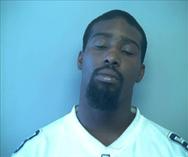
The break in the case became public on January 30, 2019, when local news announced that police had arrested a man named Kaewon Dontae Fritz. According to two Tulsa television stations, Fritz had been taken into custody the day before on unrelated charges; as detectives built their case, a warrant was then signed charging him with first-degree murder in the shooting death of Glen Dale Scott. News reports and later case compilations agree that investigators believed Scott was shot near Apache and Martin Luther King Jr. Boulevard, in essentially the same patch of north Tulsa that had been described in the earliest coverage, and that he was transported from there to OSU Medical Center, where he died. With the murder charge filed, Fritz moved from being an unnamed person of interest to the central suspect in the killing, and Scott's case shifted, at least on paper, from an unsolved homicide to one with a defendant facing trial.
Court records show that the same late-January 2019 arrest also led to a separate prosecution against Fritz for possession of a firearm after former conviction of a felony and related offenses stemming from that date; he ultimately pleaded guilty in that firearms case in early 2021 and received a prison sentence, while several associated drug and paraphernalia counts were dismissed at the state's request. Publicly accessible records and news archives, however, do not clearly spell out how the specific first-degree murder charge in Scott's death was resolved, leaving the outcome of the homicide prosecution less visible than the firearm conviction that grew out of the same arrest. In summaries aimed at the general public, Scott's case is still most often described in terms of the original shooting, the later arrest of Fritz, and the sense of partial closure that an identified suspect brought to a shaken community, rather than any detailed account of a jury verdict.
Today, Scott's name appears on the National Gun Violence Memorial alongside dozens of other Americans killed with guns on December 28, 2018, a stark entry noting only that he was 47 and “lost to gun violence” in Tulsa. Crime databases and advocacy sites repeat the core facts: that he was a Tulsa resident struck down in a burst of gunfire near a busy north-side thoroughfare, that he died at OSU Medical Center, and that an arrest and murder charge followed weeks later. Beyond those bare details, the public record grows quiet, leaving the full story of who Scott was, what led up to the encounter that ended his life, and how his family has carried on to be held mostly in private memory—known best to those who loved him, and marked in the broader public sphere only by a handful of news stories, a funeral home notice, and a line on a memorial page that tries to insist he was more than just another statistic.