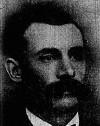
William Cooper, a White/Caucasian male, was serving as a deputy with the Jefferson County Sheriff's Office when he was killed in the line of duty in Waterloo, Wisconsin, on the night of Saturday, February 8, 1902. Surviving accounts place the shooting shortly after 9:00 p.m. Cooper had become involved in a violent domestic confrontation involving Fred W. Stephenson and Stephenson's wife or former wife. Contemporary newspaper information later cited by Jefferson County officials described Cooper as trying to protect the woman during the disturbance.
The confrontation had already become dangerous before Cooper intervened. Law-enforcement memorial records state that Stephenson had attempted to shoot his former wife, prompting Cooper to try to arrest him. During that effort, Stephenson produced a handgun, described specifically as a revolver in memorial records, and shot Cooper. The gunfire proved fatal, and Cooper died that night in Waterloo while carrying out his duties. Later historical accounts characterized the incident as what would now be recognized as a domestic-abuse response in which an officer entered an already volatile situation in an effort to protect the woman and take the armed suspect into custody.
After the shooting, Stephenson did not immediately submit to authorities. He barricaded himself inside a nearby residence, creating a standoff while law enforcement sought his surrender. According to the surviving memorial account, Stephenson eventually gave himself up to the sheriff after being warned that authorities would otherwise leave him to the citizens who were threatening to lynch him. He was then taken into custody rather than being allowed to remain barricaded or face the angry crowd outside.
The suspect was identified in historical newspaper accounts as Fred W. Stephenson. He was approximately 45 years old at the time of the case. The prosecution ultimately resulted in a conviction for second-degree murder. On February 13, 1903, a little more than a year after Cooper's death, Stephenson was sentenced to 25 years in prison for the killing. Available online accounts do not provide a detailed surviving transcript of the trial, but they clearly record both the second-degree murder conviction and the prison sentence.
For many decades, Cooper's death appears to have received little formal recognition even within the agency he had served. More than a century later, Jefferson County officials researched the shooting and restored his place in the county's law-enforcement history. His name was subsequently added to the Wisconsin Law Enforcement Memorial and engraved on the National Law Enforcement Officers Memorial in Washington, D.C., recognizing that his February 8, 1902 death occurred while he was responding to violence and attempting to protect another person.