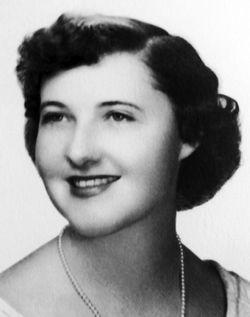
Patricia Marie Birmingham was a 16-year-old White/Caucasian female and a high school student from West Allis, Wisconsin, whose disappearance in February 1949 became one of Milwaukee's most widely reported murder cases of the period. Although March 20, 1949, is sometimes associated with her death, official Milwaukee police records show that this was the date her body was recovered. Investigators determined that Patricia had actually been killed on February 10, the same afternoon she disappeared while traveling between school and home.
The investigation eventually centered on Milton Julius Babich, a 19-year-old West Allis resident who had been dating Patricia's older sister, Kathleen Birmingham. Kathleen had become pregnant, and she and Babich intended to marry. Patricia had apparently realized her sister was pregnant and had made remarks about the situation. According to the prosecution and statements attributed to Babich after his arrest, he was angered or concerned that Patricia would disclose the pregnancy and arranged to meet with her on the afternoon of February 10. Weeks before the killing, on January 27, Babich had purchased a. 22-caliber Harrington & Richardson revolver. He used his brother Victor's name and supplied an address that was not associated with the Babich family when buying the weapon.
At approximately 4:10 p.m. on February 10, Patricia was with Babich in his father's automobile on West Harrison Street between South 64th and South 65th Streets. Babich later maintained that he had taken her to the secluded location only because he wanted to frighten her into keeping quiet about Kathleen's pregnancy. He claimed the weapon discharged during a struggle and that the shooting was accidental. The physical evidence, however, became a central reason prosecutors rejected that explanation. Patricia suffered two gunshot wounds. Milwaukee police described one bullet as entering through her left cheek and lodging in the neck and the fatal shot as entering just above her left ear. At trial, medical evidence indicated that the first wound occurred before the fatal head wound and that as much as approximately a minute may have separated the shots.
Ballistics and crime-laboratory testimony further weakened Babich's account of an accidental struggle. Examination of the revolver showed two fired cartridges, evidence that its cylinder had subsequently been turned, and a mark on another cartridge that an expert believed indicated an attempt to fire the weapon again. The firing pin apparently broke with the second shot. Tests on Patricia's jacket also indicated that the weapon had been in substantially different positions when the shots were fired. Prosecutors argued that these findings were inconsistent with Babich's claim that the gun had discharged twice almost instantaneously during a struggle.
After Patricia was shot, her body was weighted with a concrete building block and disposed of in the Milwaukee River system. Wire and pieces of cloth were used to secure the weight to her. Prosecutors later emphasized the concrete block as evidence of planning. Babich said he had obtained a block spontaneously after the shooting, but investigators found that blocks matching the one attached to Patricia had not been delivered to the construction project where he claimed to have obtained it; similar blocks had, however, been delivered near the Babich residence. The state argued that the loaded gun, the secluded meeting and the materials used to conceal the body supported a conclusion that the killing and disposal had been planned rather than improvised after an accident.
For more than five weeks Patricia remained missing. On March 20, Milwaukee firefighters were dragging the water near the harbor entrance while searching for Florence Wynne, a woman who had reportedly entered the river in an apparent suicide. At about 1:40 p.m., the search unexpectedly brought up Patricia's weighted body near the junction of the Milwaukee and Kinnickinnic Rivers. The discovery transformed the missing-person investigation into a homicide case and quickly brought renewed scrutiny to people who had been close to her before she vanished.
By then, Babich and Kathleen had left Wisconsin. They departed West Allis on March 17, traveled through Chicago to Kalamazoo, Michigan, and were married there on March 18. After leaving Kalamazoo on March 20, they reached Chicago that night and learned through newspaper reports that Patricia's body had been found. Although they discussed returning to Milwaukee, they instead continued to Minneapolis. Minneapolis police took Babich into custody on March 23 at the request of Milwaukee authorities, initially under circumstances connected to Kathleen's age. He subsequently waived extradition and was returned to Wisconsin.
During questioning in Milwaukee, Babich eventually acknowledged that he had been alone when Patricia was killed and later gave a statement describing the shooting. Police also recovered the revolver from the Milwaukee River as a result of information obtained during the investigation. A sporting-goods-store employee identified Babich as the purchaser of the weapon, and another witness identified him as someone seen near the location where he had met Patricia on the afternoon she disappeared. On March 28, Babich was formally arraigned on a first-degree murder charge. His attorneys later attacked the admissibility of his statements, arguing that they had been obtained during improper detention and interrogation, but the trial judge allowed the statements into evidence.
At a preliminary hearing, Babich continued to maintain that Patricia had been shot accidentally while he was attempting to frighten her. Judge Harvey L. Neelen ultimately found sufficient evidence to send the case forward, and Babich was bound over for trial on the first-degree murder charge. The prosecution's theory was that Babich deliberately killed Patricia because he feared she would reveal Kathleen's pregnancy. The defense maintained that he had intended only to scare Patricia and that the weapon discharged during a struggle.
The case went before a jury in June 1949. Patricia's mother testified for the prosecution, and witnesses presented evidence regarding the gun purchase, Babich's statements, the bullet wounds, the physical evidence on Patricia's clothing and the concrete block used to weigh down her body. Babich testified in his own defense and repeated his account that the shooting was an accident. The jury was permitted to consider first-degree murder, fourth-degree manslaughter or acquittal. Prosecutors argued that the sequence of the wounds, the firearm evidence and the preparations surrounding the meeting and disposal demonstrated a deliberate killing.
After approximately an hour and twenty minutes of deliberation, the jury found Milton Babich guilty of first-degree murder. Municipal Judge Herbert J. Steffes imposed the mandatory life sentence and ordered him imprisoned at the Wisconsin State Prison at Waupun at hard labor. Babich continued to insist that he was not guilty of first-degree murder. His attorneys pursued an appeal, challenging among other matters the admission of his confessions, the jury instructions and whether extensive publicity had prevented a fair trial.
The Wisconsin Supreme Court reviewed the case and, on January 9, 1951, affirmed the conviction. The court concluded that Babich's statements had been properly admitted and that the evidence was sufficient to support the prosecution's theory of a deliberate killing rather than an accidental discharge. A request for rehearing was denied on March 6, 1951. Babich remained imprisoned until February 1958, when contemporary newspaper reports recorded that he had been released on parole and left to rejoin Kathleen and their child. Patricia's killing was therefore legally solved: Milton Julius Babich was arrested, prosecuted, convicted of first-degree murder and sentenced to life imprisonment for her death.