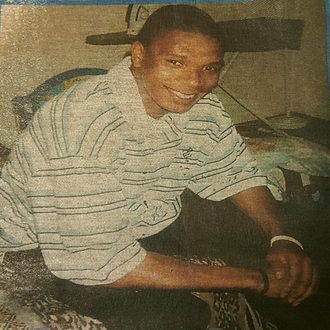
In the quiet, rural town of Fremont, Wisconsin, the summer of 2003 was shattered by a brutal and unsettling crime. Glenn Mark Kopitske, a 37-year-old male, was found dead in his home on August 2, 2003. Described by those who knew him as a gentle, eccentric, and funny man, Kopitske lived a relatively solitary life. He had a degree in Historical Studies and worked as a substitute teacher and at Wal-Mart.
Diagnosed with bipolar disorder as a teenager, he lived independently but remained close to his adoptive parents. His mother, Shirley Kopitske, made the grim discovery of her son's nude body after being unable to reach him by phone for a couple of days. The initial assessment by authorities was that he had died of natural causes, a conclusion drawn due to the state of decomposition accelerated by the summer heat.
However, a closer examination by the medical examiner revealed a much more sinister reality. Kopitske had been shot in the back of the head with a 12-gauge shotgun, and his body bore multiple stab wounds that were inflicted after his death. The personal and violent nature of the attack was evident, as one of the stab wounds had penetrated his spine with such force that the knife became lodged in the bone. As the investigation into the homicide began, police found no immediate suspects or physical evidence at the scene, leaving the community in a state of fear and uncertainty. For five months, the case grew cold, and it seemed as though the person responsible for Glenn Kopitske's death might never be found.
The break in the case came from an unexpected source. A young woman, Olivia Thoma, came forward to the police in January 2004 with a disturbing story. Her ex-boyfriend, 17-year-old Gary Hirte, had confessed to her that he had killed Kopitske. Hirte was the town's golden boy, a high school senior, an honor student with a 4.4 GPA, a star athlete, and the first Eagle Scout in Weyauwega in two decades. The police were initially skeptical, but Thoma provided details that had not been released to the public. She agreed to a recorded phone call with Hirte, during which he again admitted to the murder, stating he did it "to see if he could get away with it."
Following this confession, Gary Hirte was arrested at his high school on January 29, 2004. A search of his parents' home uncovered Glenn Kopitske's keys and an 8-inch hunting knife that tested positive for Kopitske's blood. Hirte had also boasted about the murder to another friend, Eric Wenzelow, showing him the knife and the stolen keys as proof. After his arrest, Hirte's story began to change. He and his defense team, which included an attorney who had previously represented Jeffrey Dahmer, claimed that the murder was the result of temporary insanity. Hirte alleged that he had a consensual homosexual encounter with Kopitske and was later overcome with a murderous rage. The prosecution, however, argued that Hirte had stalked his victim, choosing him because he was a loner who, Hirte believed, would not be missed. In October 2003, Hirte pleaded guilty to first-degree intentional homicide but later changed his plea to not guilty by reason of mental disease or defect. A jury ultimately rejected his insanity defense, and on March 17, 2005, Gary Hirte was sentenced to life in prison with the possibility of parole after 32 years.