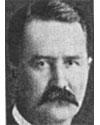
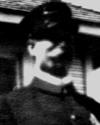
In the autumn of 1920, with the nation in the early grip of Prohibition, the authorities in Grays Harbor, Washington, were embroiled in a determined effort to curb the illicit trade of bootleggers. As their usual plainclothes agents became too well-known, Aberdeen's Chief of Police, Frank O'Brien, sought the assistance of the Seattle-based Revelare Detective Agency. From this agency came Nicholas Koleski, a 22-year-old male of Russian-Polish descent. Despite his youth, Koleski had already garnered a few years of experience working undercover for various police agencies. His assignment in Aberdeen was to infiltrate and gather evidence of illegal liquor sales at The Blue Front, a soda parlor on South G Street operated by two Russian men, Harry Kargin and Adam Sirhoff.
Koleski quickly began to frequent The Blue Front, where he successfully gained the confidence of the bartender, Peter Ambaloff. Believing he had secured a reliable informant, a raid was planned for the 5th of September. As arranged, Koleski entered the establishment with two companions and ordered whiskey. The plan, however, went awry. His disappearance on September 21, 1920, was initially kept quiet as authorities conducted a discreet but thorough search of the densely wooded areas near a local dairy, uncovering two abandoned stills in the process. For days, there was no sign of the missing agent. The grim discovery was made on the afternoon of September 26th by a 14-year-old boy, Arthur Berg, who was playing near an old skid-road. He moved a plank covering a pile of cedar boughs and grass, revealing the badly decomposed and blindfolded body of Nicholas Koleski.
An autopsy performed by the Grays Harbor County Coroner, G.E. Chamberlain, revealed that Koleski had been shot three times in the head. One bullet had entered his left cheek and exited the right side of his neck, another had gone through his chin and exited the back of his neck, and the fatal shot had entered his left parietal region, lodging in the right mastoid. Police promptly arrested Harry Kargin, Adam Sirhoff, and Peter Ambaloff for the murder. The investigation led to a confession from Ambaloff and the discovery of a. 32-caliber Savage automatic revolver, believed to be the murder weapon, which had been reported missing from a nearby tailor shop shortly after the initial raid on The Blue Front.
With a confession and what they believed to be the murder weapon, the prosecution felt they had a strong case. The trial commenced on May 25, 1921. However, the case began to unravel just two days in. The tailor could not definitively identify the revolver as his, stating, "I would not swear to it but to the best of my judgment, this is the gun." Furthermore, a ballistics expert could only confirm that the bullets were from a. 32-caliber revolver, but could not conclusively link them to that specific weapon. These developments significantly weakened the prosecution's position, casting doubt on what was initially perceived as an airtight case against the three suspects. Although the suspects were identified and initially charged, the outcome of the trial was not one of certain conviction.