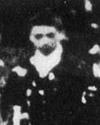
Dave Barton was a 61-year-old male marshal serving the small community of Knoxville in rural Pendleton County, Kentucky, when his life came to a sudden end on Sunday, July 27, 1902. In this crossroads town, listed among the scattered settlements of Pendleton County, lawmen like Barton were often the only barrier between everyday order and the chaos that could erupt when tempers and alcohol mixed.
His duties as marshal fell under the Knoxville Police Department, later recognized as a predecessor agency to the Pendleton County Sheriff’s Office, a reminder that in such small communities the lines between town marshal and county authority were thin and overlapping.
On that July Sunday in 1902, Barton responded to a familiar kind of trouble: a drunk and disorderly man causing a disturbance in Knoxville. What began as a routine duty, the sort of arrest he had likely made many times before, took a deadly turn. As he attempted to place the intoxicated man under arrest, the encounter escalated violently. The man produced a firearm and shot Barton, inflicting wounds from which the marshal did not recover. Contemporary law-enforcement memorials record his “end of watch” as that same day, noting simply and starkly that he was “shot and killed while attempting to arrest a drunk and disorderly man in Knoxville,” his death officially classified as gunfire in the line of duty.
The man who pulled the trigger is described in surviving records only in the most generic terms: the drunk and disorderly individual Barton was trying to subdue. His name, background and motives have not been preserved in the readily available historical and memorial sources, which focus almost entirely on the fallen marshal rather than the assailant. What is recorded is that the shooter was taken into custody after the killing, indicating that Barton’s attacker did not escape and was at least initially held to account by the local authorities. Beyond this brief note of an arrest, however, the trail grows thin. No accessible memorial or genealogical record gives details of the subsequent legal process: the specific charges brought, whether a trial was held, or what verdict and sentence, if any, followed. The silence of the record leaves open the question of how, in the end, the justice system dealt with the man responsible for Barton’s death.
Behind the bare official phrases lay the life of a man known more fully in genealogical records as David Harrison Barton, born on September 5, 1840, in Randolph County, Indiana. By the time he took up the badge in Knoxville, Kentucky, he had lived through the upheavals of the nineteenth century and grown into a figure of local authority in a small river-county community. After his death, he was laid to rest under his full name at Pleasant Ridge Baptist Church Cemetery near DeMossville in Pendleton County, his grave now part of a virtual cemetery of fallen officers and a tangible point of remembrance for a life ended in the line of duty. Today, entries on memorial pages and in law-enforcement rolls of honor keep his story alive in a few carefully chosen lines, preserving the essential facts of a marshal who faced down danger in a small Kentucky town and paid for that duty with his life, even as the fate of the man who killed him has largely faded from the historical record.