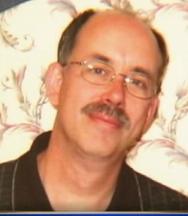
On the morning of September 16, 2013, Michael Arnold, a 59-year-old White male, reported for another workday at the Washington Navy Yard in Washington, D.C., where he was serving as a civilian contractor after a long career in the U.S. Navy. A Michigan native who had made his home in Lorton, Virginia, he was known in his neighborhood as a quiet, polite presence, a longtime husband and father of two sons, and in the Navy world as a seasoned officer who had spent nearly three decades working on
amphibious assault ship programs before retiring at the rank of captain and moving into consulting work that kept him closely tied to the fleet he had served.
Away from the corridors of the Pentagon and the Navy Yard, Arnold's life revolved around flight. Friends in his Experimental Aircraft Association chapter remembered that he had fallen in love with flying as a teenager and, later in life, had thrown himself into the demanding project of building his own two-seat Sonex aircraft, piece by carefully crafted piece. He spent long weekends in his basement workshop, immersed in the meticulous task of assembling the airplane and quietly setting himself a private goal: to have it flying before his sixtieth birthday. Fellow pilots described him as the person who always showed up to chapter events, always willing to help, the kind of friend who would drop what he was doing to lend a hand on someone else's project, encourage a new student pilot, or share what he'd learned over decades in the air.
That Monday at the Navy Yard began like countless other workdays, with Arnold immersed in the technical world he knew so well, contributing his expertise to teams responsible for the design and support of Navy ships. But elsewhere on the base, a different story was unfolding. Aaron Alexis, a 34-year-old civilian contractor with legitimate access to Building 197, arrived that morning with a shotgun he had altered and concealed, passed through security using a valid pass, and made his way upstairs before quietly assembling the weapon. Minutes later he began moving through the building's office floors, opening fire on workers as the first terrified calls to emergency dispatchers started to come in.
Amid the chaos and confusion as shots echoed down hallways and into cubicle bays, Arnold was on the phone with his wife. According to accounts later shared by his family, he stepped out of his office, unaware of exactly where the danger lay, and in doing so walked into the line of fire as Alexis moved through the workspace. In the frantic minutes that followed, coworkers fled or sheltered in place, alarms sounded, and sirens converged on the historic Navy campus along the Anacostia River while inside Building 197 colleagues and friends were suddenly separated forever.
Law enforcement officers from multiple agencies began to flood the Navy Yard shortly after the first reports, struggling at first to find the correct building among the many structures on the base, then pushing inside once they located the site of the attack. In a running gun battle through the building, specialized police teams tracked Alexis down, exchanging fire in a warren of cubicles until an officer fatally shot him shortly after 9 a.m., ending the rampage that had claimed a dozen lives, including Arnold's. Initial reports suggested the possibility of additional gunmen, and authorities briefly circulated descriptions of other men who might be involved, but those leads were later ruled out; subsequent investigation and federal findings concluded that Alexis had acted alone, and with the perpetrator dead, no arrests were made in connection with Arnold's killing.
In the days that followed, the story of Michael Arnold's death traveled far beyond the Navy Yard's gates. Neighbors in Lorton spoke of a kind, reserved man whose quiet demeanor belied the depth of his experience, while fellow aviators mourned the loss of the mentor who had been “the guy you could depend on,” the one who showed up, volunteered, and cheered others on. Memorials and services noted the arc of his life: a boy who grew up in Michigan, a young officer who committed himself to nearly three decades of naval service, a husband and father devoted to his family, and a pilot who found joy in the sky and in the painstaking craft of building an airplane at home. At the Navy Yard and in aviation circles, his name joined the roll of twelve lives cut short that day, remembered not only as a victim of a mass shooting, but as a man whose steady presence and quiet passions had anchored the people around him.