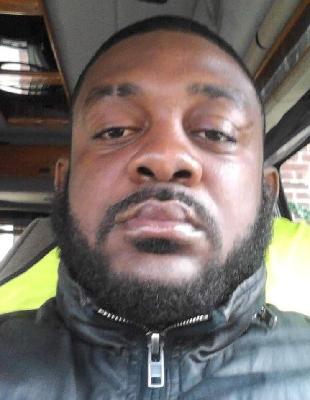
Delany Christopher Epps, a 29-year-old male, spent the evening of September 22, 2015, in the busy U Street corridor of Northwest Washington, D.C., where the nightlife of restaurants and clubs spills out onto the sidewalks around 14th and V Street NW. Around 8:25 p.m., gunfire shattered the normal hum of traffic and conversation in the 1400 block of V Street.
When officers from the Metropolitan Police Department's Third District arrived after reports of shots fired, they found Epps in the street suffering from multiple gunshot wounds. He was rushed from the scene to a nearby hospital, but the wounds were too severe and he was pronounced dead a short time later.
Witnesses that night described a chaotic scene at the intersection, a heavily trafficked corner of the U Street corridor lined with trendy restaurants and nightspots. According to a report that drew on police and Washington Post accounts, around twenty-five diners were sitting on a nearby patio less than fifty feet from where Epps fell, forced to dive under tables and crouch behind walls as shots rang out. Investigators were told that the violence erupted after an argument between Epps and another man, later identified as Raphael Antonio Roy, also 29. Roy allegedly told police he had been trying to buy marijuana from Epps, that the dispute escalated, and that he opened fire, striking Epps five or six times in the middle of the street.
Police moved quickly once the shooting stopped. Officers responding to the scene pursued a suspect on foot through the surrounding blocks and, after a brief chase, took Roy into custody. A 9 mm Hi-Point pistol, which authorities said Roy discarded behind an apartment building during his attempt to flee, was recovered by investigators. That same night, Roy, a resident of Northwest D.C., was booked and charged with first-degree murder while armed in connection with Epps's killing, transforming what had begun as yet another frantic shooting call into a homicide case with an immediately identified suspect.
In the days that followed, the corner where Epps was shot became both a crime scene and a place of mourning. On September 25, friends, family, and supporters gathered at a vigil in his memory, captured in photographs by a Washington Post photographer and later distributed through a national photo agency. The caption noted that Epps's death marked the 116th homicide in the nation's capital in 2015, a grim milestone that weighed heavily on those who stood holding candles in the evening light. Online memorials filled in more of who he had been: loved ones listed nicknames like “Fatz” and “Fat GuWop or Wop,” remembered him as “life of the party,” and noted that he was a father of three who had worked at Booker T. Washington Charter School. In Washington Post coverage referenced on his memorial page, he was later described as a victim of a U Street shooting who had been trying to “bridge two worlds,” underscoring the sense that his life had been lived between different communities and expectations in a rapidly changing neighborhood.
The criminal case against Raphael Antonio Roy moved forward over the following months in D.C. Superior Court. Among the cluster of September 2015 homicides tracked by court-watchers, many remained unsolved or stalled, but Epps's case did not. According to court summaries compiled by D.C. Witness, Roy was ultimately convicted on February 12, 2016, for the murder of Delany Christopher Epps and sentenced to 20 years in prison, followed by five years of supervised release. Epps's killing thus became one of the relatively few homicides from that period to end with a definitive conviction rather than an open case, and no public records from these sources indicate that any additional suspects were ever charged in connection with his death.