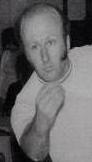
On September 22, 1980, the life of Donald P. Doroni, a 41-year-old male, was brutally cut short in what would become a notorious Boston crime. Known to his loved ones as Donnie, he was a father of three with a passion for bowling, a sport that led him to manage Sammy White's Brighton Bowl. He was remembered for his sense of humor and infectious laugh. On that fateful day, while at his place of work, Doroni and three other men were subjected to a horrific ordeal.
The men were handcuffed, bludgeoned, and then shot to death.
The crime scene at the Brighton bowling alley told a grim story of violence and robbery. Alongside Doroni, his colleagues George Hagelstein, Brian Cobe, and David Cobe were also found murdered in the mechanics' room. An investigation revealed that a sum of $4,800 had been stolen from the safe. The brutal nature of the killings, where each victim was restrained before being killed, pointed towards a calculated and ruthless act. The community was left in shock and fear as police began the arduous task of piecing together the evidence to find the person responsible for the quadruple homicide.
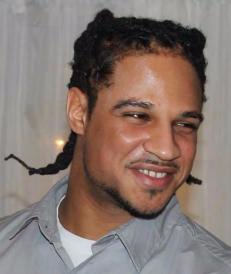
The investigation soon zeroed in on a former employee of the bowling alley, Bryan A. Dyer. Though he had not worked at Sammy White's for several years and did not personally know the victims, his connection to the location was a critical lead. Dyer was eventually apprehended and charged with the murders. The case against him was built on a foundation of compelling evidence that tied him directly to the crime.
The subsequent legal proceedings brought a measure of justice to the families of the victims. Bryan A. Dyer was convicted for the murders of Donald P. Doroni and the three other men. He was sentenced to four consecutive life terms in prison, with no possibility of parole. This sentence ensured that he would spend the remainder of his life behind bars for the heinous acts he committed. Dyer ultimately died in prison in May of 2011, closing the final chapter on a crime that had left a lasting scar on the city of Boston and the families of the men whose lives were so tragically taken.