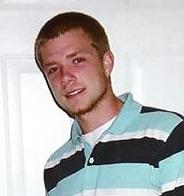
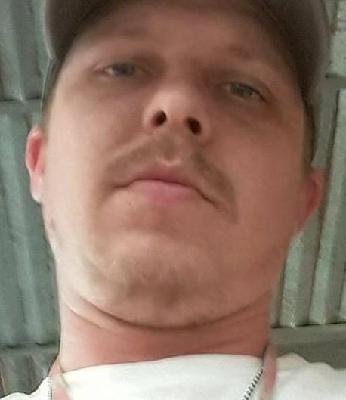
Okey Meadows Jr. was a 26-year-old White/Caucasian male and a resident of the Campbells Creek area of Kanawha County whose life ended during a frightening series of long-range shootings around Charleston, West Virginia. Late on August 14, 2003, Meadows stopped at a Go-Mart convenience store along U.S. Route 60 in Cedar Grove to buy milk. As he stood near the store's security or pay window, a single rifle shot struck him in the neck. Investigators estimated that the shot had been fired from roughly 60 to 70 yards away, a distance that led authorities to believe the gunman had used a rifle and had deliberately taken aim from well away from his victim.
Meadows's killing was not an isolated event. Roughly 90 minutes earlier, Jeanie Patton had been shot in the head while pumping gasoline at a Speedway station in Campbells Creek, approximately 10 miles from the Cedar Grove crime scene. Four days before that, Gary Carrier Jr.
had been fatally shot in the head while using a pay telephone outside another Go-Mart in Charleston. All three victims had been engaged in ordinary activities outside convenience stores when they were struck by single shots fired from a distance, causing investigators to fear that someone was moving through Kanawha County deliberately selecting people and shooting them sniper-style.
The scene of Meadows's shooting produced one of the investigation's most important early leads. Witnesses reported seeing a dark-colored pickup truck, later described as a two-tone Ford F-150 extended cab, behaving suspiciously around the Cedar Grove store. Accounts indicated that the truck had moved around the parking lot or remained nearby before the shooting and then sped away immediately afterward, at one point reportedly spinning its tires. One witness said a similar vehicle had been sitting near the store for as long as 20 minutes. Investigators believed the shot may have been fired from inside the truck, in part because no shell casing was found outside and because of the vehicle's rapid departure. Police began stopping dark pickup trucks, examining surveillance footage from area businesses and urging residents to use caution during late-night errands.
Ballistics soon strengthened the connection between Meadows's death and Patton's killing. Authorities determined that both had been shot with a. 22-caliber rifle and reported that the same weapon had been used in those two attacks. The bullet recovered in Carrier's earlier killing was initially too damaged for investigators to make as definitive a comparison, although it had characteristics similar to the other bullets. Later reports from the joint investigation treated the three deaths as part of the same sniper-style series. Investigators assembled teams from local police agencies, the Kanawha County Sheriff's Department, the FBI and the Bureau of Alcohol, Tobacco and Firearms, eventually pursuing hundreds of tips and numerous leads. A reward for information leading to the killer was initially set at $50,000 and later increased to $100,000.
As investigators dug deeper, their theory changed from that of a completely random sniper. Within days of the shootings, officials said Patton and Meadows appeared to have been deliberately targeted and that investigators were examining a possible connection to drug activity. That did not establish that Meadows himself was involved in drugs; rather, it became part of a broader attempt to understand why the shootings occurred and whether one victim was the intended target while others were killed to disguise the motive. The killings nevertheless remained unsolved for years, despite the large task force, public appeals and substantial reward.
A major break finally came in 2011. On March 31 of that year, Charleston-area resident Shawn Thomas Lester was arrested after investigators revived the case and developed new information. His initial first-degree murder charge concerned Jeanie Patton, but authorities continued building their case around all three sniper-style deaths. Contemporary accounts said two people had provided information that helped bring about Lester's arrest and that he had previously been among numerous individuals investigated in the case. In August 2011, Lester was formally indicted in connection with the murders of Patton, Meadows and Carrier. He pleaded not guilty and prepared to face trial on multiple felony charges, including three counts of first-degree murder.
By the time Lester's case reached court in 2012, prosecutors had developed a theory that the violence had its origins in the theft of an automobile engine containing a large quantity of methamphetamine. Prosecutors alleged that Patton's longtime partner, Marty Walker, had stolen the engine and drugs from Lester shortly before the shootings. They said the drugs were connected to a trafficker known as "Tito," identified by investigators as Gilberto Lopez. According to the prosecution, Lester feared the consequences of losing the drugs and Patton became the principal target of retaliation. Prosecutor Mark Plants later stated that investigators believed Lester was involved in the other two killings as well, including Meadows's death, but acknowledged that belief was not the same as having evidence sufficient to prove those murders beyond a reasonable doubt.
Other allegations also emerged as investigators prepared for trial. A jailhouse witness testified that Lester had spoken about killing Patton, Meadows and Carrier in retaliation connected to the drug theft, although Lester's attorneys attacked that witness as an informant seeking favorable treatment. Investigators also learned that Rodney Shaffer Sr., who died before the prosecution was completed, had reportedly told detectives that he had been in the truck with Lester when Patton was killed. Authorities believed Shaffer could have faced a murder prosecution in Patton's death had he still been alive, but the available evidence did not result in a separate prosecution of anyone for Meadows's killing.
The weakness in the evidence specifically connecting Lester to Meadows became crucial when Lester's trial was scheduled to begin in July 2012. Prosecutors told the court that their strongest evidence centered on Patton's murder. They said a ballistics report linked the rifle used to kill Patton to Lester, while the ballistic connection between that shooting and the other victims was essentially the principal physical evidence tying Lester to Meadows and Carrier. Prosecutors feared that if they proceeded with the entire case, the evidentiary weaknesses could result in an acquittal.
On the first day of the scheduled trial, with approximately 200 prospective jurors waiting, prosecutors, defense attorneys, Lester and members of the victims' families spent about two hours negotiating a plea agreement. Lester ultimately pleaded guilty to second-degree murder in Jeanie Patton's death. In exchange, the remaining charges were dismissed, including the murder charge arising from Okey Meadows Jr.'s death and the charge involving Gary Carrier Jr. Prosecutors openly acknowledged afterward that there was not enough hard evidence to continue prosecuting Lester for those two killings. Lester had denied involvement in all three deaths shortly before the plea agreement was reached.
On August 31, 2012, Kanawha County Circuit Judge Duke Bloom sentenced Lester to the maximum 40 years in state prison for Patton's murder. Although prosecutors had agreed to recommend a lesser term, the judge imposed the full statutory maximum. The conviction did not include Meadows's death. Later that year, Lester also pleaded guilty in federal court to being a convicted felon in possession of a firearm and being a habitual drug user in possession of a firearm after evidence showed that he possessed a shotgun in 2007. He received another six years in federal prison, ordered to run consecutively to his state sentence. Those federal firearm offenses were separate from the 2003 homicide charges.
The prosecution of Shawn Lester therefore brought a measure of resolution to the broader Kanawha County sniper investigation but did not produce a conviction for the killing of Okey Meadows Jr. Lester was arrested, indicted and formally accused of Meadows's murder, and investigators and prosecutors publicly expressed their belief that he was involved, but the state ultimately dismissed that murder charge because it lacked enough evidence to take the allegation safely through trial. As a result, the available public record shows no person convicted specifically for Meadows's death, leaving the legal resolution of his killing fundamentally different from the conviction obtained for Jeanie Patton's murder.