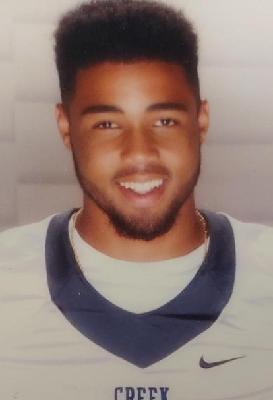
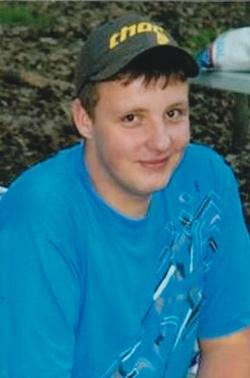
Kevin Hudson was a 17-year-old White/Caucasian male who was living with members of his family near Morgantown, West Virginia, when he was killed in a mass shooting at their Sugar Grove Road home. Although some memorial databases list September 4, contemporary police and Associated Press reporting places the killings on Monday, September 5, 2011. Kevin had previously lived in Ansonia, Connecticut, before moving to West Virginia with his mother and sister.
Relatives remembered him as kind, well-liked and artistic, someone comfortable expressing his individuality and surrounded by friends.
The violence unfolded at the Richardson family home at 100 Sugar Grove Road, a few miles west of Morgantown. Investigators said Shayne Franklin Riggleman went to the residence and opened fire with what police believed was a high-powered rifle. Kevin was killed along with his mother, Karin Richardson; his sister, Katrina Hudson; his stepfather, Charles Richardson III; and Robert Raber Jr., Katrina's fiancé and the father of her unborn daughter. Katrina was six months pregnant. When West Virginia State Police went to the property after receiving information that something was wrong, troopers initially discovered three victims. A special response team then secured and searched the residence, where two additional victims were found.
Investigators quickly identified Riggleman as the suspected gunman. One significant connection emerged through Riggleman's former girlfriend, Brittany Harwood. According to reporting based on interviews with people close to the family, Harwood had been staying with the Richardsons after ending her relationship with Riggleman and had recently begun dating Kevin. A family friend believed jealousy may have contributed to the killings, and Harwood said Riggleman had been stalking her after their breakup. State Police, however, stopped short of publicly declaring jealousy to be the established motive. Capt. James Merrill said detectives believed they had an understanding of why the attack happened but would not disclose their conclusions while the investigation remained active. Because Riggleman later died, investigators could never question him directly about his reasons for attacking the household.
After leaving the murder scene, Riggleman's violence continued across several states. He drove to Fairchance, Pennsylvania, where he appeared at Harwood's father's home and tried to persuade her to leave with him. Harwood later said he wanted her to take one final ride with him and threatened her when she refused. She contacted police. Riggleman then became involved in a collision with another vehicle and deliberately struck the other driver, Sidney Lee Bush, after she had gotten out and attempted to seek help. Bush survived but suffered multiple serious fractures. Riggleman fled south, eventually stopping at an Exxon station near Amma, West Virginia, where authorities said he randomly shot attendant Don Nichols in the neck. Nichols survived the attack.
Riggleman continued into Kentucky, where a Lewis County sheriff's deputy attempted to stop him for reckless driving. After a brief pursuit, the vehicle stopped, and authorities found that Riggleman had shot himself. Police recovered three firearms from the vehicle, including the high-powered rifle believed to have been used in the Morgantown killings, another rifle and a. 22-caliber handgun believed to have been used in his suicide. State Police described the entire episode as an extraordinarily violent crime spree and indicated that they feared additional people might have been killed had Riggleman continued traveling.
Riggleman also had a criminal history predating the murders. West Virginia corrections officials reported that he had previously been convicted of armed robbery in Monongalia County and had been sentenced in December 2008 to the Anthony Correctional Center, a facility for young offenders. He served approximately fourteen months, from January 2009 until March 2010. That conviction was unrelated to Kevin's killing but became part of the investigation into the background of the man police believed responsible for the five deaths.
There was therefore no arrest, criminal trial or murder conviction in Kevin Hudson's death. Riggleman was identified by investigators as the person responsible, but his suicide during the flight from West Virginia ended any possibility of prosecuting him for the killings. The evidence gathered by police—including the weapons recovered with him, his movements after leaving the Morgantown area and the investigation of the Sugar Grove Road scene—left authorities treating the five deaths as part of the same violent rampage. Kevin's relatives and former community in Connecticut later gathered to remember him and his sister, with family members describing the siblings as caring young people whose lives had been abruptly taken in an act of violence that devastated their extended family.