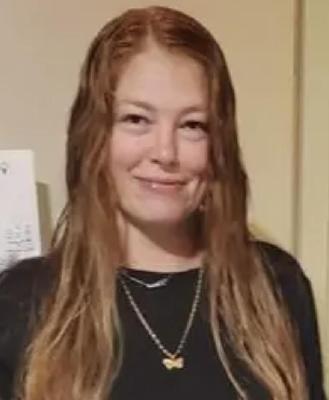
Katie Ann Toler, a 29-year-old White/Caucasian woman from Branchland, West Virginia, was killed during a late-night confrontation on March 30, 2015. The shooting occurred at about 2:30 a.m. along Coal River Road near Tornado in Lincoln County. Toler was in a vehicle with Chad Mays when an encounter at the property of Andrew Staggs escalated into gunfire. Staggs was described in contemporary reports as Toler's father-in-law, while Mays was her recently divorced former husband.
Toler and Mays reportedly had been married for more than a decade and had three children together.
West Virginia State Police said an altercation developed involving Staggs and Mays. According to the criminal complaint reported at the time, there was also a dispute involving a vehicle and other property. The complaint alleged that Staggs had a vehicle belonging to Toler that had been reported stolen and that he had a firearm pointed toward her. Police were already being sent to the location while the confrontation was unfolding. Staggs then fired multiple rounds. One account said four shots were fired, striking both Mays and Toler. The State Police's annual report similarly stated that Staggs fired multiple gunshots at Mays during an altercation and that the gunfire struck Mays as well as Toler, who was in the driver's position of the vehicle.
After the shooting, the vehicle left the area and traveled toward Kanawha County. Police issued information to officers to be on the lookout for it, and authorities eventually located the car in St. Albans near the fire department. When Kanawha County sheriff's deputies stopped the vehicle, Toler was found dead inside from the gunshot injuries. Mays was also suffering from a gunshot wound and was transported to CAMC General Hospital. Initial reports described his wounds as serious and said he was being treated in intensive care, although he survived. Witnesses near the shooting scene said a badly bleeding Mays had sought help at nearby homes before leaving the area.
Andrew Staggs was arrested shortly after the shooting. Authorities charged him with murder in connection with Toler's death and malicious wounding for the shooting of Mays. He was arraigned on March 30 and initially held without bond at the Western Regional Jail in Barboursville. From the beginning, however, Staggs disputed the prosecution's version of events. During his arraignment he claimed that he had been attacked, and State Police acknowledged that he had told investigators at the scene that he fired while attempting to protect himself.
That self-defense claim eventually became central to the case. In later accounts of the incident, Staggs said he was on his property when his dog alerted him to someone outside. He said Mays confronted him while carrying a baseball bat with a flashlight attached to it and raised the bat toward him. Staggs maintained that he initially held his firearm down at his side and hoped its presence would cause the confrontation to end, but fired when he believed he was about to be struck. He said he fired additional rounds when he believed the threat continued. Staggs also maintained that he did not know Toler was sitting inside the vehicle when the shots were fired.
Evidence surrounding visibility and the confrontation became important when the case went to trial. Defense attorney Dan Holstein said the area along Coal River Road was extremely dark and that evidence presented to jurors showed the vehicle's interior light was not working. The defense argued that Staggs therefore could not see Toler inside the car. Accounts following the trial also reported that a baseball bat was recovered from the other vehicle and that the 911 recording was used by the defense to support Staggs' contention that he had been attacked. Toler herself was reportedly on the telephone with 911 as the confrontation unfolded.
The criminal case remained pending for more than a year before reaching a Lincoln County jury in April 2016. Staggs rejected a plea arrangement that, according to a later interview, would have allowed him to plead guilty to voluntary manslaughter and face a sentence of one to five years. Instead, he proceeded to trial on the original charges and testified in his own defense. His attorney maintained that Staggs had acted to protect himself on his own property rather than intentionally setting out to kill Toler or unlawfully shoot Mays.
After a six-day trial, the jury returned its verdict on April 27, 2016. Staggs was found not guilty of the murder charge stemming from Toler's death and not guilty of the malicious-wounding charge involving Mays. His attorney said the jury accepted the self-defense argument. As a result of the acquittals, Staggs was not convicted or sentenced for either shooting. Toler's death therefore resulted in an arrest and a murder prosecution, but the only person charged was ultimately acquitted of all criminal charges after the jury concluded that the evidence supported his claim of self-defense.