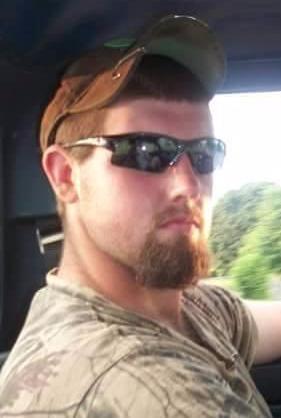
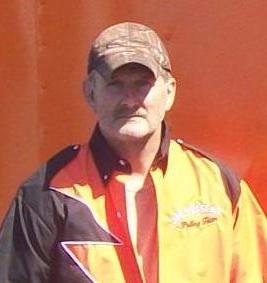
Jack Albert Douglas, a 49-year-old White male from Great Cacapon, West Virginia, died on June 13, 2016, in a triple shooting in the rural Valley High Timber Farms area of Morgan County. Douglas was a carpenter who enjoyed refinishing furniture and tractor pulling, an activity he shared with Travis Bartley and Travis’s father, William “Willie” Bartley. On the day before the killings, Douglas had asked Terry Lee Marks to come from Pennsylvania to help connect water service for Douglas’s daughter. Douglas had also been asked by the owner of a vacant residence at 1162 Gamble Lane to keep an eye on the property. When Douglas and Marks drove around that property on June 12, Marks later testified that he saw neighboring resident Erick D. Shute in the woods carrying a rifle, although there was no confrontation that evening.
The next afternoon, Douglas, Marks and Travis Bartley finished working at Douglas’s daughter’s home at about 3 p.m.
and headed to the Gamble Lane residence. They discovered roughly 30 yards of logs and other debris blocking its driveway. Douglas sent Travis to get his father and a chainsaw, and the four men began clearing the roadway. Shute appeared again carrying a rifle, and William Bartley began talking with him. Douglas and Marks drove farther onto the property to inspect the residence and noticed that items appeared to have been moved since the previous evening. Concerned that something was wrong, they intended to leave and contact the property owner. When they returned toward the driveway, however, William Bartley and Shute were arguing. Douglas got out of the truck and attempted to contact police, but according to trial testimony he could not obtain cell reception. Marks testified that Shute warned, “You don’t want to call the police,” immediately before opening fire.
Douglas was struck by Shute’s gunfire and came around the truck before collapsing to his knees. Travis Bartley was then shot and also fell, and when William Bartley moved toward his wounded son, Shute shot him as well. All three men suffered fatal gunshot wounds. Marks fled through the woods while Shute continued shooting in his direction; Marks later testified that he could hear bullets striking trees as he ran. The court record states that two of the three fatal victims were shot in the back and that investigators found no evidence that any of the victims had a firearm either on their bodies or inside their vehicle. Authorities initially described the weapon as a. 223-caliber or military-style rifle. The shooting occurred at approximately 4:45 p.m., and responding officers found the three victims dead after the gunman had already left the area.
After the shooting, Shute took Douglas’s cell phone and discovered that Douglas had in fact been trying to contact 911. He then fled West Virginia. Investigators launched a manhunt that extended through West Virginia, Pennsylvania and New Jersey, while residents around Great Cacapon were warned to remain indoors. Shute later contacted police himself, acknowledged that he was the shooter and maintained that he had acted in self-defense because he believed Douglas and the other men were threatening him. Authorities tracked him to Pennsylvania, where he was taken into custody in Chester County early on June 14 after an approximately eight-hour search. He subsequently declined to contest extradition and was returned to West Virginia. Early in the investigation, Morgan County Sheriff Vince Shambaugh publicly described Shute as someone associated with the anti-government “sovereign citizen” movement and said there had been previous complaints and property disputes involving the men.
The criminal case developed into far more than a simple dispute over wood or a blocked road. Prosecutors portrayed the shooting as an ambush and relied heavily on the circumstances surrounding Shute’s armed presence near the neighboring property, the debris obstructing the driveway and the eyewitness account of Marks. A Morgan County grand jury indicted Shute in January 2017 on three counts of first-degree murder for the deaths of Douglas, Travis Bartley and William Bartley, along with attempted first-degree murder and wanton endangerment for firing at Marks and a charge of using a firearm in the commission of a felony. Shute pleaded not guilty and continued to contend that he had believed the men posed a deadly threat to him.
Shute’s trial began in July 2018 and lasted three days. The prosecution called 16 witnesses, including Marks, the sole surviving member of the group. Shute testified in his own defense and admitted shooting the three men, telling jurors that he believed they were going to kill him. His attorneys pursued a self-defense theory, while prosecutors argued that the evidence demonstrated deliberate and premeditated killings rather than a justified response to an immediate threat. The trial court rejected Shute’s efforts to obtain an “imperfect self-defense” instruction, a doctrine the court said was not recognized under West Virginia law. After approximately two hours of deliberations, the jury found Shute guilty on every count and recommended no mercy on each of the first-degree murder convictions, eliminating the possibility that he could later become eligible for parole on those sentences.
In September 2018, the Morgan County Circuit Court imposed life imprisonment without the possibility of parole for each of the three murders. The court also imposed an aggregate additional term of 18 to 30 years for Shute’s other convictions, with all of the sentences ordered to run consecutively. Shute appealed, arguing among other things that the evidence had been insufficient to establish premeditated first-degree murder, that the jury had been improperly instructed, that he should have received an imperfect-self-defense instruction and that consecutive life-without-parole sentences were improper. On February 24, 2020, the Supreme Court of Appeals of West Virginia rejected those arguments and affirmed the convictions and sentences. The appellate court found that the jury had been presented with sufficient evidence to determine what happened, including Marks’s eyewitness testimony, Shute’s armed presence in the woods, the obstruction of the driveway and the shootings themselves. The result left Shute convicted as the person responsible for Douglas’s killing and the two other murders, as well as the attack on the surviving fourth man, with three consecutive life sentences without parole and additional consecutive prison time.