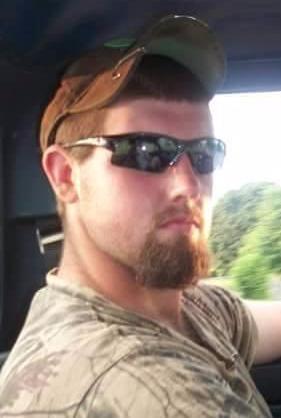
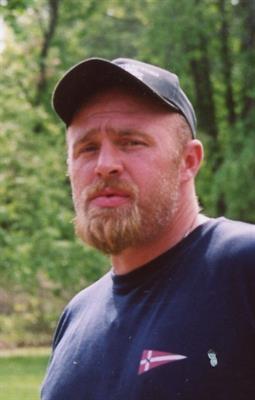
William B. “Willie” Bartley Jr., 53, a White male, was shot and killed on June 13, 2016, during a confrontation on property along Gamble Lane in the Valley High Timber Farms subdivision west of Great Cacapon, West Virginia. Although some early reports gave a different age, funeral information lists Bartley's birth date as April 2, 1963, and contemporary reporting also identified him as 53. Bartley was a Hedgesville resident and was the father of Travis Bartley, who was killed in the same shooting. The third man killed was Jack Douglas of Great Cacapon.
The events developed around a vacant residence at 1162 Gamble Lane that bordered property occupied by Erick David Shute. Jack Douglas had been asked by the vacant property's owner to keep an eye on the residence. On June 12, Douglas and Terry Marks, who had come to West Virginia from Pennsylvania, checked the property.
Marks later testified that he saw Shute in the woods carrying a rifle, although there was no confrontation that evening. When Douglas, Marks and Travis Bartley returned on June 13 after finishing work elsewhere, they found roughly 30 yards of logs and debris blocking the driveway. Travis went to get his father, Willie Bartley, and a chainsaw, and the four men began clearing the obstruction.
As the men worked, Shute appeared again with a rifle. Bartley began speaking with him while Douglas and Marks drove farther onto the property to inspect it. They noticed that items appeared to have been moved and decided something was wrong. When they returned toward the driveway, Bartley and Shute were arguing across the property boundary. Douglas attempted to contact police. According to Terry Marks' testimony, Shute objected to Douglas calling law enforcement and then opened fire. Douglas was struck, Travis Bartley was shot, and when Willie Bartley moved toward his wounded son, Shute shot him as well. Marks ran into the woods and escaped while Shute fired in his direction, with Marks later saying he could hear rounds hitting trees around him. None of the four men was found to have a firearm on his person or in their vehicle.
Medical testimony at Shute's trial established that Willie Bartley was struck in the face and neck. Travis was wounded in the abdomen and back, while Douglas was shot in the upper back. Shute later gave his own sequence of the shooting, saying that he fired first at Travis, then Douglas, shot Travis again and finally shot Willie Bartley. He claimed he believed the men posed a threat, that he thought they were stealing from the neighboring property and that he feared they might be armed. Prosecutors presented a sharply different picture: the men had permission to be on the property, were unarmed, and Shute had positioned himself with a military-style 5.56 mm rifle on his side of the fence. Evidence presented later also indicated that Shute had deliberately placed wood and debris across the driveway after seeing the men at the property the previous day.
After the shooting, Shute crossed the fence and examined the victims. He took Douglas's cellphone and discovered that Douglas had in fact attempted to contact 911. Shute then returned to his own property, disposed of the phone in a container of water and fled Great Cacapon in a white work truck. Police received the initial emergency call at about 4:45 p.m. and launched a large search involving authorities in West Virginia and neighboring states. During a telephone conversation with law enforcement later that evening, Shute identified himself as the shooter, accused the victims of being thieves and insisted that he had acted in self-defense. The call helped authorities track his movements as the search extended through West Virginia, Pennsylvania and New Jersey.
Shute, then 32, was captured in Chester County, Pennsylvania, after an approximately eight-hour manhunt. He was taken into custody late on June 13 or in the early hours of June 14 and held in Pennsylvania while West Virginia authorities sought his return. He did not contest extradition at a June 17 hearing and was subsequently returned to West Virginia. Early in the investigation, Morgan County Sheriff Vince Shambaugh said Shute described himself as a “sovereign citizen” and had expressed strong antigovernment views. The sheriff also said Shute and the victims had a history of property-related disputes and that Shute had previously accused them of stealing from him, although investigators had not substantiated those accusations.
Another person surfaced briefly in the early investigation. Shute's stepfather, identified in contemporary reporting only as Jeff, was described by the sheriff as a person of interest while investigators were trying to locate and speak with him. Later criminal proceedings, however, centered entirely on Erick Shute. The grand-jury indictment, trial record and appellate decision identify Shute as the defendant, and there is no indication in those records that the stepfather was prosecuted for participating in the killings.
On January 3, 2017, a Morgan County grand jury indicted Shute on three counts of first-degree murder for the deaths of Willie Bartley, Travis Bartley and Jack Douglas. He was also charged with attempted first-degree murder for shooting at Terry Marks, wanton endangerment for firing at Marks as he fled, and use of a firearm in the commission of a felony. Shute maintained that he had acted in self-defense. Before trial he also sought an “imperfect self-defense” instruction, but the court rejected it because West Virginia had not recognized that doctrine as a legal defense.
Shute's trial began in Morgan County Circuit Court in July 2018. The prosecution called sixteen witnesses, including surviving witness Terry Marks, investigators and medical personnel. Prosecutors argued that the physical evidence and Shute's conduct showed deliberation rather than a spontaneous act of self-protection: he had been seen armed near the property the previous day, had blocked its driveway, appeared with his rifle when the men returned and fired on men who were not armed. Shute took the stand in his own defense and acknowledged shooting the three victims but continued to maintain that he believed he was about to be attacked. He said he knew Willie Bartley sometimes carried a revolver and assumed the group might be armed, but no weapon belonging to any victim was recovered at the scene.
After approximately two hours of deliberation, the jury found Shute guilty on every charge. On each of the three first-degree murder counts, the jury recommended no mercy, eliminating the possibility of parole on the resulting life terms. In September 2018, the Morgan County Circuit Court imposed three life sentences without the possibility of parole and ordered them served consecutively. The court also imposed an aggregate additional sentence of 18 to 30 years for the remaining convictions, likewise to be served consecutively. The result ensured that Shute would spend the remainder of his life in prison.
Shute appealed, challenging the sufficiency of the evidence supporting premeditated first-degree murder, aspects of the jury instructions, the rejection of his proposed imperfect-self-defense theory and the decision to impose consecutive life-without-parole sentences. On February 24, 2020, the Supreme Court of Appeals of West Virginia rejected those arguments and affirmed the convictions and sentences. The court concluded that testimony showing Shute had watched the property while armed, obstructed the driveway and returned with his rifle when the men arrived provided sufficient evidence from which the jury could find that he had been lying in wait. The appellate court also emphasized the absence of firearms on the victims or in their vehicle and left intact the three murder convictions, the convictions associated with the attack on Terry Marks, and Shute's consecutive sentences.