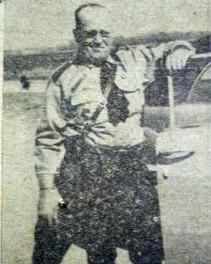
Assistant City Marshal Pat G. Jones, a white male officer from DeWitt, Arkansas, set out with his father on the night of February 24, 1921, to answer what sounded like a routine disturbance call at a local rooming house. The town would have been settling into the quiet of a late-winter evening as the two lawmen—father and son, both wearing the badge of city marshal—climbed the narrow stairs inside the building. When the operator of the place challenged their presence, City Marshal Thomas Jones identified himself and his son as officers there to investigate the reported trouble, a formal declaration of authority that should have calmed the scene instead of igniting it.
Instead, the first shots came suddenly. One man confronted them and, upon realizing who they were, drew a gun and opened fire at close range. The blast tore off one of Thomas Jones’s fingers, a brutal wound that could easily have ended the encounter then and there. But the older marshal, bleeding and stunned, returned fire on instinct, hitting the gunman in the chest and dropping him. For a heartbeat, it might have seemed that the danger was over—that the worst of the confrontation had already passed on that dimly lit stairway.
The real killing shot, however, came from elsewhere. As the wounded suspect went down, a second man emerged from one of the rooms off the hallway, armed and ready. He opened fire on Assistant City Marshal Jones, shooting him repeatedly in the legs and chest. The younger officer crumpled under the barrage, gravely wounded. In the chaotic aftermath, his father and others rushed to get him out of DeWitt and onto a train bound for Little Rock, desperate to reach more advanced medical care. He never made it. Jones died en route, his life ending between towns on a railway line rather than in a hospital bed or at home with his young family.
In the days that followed, the shooting inside that rooming house was treated as far more than a simple gunfight with a lawman. The investigation identified the wounded first gunman as the man who had fired the initial shots and the second attacker as the one whose bullets killed Jones. Multiple people were swept into the legal aftermath. Contemporary summaries record that several individuals were indicted on charges connected to the murder, and another account specifies that six people faced various counts, including murder and perjury, in relation to the killing. The wounded gunman, the one Thomas Jones had shot in the chest, stood trial for the homicide itself. Yet the case was always fragile: Thomas Jones was the only eyewitness who could clearly describe what had happened on those stairs. When the trial came, that limitation proved crucial. With no other officer able to stand in his place and no second set of eyes to corroborate his account, the man accused of shooting Pat Jones was acquitted.
The story did not end with the verdict. Barely a week after his son’s death, on March 3, 1921, City Marshal Thomas M. Jones sat down to supper with his family at their home in DeWitt. Without warning, shots were fired from outside, striking him as he ate. He died at his own table, killed from ambush in front of those closest to him. Investigators believed from the start that this second murder was no coincidence—that the attack on the father was meant to silence the key witness in his son’s case and punish the Jones family for challenging the men accused in the earlier shooting. One later description of the episode, tied to a funeral postcard from their hometown of Murray, Kentucky, even notes that Thomas Jones was expected to be the star witness in an upcoming trial involving seven men and two women connected to Pat’s murder at a DeWitt pool hall, and that both father and son were ultimately buried back in Murray. Whatever the exact number of defendants, the killings left the town with two dead marshals and a tangle of cases whose prospects dimmed sharply once the principal witness lay in the ground.
The legacy of the case is one of unfinished justice and remembered sacrifice. Contemporary memorials and modern databases list Assistant City Marshal Pat G. Jones simply as a law officer lost to gunfire in DeWitt on February 24, 1921, his death recorded alongside the bare facts of the ambush that followed against his father. Jones is commemorated on law-enforcement remembrance sites and on a national gun-violence memorial, which preserve his name, his role, and the date and place where he fell. At the same time, unsolved-murder and crime-history projects describe his killing as a homicide with multiple suspects indicted but no clearly recorded successful prosecution, leaving the impression that the case never reached a satisfying legal conclusion. More than a century later, what remains is the outline of a grim story: a disturbance call that turned into an ambush in a staircase, a father wounded while trying to save his son, a second assassin stepping from a doorway, and, in the end, a family and town marked by two funerals and a pair of badges laid to rest.