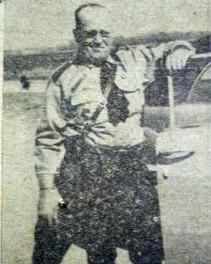
Thomas M. Jones, a male city marshal in DeWitt, Arkansas, sat down to dinner with his family on March 3, 1921, in what should have been an ordinary, quiet evening at home. Instead, it became the moment his life ended. As he ate with his loved ones, an unseen assailant fired on him in an ambush inside his own house, fatally wounding him and turning the family supper table into the scene of a targeted killing. Contemporary accounts describe his death as an off-duty, at-home ambush carried out with a rifle, a sudden burst of gunfire that left no opportunity for him to defend himself.
The attack did not come out of nowhere. Just days earlier, on February 24, 1921, Jones had gone to a rooming house in DeWitt with his son, Assistant City Marshal Pat G. Jones, to investigate a reported disturbance. As the two men climbed the stairs, the operator of the building questioned why they were there. Jones identified himself as an officer and explained they were there to look into the trouble. At that point, a man pulled a gun and opened fire, striking Jones and shooting off one of his fingers. Despite the pain and the shock, Jones returned fire and hit the gunman in the chest. A second man then came out from another room and opened fire on Pat Jones, shooting him repeatedly in the legs and chest. Pat was rushed away by train toward Little Rock for medical care, but he died on the way, leaving his father not only injured but grieving the loss of a son killed in the line of duty.
What followed that shootout set the stage for the deadly ambush at the family dinner table. In the wake of Pat Jones’s killing, authorities brought charges against multiple people connected to the violence at the rooming house. Several individuals were indicted on a variety of counts, including murder and perjury, in connection with the younger Jones’s death; one report notes six people facing such charges, while another account, tied to a contemporary funeral postcard, speaks of seven men and two women due to stand trial. Thomas M. Jones was expected to be the star witness against them, the only person who had seen the sequence of events from start to finish. After his murder, the prosecution’s case collapsed: the man accused of shooting Pat Jones was later acquitted at trial, and sources explicitly connect that acquittal to the fact that City Marshal Jones, the sole eyewitness, was no longer alive to testify.
Investigators searching for the truth behind Thomas Jones’s own killing quickly focused on motive. One theory held that the ambush at his home was a calculated act of revenge, carried out so that he could not testify against those charged with his son’s murder—a lethal form of witness intimidation at a time when small-town cases depended heavily on a single officer’s word. Another line of suspicion pointed toward a different enemy: a former informant of Jones’s who had recently escaped from prison and was said to harbor a deep grudge against the marshal. Both scenarios underscored how dangerous his work had made his life, even off duty and behind his own front door. Yet, despite these leads and the clear sense that the killing was targeted, no specific offender is recorded in the surviving documentation, and official summaries of the case list the offender as “not available,” suggesting that no one was ever definitively identified, arrested, and held to account for the ambush that ended his life.
In death, Thomas Jones left behind a family already marked by sudden loss. Records note that he was survived by his wife and daughter, who had already watched Pat fall and then, scarcely a week later, saw the husband and father of the household gunned down in their home. Later descriptions of a real-photo postcard show his funeral taking place in Murray, Kentucky, and state that both he and his son were buried there, far from the Arkansas town where they had worn the badge. Today, their names appear on memorial rolls of the DeWitt Police Department and on national registries of gun-violence victims and fallen officers, reminders that the deadly chain of events that began with a call to a rooming house in February 1921 culminated, days later, in a still-unresolved ambush at a family table in DeWitt.