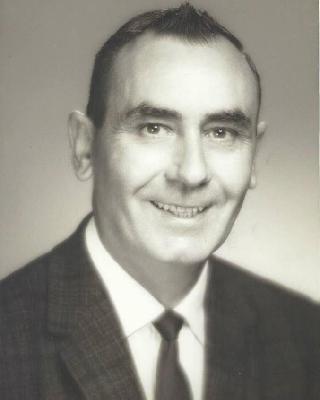
Claude Martin was a forty-two-year-old white man serving as a prison trusty guard for the Arkansas Department of Corrections at the Cummins Unit in the flat river country of Lincoln County when his life ended violently on Labor Day, September 2, 1940. The prison farm was a harsh place, a sprawling agricultural camp where men in striped uniforms worked the fields under the watch of armed trusties—prisoners themselves who had been given guns and authority in exchange for a fragile measure of
favor from the system. Martin was one of these, a life-sentenced inmate for first-degree murder who had been placed in the uneasy role of both convict and guard, walking the line between those he lived among and the institution he served.
On that Labor Day morning at Headquarters Camp No. 7, more than a hundred convicts assembled to work the “long line,” heading into the fields to pick crops under the watch of a small group of armed trusties. The air would have been heavy and wet, the kind of late-summer heat that rose from the Delta soil as the men spread out in a pea field, tools in hand, guarded not by uniformed officers but by fellow prisoners with shotguns. Beneath the outward routine, however, something far more volatile was already in motion. Among the men on that line were escape-minded prisoners who had been quietly planning a mass breakout, a desperate attempt to flee both the fields and the brutal conditions that had come to define life at Cummins.
The escape began with sudden, intimate violence. In the pea field, four trusty guards and four rank prisoners turned on the other guards, moving with the kind of speed that only long-nursed fear and resolve can produce. Guns were seized, men were disarmed, and the rigid order of the work line dissolved into shouting and struggle. In the confusion, Martin saw one of the escapees and, true to the role he had been given, raised his weapon to stop the breakout. For a brief instant, the calculus of his life—prisoner, killer, now armed guardian of the state’s authority—balanced on the trigger he was about to pull. He never got the chance. Before he could fire, a shotgun blast struck him down, ending his service as a trusty guard in the same field where he had been enforcing discipline only moments earlier.
With Martin lying dead in the field, the escape surged forward. The armed prisoners herded the remaining guards and rank convicts into nearby woods, stripping them of money, tobacco, guns, and ammunition. The old routines of the farm—rows of peas, shouted orders, the distant line of camp buildings—were replaced in an instant by chaos and flight. Thirty-six men escaped from Cummins that day, the largest prison break in Arkansas history, scattering into the countryside and beyond as sirens, telephones, and hastily assembled posses began to stitch together a widening manhunt.
The search that followed was relentless and, in many cases, as deadly as the breakout itself. One of the escapees, James Perry Williams, was captured quickly, but others dug in and fought. The next day, authorities cornered Raymond Harrell and James Scott in an abandoned shack near the Arkansas River, not far from the prison. When officers closed in, the two convicts opened fire, turning the shack into a kill zone until both were shot and killed in the exchange. Still others managed to slip across the state line, carjacking vehicles and seizing hostages as they made for Louisiana, their movements drawing headlines and stirring fear in every town along their path.
In Louisiana, the story of the escape—and of Martin’s death—twisted into a broader saga of pursuit and retribution. Six of the fugitives drove south with several high school students as captives, a desperate rolling crime scene on rural roads. When they stopped in Columbia, Louisiana, to fix a tire, a hastily deputized posse confronted them. Frank Gartman, a car salesman turned posse leader, approached the escapees’ vehicle and was shot and killed, triggering a gunfight that showered the roadside with bullets before authorities seized two of the men, Leon Johnson and William Magby, and freed the students.
The remaining fugitives from that Louisiana group were hunted down in the days that followed. William Heard, William Landers, William Meharg, and Floyd Boyce were captured and later stood trial for Gartman’s murder, not for the killing that had taken place back in the Arkansas pea field. On March 7, 1941, the four were executed by hanging in Louisiana, the last men to die by that method in the state before electrocution replaced the gallows. In the meantime, other escapees were tracked across multiple states: some killed in shootouts with officers, others dragged back in shackles to Cummins from places as far away as Vicksburg, Baton Rouge, Kansas City, and even Los Angeles. By November, all thirty-six men had either been captured, killed, or otherwise accounted for, their brief taste of freedom paid for with a trail of bodies that began in the Arkansas fields and ended at gallows and gun barrels across the South.
Within this wider storm of violence, Martin’s death remained the first and, in some ways, most symbolic casualty of the escape—a trusted inmate felled by the very men he had been armed to control. The historical record that survives focuses on the scope of the prison break and the headline-making killing of Gartman, rather than on a precise accounting of who pulled the trigger in the pea field or whether any fugitive was ever formally charged with Martin’s murder as a separate crime. Modern memorials and law-enforcement honor rolls simply record him as a prison guard slain by gunfire in the line of duty during the Cummins prison break, his name listed alongside other fallen officers and victims of gun violence, the details of his final moments distilled to the brief note that he died doing the job the state had given him.