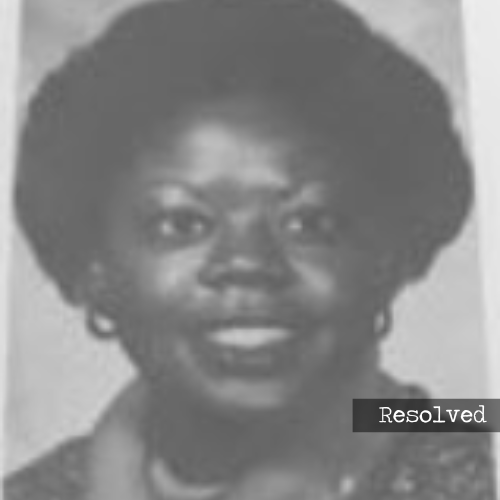
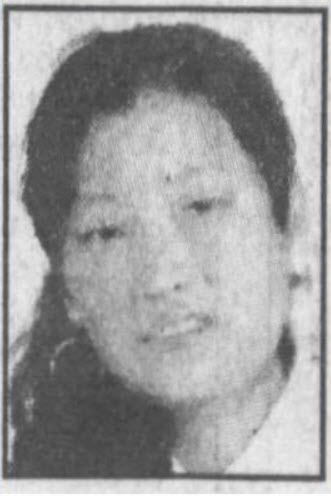
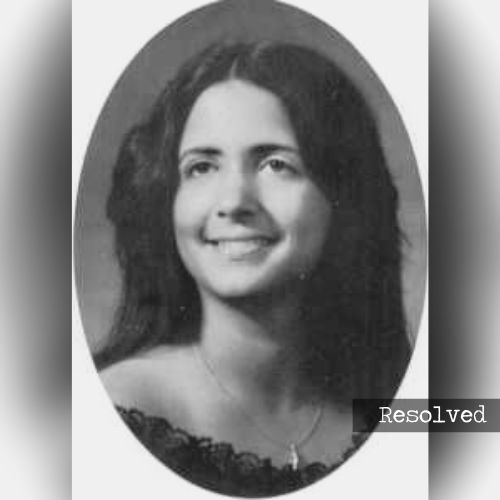
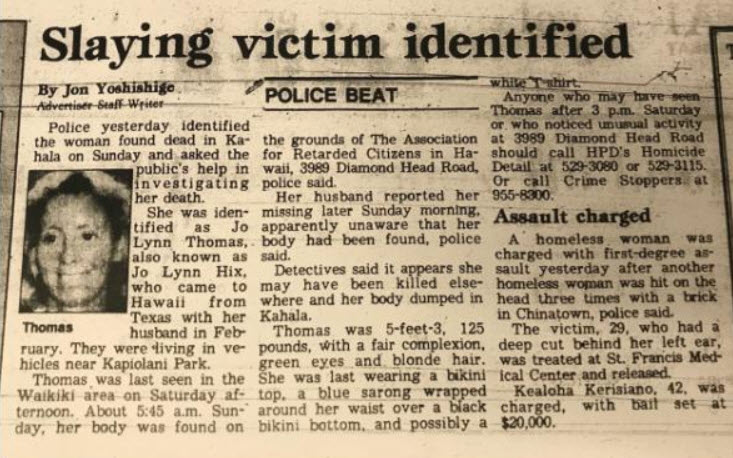
Do you know who murdered Helen? Helen Correa was a 22-year-old white woman whose final hours unfolded along the familiar routes of Leeward O‘ahu, where ordinary Sunday plans could still leave someone exposed after dark. In the days that followed, accounts of when she was last seen pointed to a narrow window: one report placed her at a Trinity United Methodist Church service the day before, while police also said she was last seen later that night in the Waipahu area, possibly at a bus stop.

On October 8, 1984, her body was discovered in the Kunia area, left in a sugar cane field ditch. Investigators concluded she had been strangled, and one published account described a chilling detail: she was killed with a long key chain she wore around her neck. In the flat, secluded stretches of cane, the scene offered little comfort—just the sense that someone had enough time and privacy to do what they did and then vanish back into the island’s traffic and routine. 
As years turned into decades, the case hardened into a cold-case file: a name, a date, and a small set of last-known movements that never quite joined into a full story. Honolulu police have continued to circulate the basic facts—Kunia cane fields, strangulation, last seen in Waipahu—and have kept the killing listed among their unsolved cases, a signal that the investigation never reached the point of naming a suspect publicly. 
In the immediate aftermath, her death rippled through family and community in the way homicides often do—through funeral arrangements and the stunned logistics of grief. An obituary notice identified her as an Ewa Beach resident and said she had been found dead that Monday in Kunia; it also named surviving relatives, including her parents and siblings, underscoring how many lives were abruptly reorganized around a single, unanswered loss. 
No public record in the available sources describes an arrest, formal charging decision, trial, or conviction connected to her killing. Later advocacy around the case emphasized that investigators had revisited evidence and pursued additional testing over the years, but the public-facing status remained the same: an unsolved homicide still waiting for the one piece of information that can turn a long-quiet file into a name and accountability.